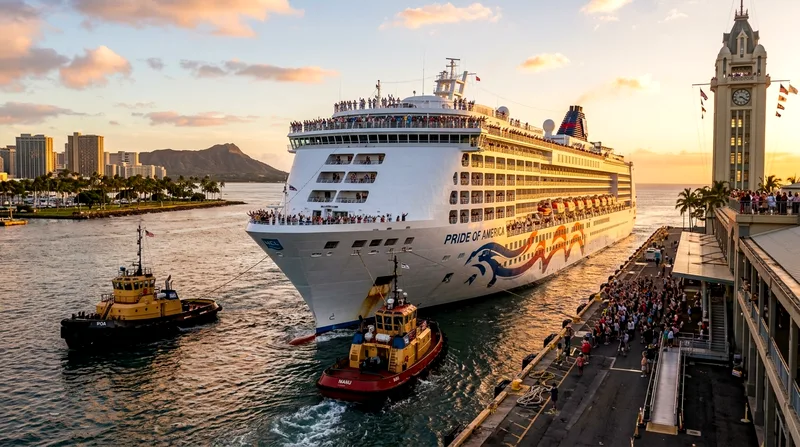
Pride of America Itinerary: 7 Days Around the Islands
Follow a port-by-port Pride of America Hawaii itinerary: 7 days from Honolulu to Hilo, Kona, Maui and Kauai, with the best shore excursion at each stop.
10 min read · 21 Oct 2026
Tours & activities
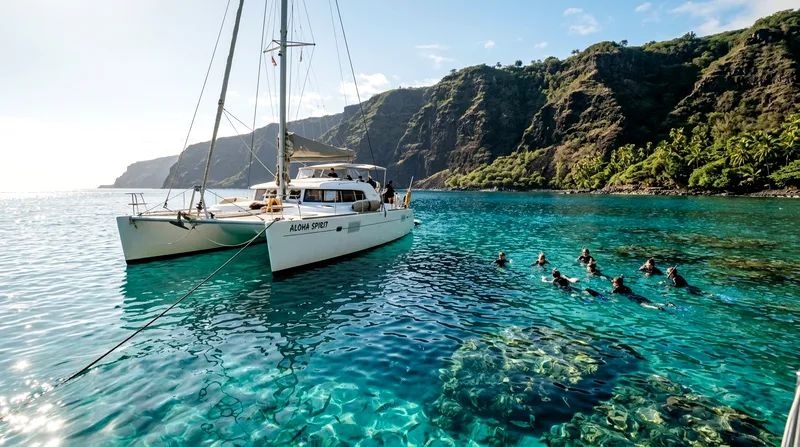
Compare Hawaii boat tours by type: snorkel trips, catamaran sails, sunset dinner cruises, whale watching and inter-island cruises. Find the right boat.
Every visitor to Hawaii eventually faces the same decision: how to get out on the water. Options range from a three-hour sunset sail out of Waikiki to a full week aboard an inter-island cruise ship visiting four islands. Hawaii boat tours split broadly into snorkel trips, catamaran sails, sunset and dinner cruises, whale watching excursions, manta ray night tours, glass bottom boat rides, and longer cruises. Each suits a different kind of traveler, budget and tolerance for rocking water.
The honest starting point is admitting that no single tour fits everyone. A family with young children has different needs than a couple celebrating an anniversary, and a serious snorkeler wants something different again from someone who just wants photos of a sunset behind Diamond Head. Before you look at any specific company's schedule, decide what matters most: time in the water, comfort, wildlife odds, or atmosphere.
Rough duration gives a useful shorthand. Short tours (2-4 hours) cover sunset cruises, most snorkel trips, and manta ray night tours. Half-day trips (4-6 hours) usually mean Molokini crater snorkeling off Maui or combination snorkel-plus-whale-watching trips in winter. Full-day charters and private boats run 6-8 hours. Inter-island cruises run 7 days or longer. Price generally scales with duration and boat size, and smaller group charters cost more per person than large group catamarans.
Families with kids under 10 do best on larger, stable catamarans rather than fast powerboats — the ride is gentler, there's shade, and most operators provide flotation gear and shallow snorkel areas for non-swimmers. Look for trips explicitly marketed as family-friendly; they tend to build in more swim time and less distance offshore. Avoid the adults-only sunset dinner cruises with open bars if you're bringing children — read the fine print, because some operators genuinely restrict or discourage young kids on evening cruises.
Couples looking for a romantic experience gravitate toward sunset cruises out of Waikiki or Ko Olina on Oahu, or similar sails off Lahaina on Maui. These run two to three hours, include a drink or two, and prioritize views over activity. If seasickness is a concern for either of you, a sunset cruise on a catamaran is far gentler than a snorkel trip in open ocean swells.
First-timers to Hawaii who aren't sure what they want should start with a half-day snorkel-and-whale combo (winter) or a standard Molokini snorkel trip (any season) — it's the most representative sample of what Hawaii's water offers without committing to a full day or a week-long cruise.
Serious snorkelers and divers should prioritize boats that visit Molokini Crater off Maui, widely regarded as the clearest water in the islands thanks to its partially submerged crater shape blocking runoff and current. Morning trips beat afternoon ones — visibility and calm water both degrade as the day warms and wind picks up.
Wildlife fans have two very different targets: humpback whales (winter, roughly December through April, peak visibility January to March) and manta rays (year-round, but Kailua-Kona on the Big Island is the primary hub for manta ray night tours). These are genuinely different trips — whale watching happens in daylight from a moving boat scanning the horizon, while manta tours happen after dark with underwater lights attracting plankton, and you snorkel or dive while rays feed inches away. Thrill-seekers who want speed and fewer stops should look at rigid-hull powerboat tours rather than catamarans — they cover more distance faster and tend to attract a younger, more active crowd.
The core decision for most visitors is vessel type, because it determines comfort, speed, and group size more than anything else. Understanding the difference between a catamaran, a powerboat, and a specialty vessel like a glass bottom boat will save you from booking the wrong experience.
The right Hawaii boat tour depends less on price than on vessel type, trip length and season.
Hawaii boat tours compared by vessel, duration and best season
| Tour Type | Typical Vessel | Duration | Best Suited For | Best Season |
|---|---|---|---|---|
| Snorkel (Molokini/reef) | Catamaran or powerboat | 3-6 hours | Snorkelers, families | Year-round, mornings best |
| Sunset/dinner cruise | Large catamaran or yacht | 2-3 hours | Couples, groups, first-timers | Year-round |
| Whale watching | Small-to-mid motor vessel | 2-3 hours | Wildlife fans, seniors | December-April |
| Manta ray night tour | Small boat with dive raft | 2-3 hours | Snorkelers, divers, thrill-seekers | Year-round, Kailua-Kona |
| Glass bottom boat | Flat-hull motor vessel | 45-75 minutes | Non-swimmers, seniors, mobility-limited | Year-round |
| Inter-island cruise | Mid-size cruise ship | 7+ days | Multi-island travelers, world travelers | Year-round, varies by itinerary |
Durations and seasons are typical ranges; always confirm current schedules and conditions with the operator before booking.
Catamarans are the default choice for most snorkel and sunset tours in Hawaii, and for good reason — the twin-hull design is far more stable than a monohull, which matters a lot if anyone aboard is prone to seasickness. They're slower than powerboats, typically cruising at 8-10 knots versus 20+ for a rigid-hull inflatable, so getting to Molokini from Maalaea Harbor takes closer to 45-60 minutes on a catamaran versus 20-25 on a powerboat. Catamarans also carry more passengers, often 40-100 people on the larger vessels, which means less personal attention from crew but usually a bathroom onboard and more deck space.
Powerboats (often rigid-hull inflatables or smaller monohulls) carry fewer passengers — typically 6-24 — and get you to snorkel sites faster with more time in the water as a result. The trade-off is a bumpier ride, especially crossing open channels like the Alenuihaha between Maui and the Big Island, and no bathroom on smaller models. Choose a powerboat if you want a smaller group, don't get seasick easily, and value time in the water over onboard comfort. Choose a catamaran if you're traveling with kids, older relatives, or anyone uncertain about their sea legs.
Sunset and dinner cruises are built for atmosphere rather than activity — expect a cocktail or buffet dinner, live music on larger vessels like the Star of Honolulu out of Oahu, and minimal time actually in the water, since these trips run in the evening. They suit couples and groups wanting a relaxed, scenic evening more than active travelers.
Whale watching tours run exclusively in winter (roughly December-April) and range from dedicated spotting boats with naturalist guides to add-on sightings during regular snorkel trips. Dedicated whale tours tend to use smaller, more maneuverable boats and often have a hydrophone to listen to whale song — a detail worth asking about since not every boat has one.
Manta ray night tours, concentrated around Kailua-Kona, are a different category entirely: you're in the water after dark, holding onto a floating raft with underwater lights, watching rays glide beneath you. It's one of the more memorable wildlife encounters in Hawaii, but it's not for anyone uneasy in open water at night, and sightings — while fairly reliable in this specific location — are never guaranteed.
Glass bottom boat tours, including operators like Hawaii Glass Bottom Boats, suit non-swimmers, seniors, and anyone with mobility limitations who still wants to see reef and fish life without getting wet. They're shorter (often under an hour), gentler, and cheaper than snorkel trips, but the marine life view is more distant and less vivid than being in the water yourself.
If you want to see Oahu, Maui, the Big Island and Kauai without flying between them, an inter-island cruise solves the logistics problem neatly — you unpack once and wake up at a different island most mornings. It's a genuinely different product from a day tour, closer in spirit to a Caribbean or Mediterranean cruise than to a snorkel trip, and it suits travelers who dislike inter-island flights or want a structured itinerary rather than rental-car logistics.
A typical Hawaii cruise itinerary runs 7 nights, departing from Honolulu and calling at ports on Maui (Kahului), the Big Island (Hilo and/or Kailua Kona), and Kauai (Nawiliwili), sometimes with a stop near Pearl Harbor built into the Oahu portion. Some itineraries begin or end in a mainland US port like San Francisco or Los Angeles, adding several sea days — worth knowing if you get seasick or have limited vacation time, since a round-trip mainland departure can stretch to 15 days total.
Compared to flying between islands and staying in hotels, a cruise trades flexibility for convenience. You get far less time at each port — often just 8-10 hours — which isn't enough to do a serious hike or a full day at the beach. If you've compared this to a Fiji or Tahiti cruise, Hawaii's itinerary is more port-dense and less about days at sea, which some travelers prefer and others find rushed.
Private charters — booking an entire boat for your group — cost significantly more per person than joining a scheduled group tour, but they buy you control over timing, route, and who's aboard. For a family reunion, a proposal, or a group of divers who want to choose the exact snorkel site, a private charter on a 6-10 person boat is worth the premium. For solo travelers or couples on a budget, a group tour on a larger catamaran gets you the same water and often the same reef, just with 30 strangers and a fixed schedule.
I'd skip a private charter for a standard sunset cruise — the experience (drinks, views, music) doesn't really improve with privacy the way a snorkel trip or whale watch does, where route flexibility actually changes what you see.
Boat tour listings can look nearly identical until you read the fine print. A few checks before you pay a deposit will save real disappointment on the day.
Snorkel gear (mask, fins, snorkel) is included on nearly every Hawaii snorkel tour, but wetsuit or flotation vest rental sometimes costs extra — ask specifically if you run cold easily, since even tropical Hawaiian water feels chilly after an hour. Lunch or snacks are standard on half-day-plus trips; sunset cruises usually include at least one drink and often a buffet-style dinner on larger boats like the Star of Honolulu.
Group size matters more than most people expect. A 100-passenger catamaran means lining up for gear and sharing snorkel space with dozens of others; a 12-passenger powerboat means more personal attention but a higher price per head. If you specifically want quiet water away from crowds, ask how many other boats typically anchor at the same site — Molokini, for instance, gets crowded with multiple operators by mid-morning.
Hawaii's weather can cancel or reroute a trip with little notice, particularly whale watching and Molokini crossings in windy winter conditions. Most reputable operators offer a rebooking or credit rather than a cash refund for weather cancellations, so check the written policy, not just what a booking page implies. Trade wind strength varies by season and by coastline — the Kona side of the Big Island is typically calmer than Maui's Maalaea channel.
Accessibility varies a lot by boat. Larger catamarans and cruise ships generally have ramps, restrooms, and crew able to help with boarding; smaller powerboats and glass bottom boats may require climbing down a ladder or stepping over a gunwale, which isn't realistic for everyone with mobility issues. If this matters to you or a traveling companion, call or message the operator directly and ask about boarding specifics rather than assuming from photos.
Timing affects both what you'll see and how much competition you'll have for a spot on the boat.
Winter (December-April) is whale season, with peak sightings January through March — this is also when trade winds and swells run highest, so snorkel and Molokini trips can see more cancellations or rougher crossings. Summer (May-September) brings calmer water generally, better for first-time snorkelers and nervous sailors, but no whales. Manta ray night tours run year-round in Kailua-Kona with no strong seasonal pattern, since the rays feed on plankton drawn by the boat's lights regardless of month. Sunset cruises work any time of year, though sunset time shifts — summer evenings run later, around 7pm, versus winter's earlier 6pm sunsets, which affects dinner cruise scheduling.
Book popular snorkel and sunset cruises 1-2 weeks ahead for most of the year; during peak travel weeks (winter holidays, summer school break) push that to 3-4 weeks, especially for family-sized groups needing several seats together. Whale watching tours during peak winter months fill fast, partly because they overlap with the busiest tourist season — booking a month out isn't unreasonable. Inter-island cruises require the most lead time, typically several months, since cabin categories and sailing dates sell out well before departure. Private charters need the most advance notice of all if you want a specific date and boat size.
Catamarans are twin-hulled, more stable, slower (roughly 8-10 knots), and carry larger groups (40-100 passengers), making them better for families, seniors or anyone worried about seasickness. Powerboats are faster, smaller (often 6-24 passengers), get you to snorkel sites quicker, but ride rougher in open channels and usually lack onboard restrooms.
Most Hawaii snorkel tours include mask, fins and snorkel, plus some kind of food — snacks on short trips, a full lunch on half-day or longer ones. Wetsuits and flotation vests are sometimes extra. Always check the specific listing, since inclusions vary between operators and between short reef trips and longer Molokini crossings.
Humpback whale season runs roughly December through April, with peak numbers and calf sightings January through March. Outside that window, whale watching tours generally don't run, since the whales have migrated back to Alaskan waters for summer feeding.
Many are, particularly catamaran snorkel trips and glass bottom boat tours, which tend to have gentler rides and shallow swim areas. Evening sunset or dinner cruises sometimes discourage or restrict young children, so check the specific policy. Manta ray night tours are generally not recommended for young kids given the dark, open-water setting.
Expect green sea turtles, spinner dolphins, tropical reef fish and occasionally monk seals on standard snorkel trips. Winter tours add humpback whales; Kailua-Kona night tours add manta rays, which can have wingspans over 10 feet. Molokini's crater waters are known for especially clear visibility and dense fish populations compared to shoreline reef sites.
Follow a port-by-port Pride of America Hawaii itinerary: 7 days from Honolulu to Hilo, Kona, Maui and Kauai, with the best shore excursion at each stop.
10 min read · 21 Oct 2026
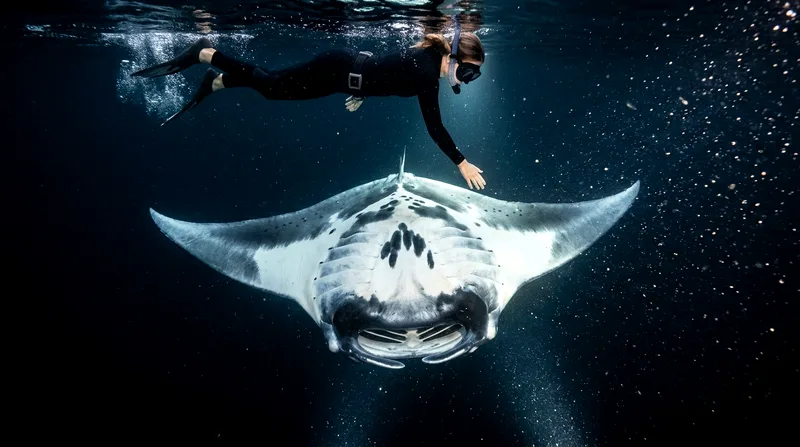
Planning a Kona manta ray night snorkel? Compare tour types, group sizes and sighting odds, plus tips for nervous swimmers and kids before you book.
9 min read · 21 Oct 2026
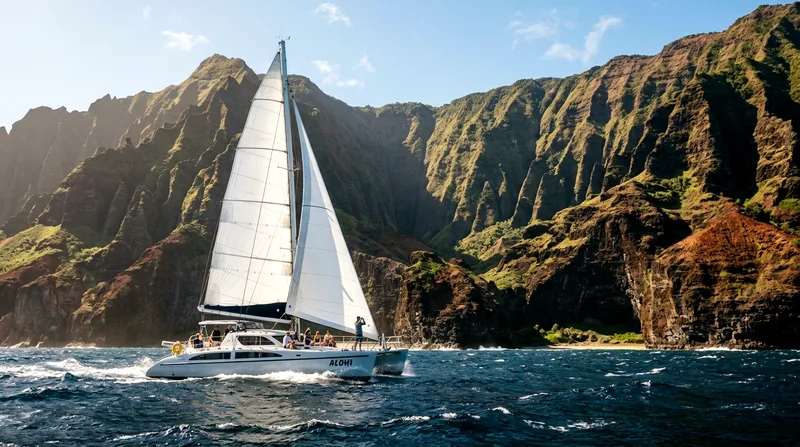
Compare Na Pali Coast boat tours by catamaran and raft: comfort, seasickness risk, sea cave access, snorkeling and sunset cruises, plus booking tips.
10 min read · 21 Oct 2026
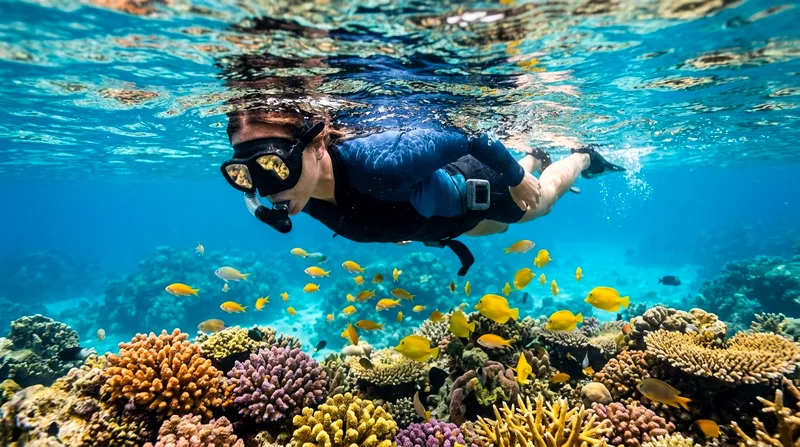
Compare catamaran and raft Molokini snorkel tours, morning vs afternoon departures, and Turtle Town add-ons for clearer water and fewer crowds.
10 min read · 21 Oct 2026
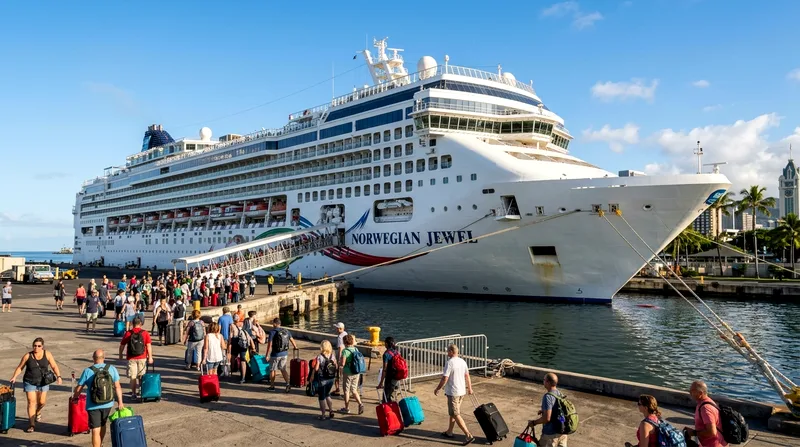
Hawaii cruise vs land vacation: compare total cost, time ashore, excursion access and fit for seniors and families to decide which trip suits you best.
11 min read · 21 Oct 2026