Compare Na Pali Coast boat tours by catamaran and raft: comfort, seasickness risk, sea cave access, snorkeling and sunset cruises, plus booking tips.
Which Na Pali Boat Tour Suits You
The Na Pali Coast is 17 miles of fluted green cliffs on Kauai's northwest shore, and there's no road anywhere near most of it. The only way to see Kalalau Valley, the sea caves, and the waterfalls that drop straight into the Pacific is by boat, by air, or by a grueling multi-day hike. For most visitors, a Na Pali Coast boat tour is the realistic option — and the decision that matters most isn't which company to book, it's catamaran or raft.
Here's my honest take: there's no universally "best" boat. A catamaran suits people who want to stand up, use a real bathroom, and not get soaked. A raft suits people who want to feel the ocean, duck into sea caves, and don't mind getting wet and bounced around for a few hours. Neither is wrong, but picking the wrong one for your tolerance level can ruin an otherwise expensive morning.
Families and first-timers
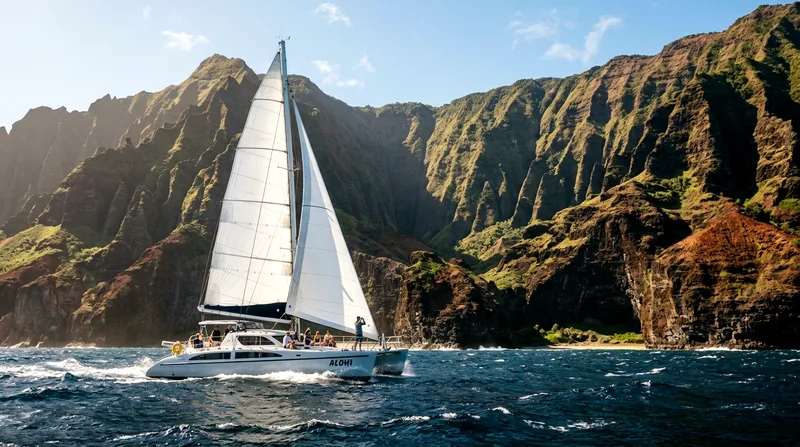
If you're traveling with kids under 10, aging parents, or you've simply never been on a small boat in open ocean swell, start with a catamaran. They're larger — typically 40 to 65 feet — with shaded seating, actual railings, and marine toilets. Motion is smoother because the hulls cut through chop rather than slapping over it. Most catamaran operators also set a minimum age (often 2 years) while many rafts set theirs around 5 to 8 years old due to the bouncing ride, so check that detail before you book if traveling with young children.
Adventurous travelers and photographers
If you want to get close to the cliffs, nose into sea caves, and photograph the coastline from water level rather than a deck ten feet up, the raft wins. Rafts are rigid-hull inflatables, typically 24 to 36 feet, seating 14 to 24 people on tubed sides you straddle or brace against. They're faster, more maneuverable, and sit low to the water, which makes for dramatic photos but also means more spray on your lens. Photographers should bring a dry bag or waterproof housing — I've heard too many stories of ruined camera gear on raft trips to treat this as optional.
Na Pali Tour Types Compared
Beyond the catamaran-vs-raft split, tours vary by time of day, departure port, and group size. Most Na Pali Coast tour Kauai operators run from either Port Allen on the south shore or Hanalei on the north shore (seasonally, when surf allows), with Port Allen operating nearly year-round since it's more sheltered. A tour from Hanalei puts you closer to the coast's most dramatic section and cuts transit time, but Hanalei departures are weather-dependent and often pause entirely during winter swell.
Morning snorkel cruises and sunset cruises
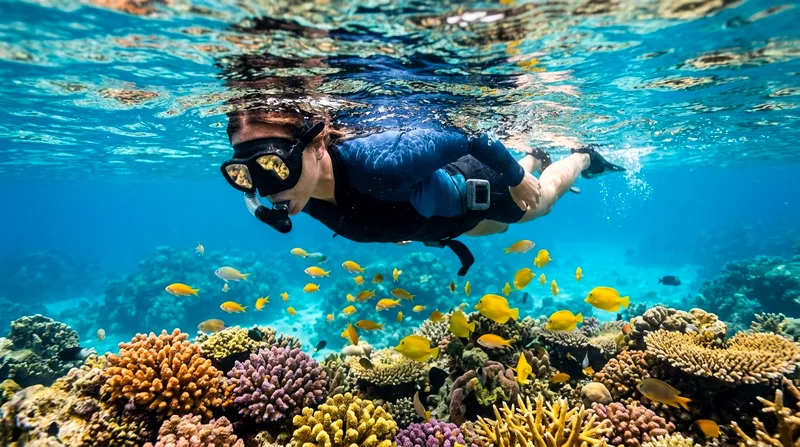
Morning trips, usually 4 to 5 hours, combine the coastline run with a snorkel stop, often near Nualolo Kai or further toward Niihau depending on conditions. Visibility is generally best before midday, before wind picks up and churns the water. A Na Pali coast sunset cruise, by contrast, skips snorkeling and focuses purely on the lighting — golden hour on the cliffs is genuinely one of the better sunset experiences in Hawaii, better in my opinion than most Waikiki sunset sails because there's no skyline competing for attention. Sunset cruises run 2 to 3 hours and usually include light pupus (appetizers) rather than a full lunch. If you only have time for one tour, I'd lean toward the morning snorkel trip — you get the cliffs, the wildlife, and still see good light, whereas sunset-only trips skip the water activity entirely.
Private charter vs group tour
Group tours are the default and the better value — you'll share the boat with roughly 14 to 49 other passengers depending on vessel size. Private charters exist for both catamarans and rafts, letting you set the route, skip crowded snorkel spots, and bring your own group of family or friends. They cost substantially more — often several times the per-person group rate — and make sense mainly for special occasions like proposals, anniversaries, or a family reunion where flexibility matters more than cost. For everyone else, a group tour gets you the same coastline view for a fraction of the price.
Catamaran vs Raft: Comfort and Seasickness
This is where most people actually decide. Catamaran vs raft Na Pali comparisons always come back to two things: how much you'll get tossed around, and how much you'll get wet.
Catamarans offer the smoothest, most comfortable ride while rafts get closer to sea caves but bounce more in swell.
Na Pali Coast boat tour types compared: comfort, seasickness risk and sea cave access
| Tour Type | Comfort Level | Seasickness Risk | Sea Cave Access | Best For |
|---|---|---|---|---|
| Catamaran (morning) | High — shade, seating, restroom | Lower | No | Families, seniors, first-timers |
| Raft | Low — exposed, bouncy | Higher | Yes, conditions permitting | Adventure seekers, photographers |
| Sunset cruise (catamaran) | High | Lower | No | Couples, relaxed evening views |
| Private charter | Varies by vessel type | Varies by vessel type | Depends on boat chosen | Special occasions, flexible groups |
Typical patterns based on vessel design; actual comfort and access depend on daily sea conditions, so check with the operator before booking.
Ride quality, shade and restrooms
Catamarans have two hulls that stabilize the boat against rolling, plus a raised deck, shade canopy, and an enclosed restroom. You can walk around, stand at the rail, and sit in the same spot the whole trip if you want. Rafts have none of this — you're seated low, exposed to sun and spray the entire time, and "restroom" usually means a privacy-curtained bucket or a brief stop, if even that. If you burn easily or need regular bathroom access, that alone should push you toward a catamaran.
Seasickness risk is genuinely higher on rafts, not because the vessel is more dangerous but because you feel every swell directly — there's no hull mass to dampen the motion. Catamarans smooth out the ride considerably, though nobody is fully immune in Na Pali's open-ocean swell, especially on the exposed crossing toward Niihau. Take motion sickness medication (like meclizine or a scopolamine patch) an hour before departure regardless of which boat you pick if you have any history of seasickness. I'd rather over-prepare than spend a four-hour tour hanging over the rail.
Accessibility and mobility considerations
Catamarans are the only realistic option for travelers with limited mobility, seniors with knee or back issues, or anyone who can't easily climb into a bouncing inflatable from a harbor ladder. Boarding a raft typically involves a wet landing or a climb down a seawall ladder, and once aboard there's no standing up and moving around — you're braced in one seat for the duration. Boarding a catamaran is far closer to boarding a ferry: a gangway or stable step, handrails, and a level deck. If anyone in your group uses a cane, has vertigo, or is pregnant, skip the raft entirely.
Sea Caves, Snorkeling and Wildlife
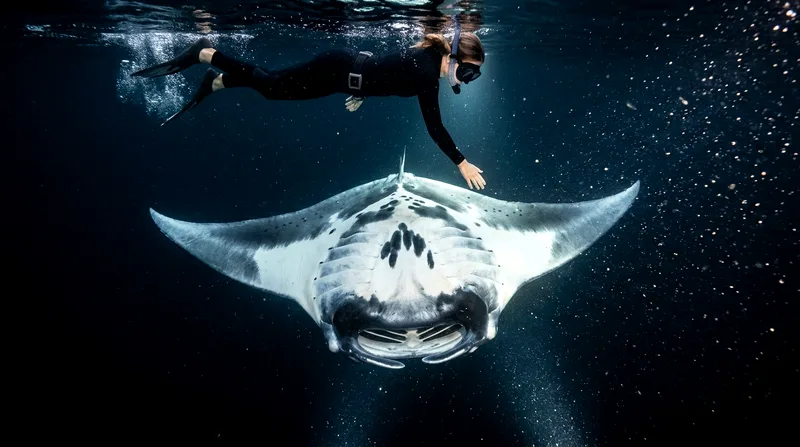
Wildlife sightings aren't guaranteed on any tour, but they're common enough that most operators build time into the route for them. Spinner dolphins frequently ride the bow wake in the morning, particularly along the stretch near Nualolo Kai, and Hawaiian green sea turtles turn up regularly at snorkel stops and sometimes just cruising past the boat in open water. Humpback whales add a seasonal bonus from roughly December through April, visible from either boat type since they're spotted at a distance rather than up close.
Which boats can enter sea caves
This is the clearest practical difference between the two. Rafts can nose directly into several of the Na Pali sea caves — shallow-draft, nimble, and small enough to maneuver into tight openings that a 50-foot catamaran simply can't fit through. If entering a sea cave is a priority for you, the raft is the only way to do it; no catamaran operator will attempt it. That said, cave access depends entirely on swell and tide that day — captains won't risk it in marginal conditions, so treat it as a likely bonus, not a guarantee, even on a raft tour.
Seasonal snorkel conditions and Niihau crossings
Snorkel quality shifts with the season and the day's wind. Summer (roughly May through September) tends to bring calmer water and better visibility along the whole coast, which is also when some longer tours push further south toward the Niihau channel — the strait between Kauai and the privately owned island of Niihau — for a second, often less crowded snorkel site. Winter swell makes that crossing rougher and many operators shorten the route or stick closer to Port Allen. If snorkeling is your main goal, a Na Pali snorkel tour booked between May and September gives you meaningfully better odds of clear water than a December trip.
What to Check Before Booking
Tour listings can look nearly identical until you read the fine print. A few details separate a good trip from a disappointing one.
Inclusions, group size and hidden costs
Most morning tours include snorkel gear, a light meal or deli-style lunch, and water or soft drinks; sunset cruises typically include appetizers only. Check whether gear rental, wetsuit use, or gratuity is bundled in or added at checkout — some listings quote a lower headline figure that climbs once you add the mandatory fuel surcharge or gear fee. Group size matters too: a raft capped at 14 passengers feels very different from a catamaran carrying 49. Smaller groups generally mean more personal attention from the crew and easier access to the rail for photos, but larger catamarans often have steadier rides and better shade coverage.
Cancellation and weather policies
Read the cancellation policy before you pay, not after. Na Pali tours get called off for surf and wind more often than visitors expect, particularly raft tours and anything departing from Hanalei. Most reputable operators offer a full refund or free reschedule for weather cancellations initiated by the company — but policies on passenger-initiated cancellations (you decide not to go) vary widely, from full refunds up to 48 hours out to no refund at all inside 24 hours. Confirm this before booking, and always check current prices and cancellation terms directly on the listing — don't assume the policy from one operator applies to another.
When to Book Your Na Pali Tour
Timing affects both which boats are running and how rough your ride will be.
Summer vs winter sea conditions
Summer (May through September) brings the calmest water on average, higher reliability for Hanalei departures, and the best shot at a smooth raft tour. Winter (roughly November through March) brings north shore swell that regularly closes Hanalei entirely and makes raft tours choppier even from Port Allen. If you're set on a raft tour and traveling in winter, book from Port Allen rather than hoping for a Hanalei departure, and build a flexible day into your itinerary in case of cancellation.
How far ahead to reserve
Book 2 to 4 weeks ahead for a standard trip during summer or holiday periods; popular sunset cruises and smaller rafts sell out faster than large catamarans simply because they carry fewer passengers. If your Kauai trip is during peak season (June through August, or the winter holidays), reserve as soon as your dates are set rather than waiting until you land. Last-minute booking is possible but limits you to whatever's left, often the less convenient departure times or larger, less personal boats.
Frequently asked questions
What is the difference between catamaran and raft tours on the Na Pali Coast?
Catamarans are larger, stabler boats with shade, seating, and a restroom, giving a smoother ride but no sea cave access. Rafts are smaller, faster inflatables that sit low in the water, bounce more in swell, and can enter certain sea caves that catamarans physically can't fit into.
Do Na Pali boat tours include snorkeling?
Most morning tours (4 to 5 hours) include a snorkel stop with gear provided, typically near Nualolo Kai or further toward the Niihau channel in calmer summer months. Sunset cruises generally skip snorkeling entirely and focus on timing the cliffs at golden hour.
Can you see sea caves on a Na Pali boat tour?
Yes, but mainly on raft tours — their small size and maneuverability let them nose into several caves along the coast when swell and tide allow. Catamarans are too large to enter the caves, so if that's a priority, book a raft tour and expect it to be weather-dependent even then.
Which Na Pali boat type is best if you get seasick?
Choose a catamaran. Its twin-hull design dampens rolling motion far better than a raft's low, direct contact with every swell. Still take motion sickness medication an hour before departure if you have any history of seasickness, since the open-ocean crossing can be rough on either boat.
Are private charters available for Na Pali Coast tours?
Yes, both catamaran and raft operators typically offer private charters that let you set your own route and schedule. They cost noticeably more than a shared group tour, so they make the most sense for special occasions rather than a standard sightseeing trip.