Hawaii cruise vs land vacation: compare total cost, time ashore, excursion access and fit for seniors and families to decide which trip suits you best.
Hawaii Cruise vs Land Vacation at a Glance
The core dilemma is simple to state and harder to resolve: unpack once and let a ship carry you between islands, or fly in, pick a base, and build your days around one or two places instead of four. Both get you to the same Hawaiian Islands — Oahu, Maui, Kauai, the Big Island — but the experience of "being in Hawaii" looks very different depending on which you choose.
A Hawaii cruise vs land vacation decision really comes down to what you value more: breadth or depth. Cruises are efficient. You might see four islands in seven days without touching a rental car reservation or hunting for parking in Lahaina. Land vacations are immersive. You wake up in the same place for five or six nights, get to know a neighborhood, and don't have to be back on a tender boat by 4:30pm.
Neither is objectively "better" — the Hawaii Tourism Authority's own visitor data shows both styles are common, and gohawaii.com lists inter-island ferries, flights and cruises as legitimate ways to connect islands. What matters is matching the format to your travel style, your tolerance for structure, and how many islands you actually want to check off versus settle into.
How an inter-island cruise works
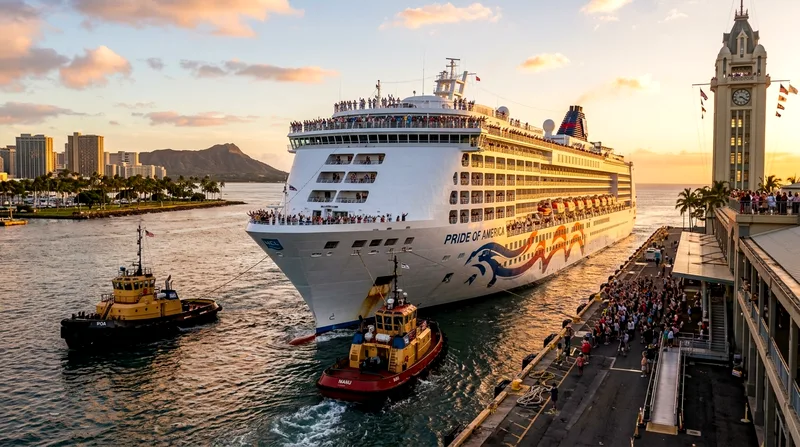
One major line (Norwegian Cruise Line's Pride of America) runs a genuine inter-island itinerary that stays within Hawaiian waters year-round, typically looping Honolulu, Maui, Hilo or Kona on the Big Island, and Kauai over seven nights. Other cruise lines — Princess, Holland America, Celebrity — occasionally include Hawaii as part of longer repositioning or Pacific itineraries, often with a sea day or two from the US West Coast tacked on.
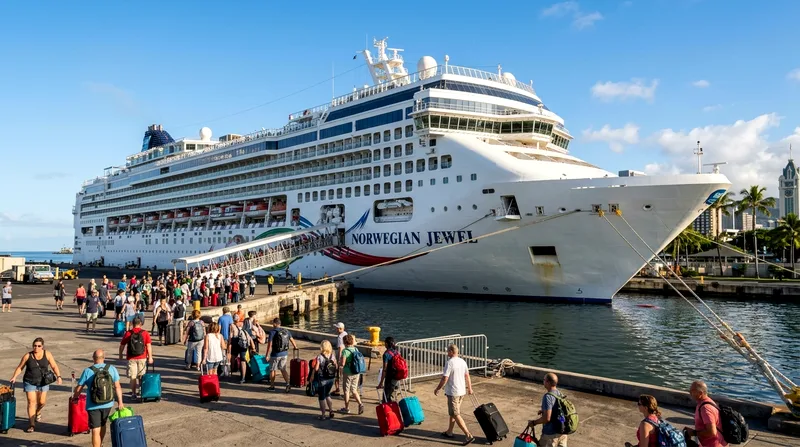
The appeal is the unpack-once model. Your cabin, meals, and entertainment travel with you, and you typically arrive at each port in the morning and depart in the evening. Shore excursions are booked through the cruise line or independently, and you're back on board for dinner. It's a fundamentally different rhythm than a land trip — compressed, scheduled, and less flexible about lingering somewhere that surprises you.
How a land-based island-hopping trip works
A land-based trip usually means flying into Honolulu or Kahului (Maui) on a direct flight from the US mainland, then either staying put on one island or booking short inter-island flights (mostly Hawaiian Airlines or Southwest) to add a second or third island. Flights between islands run around 30-45 minutes, which sounds trivial but adds up once you factor in airport time, bag claim, and picking up a new rental car at each stop.
Most experienced Hawaii travelers recommend picking two islands maximum for a one-week trip — Oahu and Maui, or Maui and the Big Island, for example — rather than trying to layer in all four. That's the trade-off: land trips let you go deeper, but covering multiple islands means repeating the "arrive, unpack, figure out a new place" cycle every few days, which some travelers find just as tiring as a cruise's rigid schedule.
Time Ashore and Island Coverage
This is where the Hawaii cruise vs land vacation debate gets decided for most people. Cruises offer breadth: you might technically visit four islands in a week. Land vacations offer depth: you spend real days, not just daylight hours, in fewer places. Island hopping in Hawaii by cruise and by land plane produce very different trip feelings even when the destinations overlap.
A cruise trades depth for breadth, while a land vacation trades convenience for flexibility and more time in each place.
Hawaii cruise vs land vacation compared by cost, time ashore and flexibility
| Option | Typical Cost Level | Time Per Island | Flexibility | Best For |
|---|---|---|---|---|
| Inter-island cruise (7 nights) | Moderate base fare, higher with extras | 4-6 hours per port day | Low — fixed schedule | First-timers wanting a sampler, low-effort planners |
| Single-island land stay (Maui or Kauai) | Moderate to higher, depends on lodging | Full days, unlimited | High | Couples, honeymooners, relaxation-focused trips |
| Two-island land trip (e.g. Oahu + Big Island) | Higher (flights, 2 rentals) | 3-4 full days per island | High | Families wanting variety without cruise structure |
| Four-island land trip | Highest, most logistics | 2-3 full days per island | Moderate — frequent transitions | Repeat visitors, experienced Hawaii travelers |
| Big-ship Pacific cruise (partial Hawaii stops) | Lower base fare, includes sea days | Fewer, shorter port days | Low | Budget cruisers prioritizing price over island time |
Cost levels and itineraries vary by season and operator; check current prices and routes before booking.
Port days versus full days on land
A typical cruise port day runs from roughly 7am or 8am arrival to a 5pm or 6pm departure — call it nine or ten hours, minus time spent disembarking, going through any local transport, and returning before the ship's all-aboard deadline. Subtract excursion travel time and you're often left with four to six hours of actual exploring per island.
A land vacation stay of four or five nights on Maui, by contrast, gives you full mornings, full evenings, and the flexibility to chase good weather or skip a rained-out day and try again tomorrow. You can watch a Haleakala sunrise, which requires a pre-dawn departure no cruise port schedule accommodates, or stay out for a sunset on the Kona coast without worrying about a departure horn.
Is a Hawaii cruise worth it for first-timers?
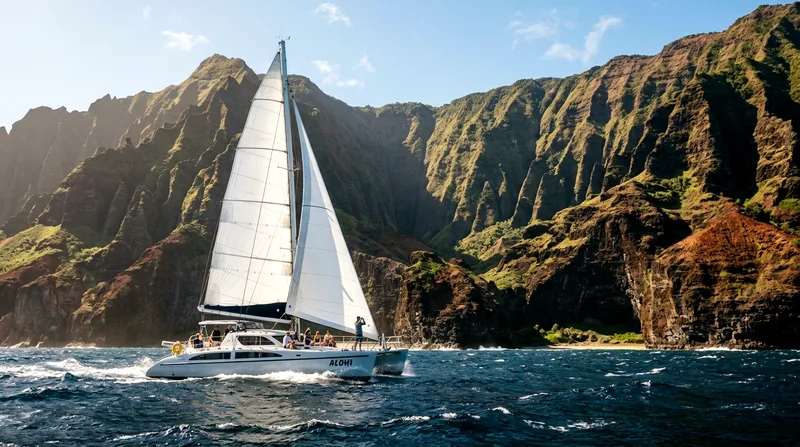
For a true first-time visitor trying to decide which islands deserve a longer return trip, a cruise can work well as a reconnaissance trip. Seeing Kauai's Napali Coast from the water, spending an afternoon in Hilo, and walking around Honolulu in the same week gives you a reasonable basis for picking where to go deeper next time.
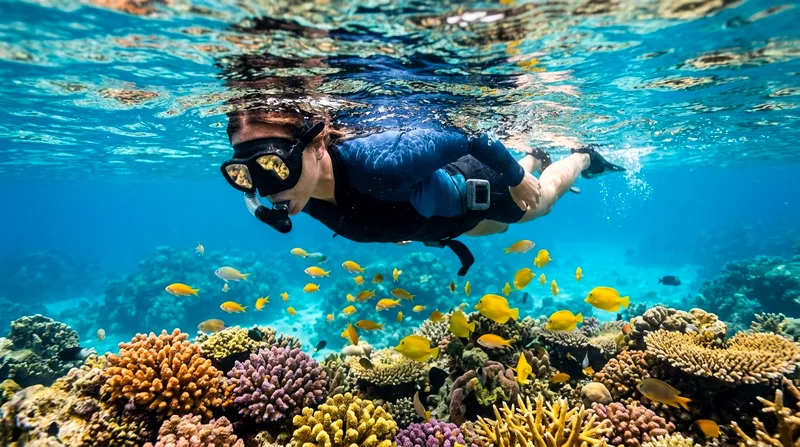
Where it falls short: if this is your one shot at Hawaii and you want to genuinely experience a place — hike Diamond Head at your own pace, snorkel Molokini without a ship schedule hanging over you, spend a full day exploring Volcanoes National Park on the Big Island — a cruise's port-day format will frustrate you. I'd steer first-timers with only one trip planned toward land, and save the cruise for people who've already been and want variety over depth.
Excursion Access and Effort
Excursion logistics are one of the most underrated differences between these two trip styles, and they shape your actual daily experience more than almost anything else on this list.
Sunrise, night and remote-area limits on cruises
Cruise schedules are built around docking and departure windows, which rules out anything that requires being somewhere before sunrise or after dark. Haleakala sunrise on Maui, stargazing atop Mauna Kea on the Big Island, and late sunset dinners on Kauai's west side are all effectively off-limits on a standard port-day itinerary. Remote spots that require a long drive — like the far end of the Road to Hana or the Waimea Canyon lookouts deep in Kauai's interior — are also tough to fit into a four-to-six-hour window once you subtract transit.
If those specific experiences are why you're going to Hawaii, book a land stay near that island instead. It's a real limitation, not a minor inconvenience, and it's worth being honest about before you book a cruise expecting to "do it all."
Packing, transfers and daily logistics
Cruises win clearly on daily logistics. You pack once, your cabin stays put, and you don't touch a rental car counter all week — a genuine relief for travelers who find multi-stop trips exhausting. Shore excursions are either booked through the ship (convenient, usually pricier) or independently through local operators meeting you at the pier (cheaper, slightly more planning required).
Land vacations require more hands-on effort: picking up and returning rental cars, repacking if you're changing islands, and researching parking and trailhead logistics yourself. It's more work, but it's also what gives you the freedom a cruise can't — the ability to change plans on the fly if a beach is too crowded or the weather shifts.
Best Choice for Seniors, Families and Couples
Who benefits most from each format depends heavily on mobility, group composition, and how much structure people in your group actually want.
Mobility, pace and onboard conveniences
For senior travelers or anyone with mobility limitations, a cruise has real advantages: no repeated airport security lines, no hauling luggage between hotels, and accessible cabins with ship staff on hand. You unpack once and the "hotel" comes to you at each island.
The trade-off is that shore excursions still require getting on and off the ship via gangway or tender, which can be a genuine obstacle at ports without direct dockside access — Kauai's Nawiliwili port is usually fine, but weather can force tendering at other stops. A land vacation, particularly a single-island stay at one well-chosen resort on Oahu or Maui, often suits seniors just as well if the goal is a slower pace without multiple transitions.
Kids, multigenerational groups and flexibility
Families with young kids often do well on cruises because of built-in kids' clubs, flexible dining times, and the fact that nobody has to drive anywhere after a long travel day. For multigenerational groups with wildly different energy levels — grandparents wanting rest, teenagers wanting adventure — a ship's variety of onboard activities can keep everyone occupied without constant group negotiation.
Couples and honeymooners, in my view, are usually better served by land vacations. A week split between a quiet Kauai stay and a few nights on Maui gives more romantic, less scheduled time than a ship full of families and fixed dinner seatings. If flexibility and privacy matter more to you than convenience, land wins this one clearly.
Final Verdict: Which Is Better?
There's no universal winner in the Hawaii cruise vs land vacation question — only a better fit for your specific group and priorities. Compared to a Caribbean cruise swing through Puerto Rico, or an island-hopping trip around Fiji or Tahiti, Hawaii's inter-island cruise is unusually convenient because the distances are short and nearly all sailing happens within US waters, no passport needed. But compared with a land-based stay in Bali or Costa Rica — where slow travel and immersion are the whole point — a Hawaii cruise's compressed port days will feel rushed to anyone chasing that kind of depth.
Choose the cruise if: you want to sample four islands in one trip, you're traveling with mobility concerns, you hate multi-stop logistics, or this is a reconnaissance trip before a longer return visit.
Choose a land vacation if: you want full days and evenings in each place, you're a couple wanting flexibility, you're budget-conscious and willing to manage your own lodging and car rental, or specific experiences — Haleakala sunrise, Mauna Kea stargazing, a full Road to Hana day — are non-negotiable for your trip.
A reasonable rule of thumb: first Hawaii trip and limited time off work, go land and pick two islands at most. Multiple trips already under your belt and craving variety without the planning, the cruise finally makes sense.
Frequently asked questions
Is a Hawaii cruise worth it compared with a land vacation?
It depends on what you want from the trip. A cruise is worth it if convenience and seeing multiple islands matter more than depth — you'll get a four-to-six-hour taste of each port. It's less worth it if you want full days, sunrise or nighttime activities, or a slower pace, since a land vacation delivers those far better for similar or sometimes lower total cost once cruise extras are included.
Is $5000 enough for a week in Hawaii?
Yes, for most travel styles. A week-long land vacation for two — flights, a mid-range hotel or condo, a rental car, meals, and a couple of paid activities — typically fits within that budget if you avoid peak-season resort rates on Maui's Wailea coast. A comparable cruise for two, once gratuities, drinks, and excursions are added to the base fare, often lands in a similar range, so the dollar amount isn't the deciding factor — your priorities are.
Is a cruise or a land trip better for seeing multiple Hawaiian islands?
A cruise technically covers more islands per week, since it can loop Oahu, Maui, the Big Island and Kauai without you touching a rental car. But a land trip hitting two islands via short inter-island flights gives you far more actual time in each place. If "seeing" means setting foot somewhere briefly, cruise wins; if it means experiencing a place, land wins.
What are common mistakes to avoid when visiting Hawaii?
The biggest mistake is trying to cover too many islands in too little time, whether by cruise or land — four islands in seven days leaves almost no room to actually relax. Other common errors: not budgeting for resort fees and parking on Oahu and Maui, underestimating inter-island flight connection times, and skipping sunscreen reef-safety rules, which several counties now enforce around protected reef areas.
How do I plan a Hawaii vacation?
Start by deciding cruise versus land based on how many islands you genuinely want to experience versus sample. Check gohawaii.com (the Hawaii Tourism Authority's official site) for current inter-island transportation options and seasonal event info, pick one or two islands if going the land route, and book inter-island flights or your cruise cabin at least two to three months ahead during peak summer and winter holiday periods when availability tightens.