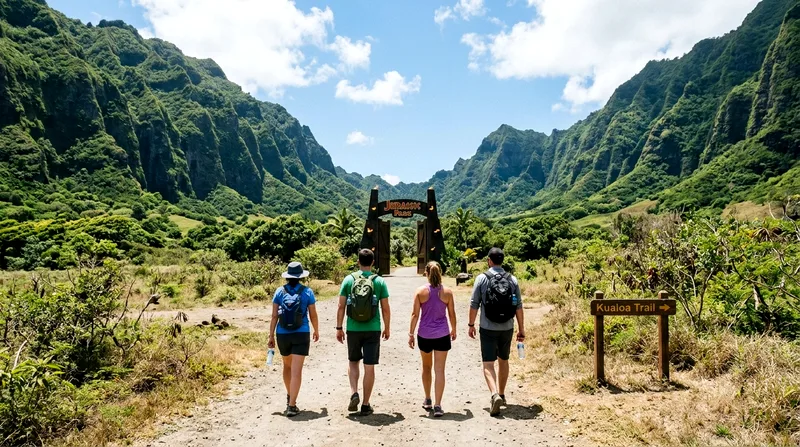
Jurassic Park Filming Locations in Hawaii: A Scene-by-Scene Map
Find every Jurassic Park filming location in Hawaii, from Kualoa Ranch on Oahu to Manawaiopuna Falls on Kauai, with scene details and what you can visit.
9 min read · 21 Oct 2026
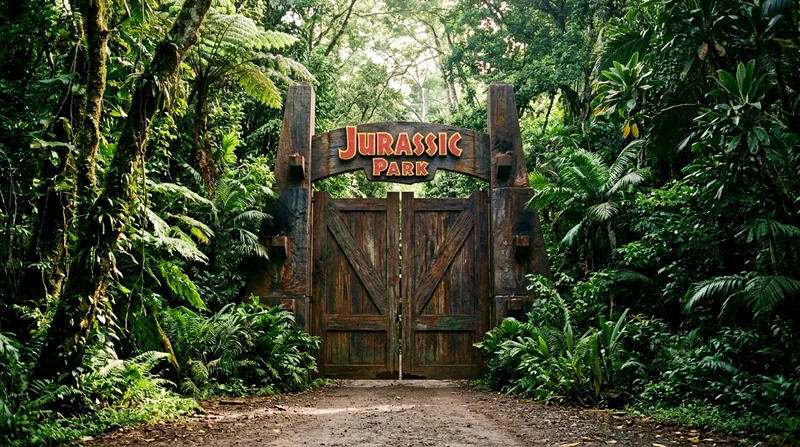
Tours & activities
Compare Jurassic Park tours in Hawaii, from Kualoa Ranch UTV and bus tours to Kauai helicopter flights, and learn what to check before you book.
Hawaii's valleys and ridgelines doubled as Isla Nublar and Skull Island, but only some tours actually reach the sets, so matching the format to your group matters more than the movie branding on the booking page. A "Jurassic Park tour Hawaii" search turns up a mix of bus tours, UTV convoys, helicopter flights and self-guided drives — all covering overlapping ground, at very different paces and price points.
The honest starting point: nearly all of this activity happens on Oahu, at Kualoa Ranch, in Ka'a'awa and Hakipu'u Valleys. Kauai has its own filming history, but far fewer organized "movie tours" — more on that below. If someone promises a Jurassic Park tour on Maui or the Big Island, be skeptical; neither island has comparable filming credits for this franchise.
What suits you depends on three things: how much time you have, how many people are in your party, and whether you want narration and trivia or just the scenery. A couple with half a day free and a casual interest in Jurassic World will get plenty from a standard bus tour. A photographer chasing a specific ridge shot from Jurassic Park (1993) needs a tour that actually stops at that overlook long enough to shoot it — not all of them do.
If you've got kids who liked the movies but don't need chapter-and-verse trivia, the bus-based ranch tours are the easiest choice. They're narrated, seated, shaded, and typically run 2 to 3.5 hours including stops for photos at valley overlooks. There's no driving skill required and no minimum age for most bus tours, though check the specific policy — lap-held infants are sometimes free, and car seats generally aren't provided or required on these vehicles.
The trade-off is pace. Buses stop at fixed points and move on a schedule, so you won't linger at a single location the way a self-guided visitor might. For families who just want the "we stood where the T. rex paddock was" photo without a lot of walking, that's a fair compromise. Combine it with one of Kualoa Ranch's other activities — a zipline or the Secret Island beach add-on — and you've got a full day that isn't all about dinosaurs.
Serious fans want two things buses don't always give: time at specific locations and unobstructed sightlines. UTV (side-by-side off-road vehicle) tours solve part of this — you drive yourself, in a small group, with more flexibility to pause than a 20-seat bus allows. Self-guided driving tours on the ranch's own trails go further, letting you set your own pace entirely, though they come with less narration and no guide pointing out exactly which ridge appeared in which scene.
For buffs who want the widest possible view of the terrain — the sweep of Ka'a'awa Valley that stood in for Isla Nublar, or the ridgelines used in Kong: Skull Island — a helicopter tour over Oahu or Kauai delivers scale no ground tour can match, at a real cost premium and with no stopping. If your priority is the single best photo, ground tours with flexible timing usually beat air tours, which move fast and shoot through glass or an open door.
"Hawaii movie tours" isn't one product — it's a spread of formats that differ mainly in vehicle, group size, and how much ground you cover. Bus tours are the default for a reason: high capacity, fixed loop, narration included, and generally the lowest cost per person. UTV tours cost more and seat fewer people, but you're driving (a valid driver's license is typically required, and there's often a minimum age to drive versus ride), and the open-air format feels more like being in the valley than looking at it through a window.
Self-guided tours — walking or e-bike routes through parts of the ranch — are the quietest option and the cheapest after a basic bus ticket, but they reach the fewest of the actual filming vantage points and have zero trivia unless you bring your own research. Helicopter tours are the opposite extreme: short (often 30 to 60 minutes), expensive relative to ground tours, and dependent on weather, but they cover both valleys and coastline no land vehicle reaches.
Bus tours cover the most ground for the least effort, while helicopter and private tours trade cost for either scale or flexibility.
Jurassic Park tour Hawaii formats compared by duration, access and best use
| Tour Type | Typical Duration | Access to Film Sites | Physical Effort | Best For |
|---|---|---|---|---|
| Ranch bus tour | 2-3.5 hours | Good, fixed stops | Low | Families, first-time visitors |
| UTV tour | 1.5-2.5 hours | Good, flexible stops | Moderate | Active couples, small groups |
| Self-guided tour | Flexible, 1-2 hours | Limited | Low-Moderate | Independent travelers, budget-conscious |
| Helicopter tour | 30-60 minutes | Aerial only, no stops | Low | Photographers, special occasions |
| Private tour | 2-4 hours | Good, customizable | Low-Moderate | Film buffs, accessibility needs |
| Combo/multi-movie tour | 2-4 hours | Good, fixed stops | Low-Moderate | Fans of multiple franchises |
Durations and stops vary by operator and season; always check the current itinerary and inclusions before booking.
The bus format — often marketed as a "Jurassic Adventure Tour" or similar — typically runs under four hours round trip from check-in to drop-off, with several stops for photos at overlooks used in Jurassic Park, Jurassic World, and Kong: Skull Island. It's wheelchair-accessible in a general sense (ask the operator about specific vehicle access), low-effort, and the best value per person if you're part of a family or group of four or more.
UTV tours run a similar valley route but let you drive a two- or four-seat vehicle in a convoy, with a guide leading. Expect dust, sun exposure, and a bumpier ride — not ideal if anyone in your group has back problems or is pregnant, and most operators restrict driving to adults with a valid license, with minimum ages for passengers too. Self-guided options exist on part of the property for people who'd rather skip narration and set their own rhythm, but they don't typically reach every valley stop the guided tours do.
Helicopter tours over Oahu and Kauai give you the only aerial perspective on these locations, and on Kauai specifically, they're close to the only organized way to see film locations at all, since much of the island's filming terrain (used in Jurassic Park's original waterfall and jungle shots) sits deep in areas with no road access. Expect a 30- to 60-minute flight, a real weather dependency, and a noticeably higher price than any ground tour.
Private tours — a dedicated guide and vehicle for your group only — exist at Kualoa Ranch for people who want flexibility on timing or who are traveling with someone who needs a non-standard pace. Combo tours bundle Jurassic franchise stops with other film history on the same land: Kong: Skull Island, parts of Jumanji, and various TV productions have all used these valleys, so a single tour can cover multiple fandoms in one outing rather than requiring separate bookings.
It helps to know the geography before you book, because "Hawaii filming locations" covers a lot of ground that isn't actually open to tourists. The useful, accessible core is small: Kualoa Ranch on Oahu's Windward side, and a handful of Kauai locations reachable mainly by helicopter or long hiking routes.
Kualoa Ranch isn't a theme park built around the movies — it's a working 4,000-acre cattle and agricultural ranch that happens to have leased its valleys to Hollywood for decades. That matters for expectations: there are no animatronic dinosaurs, no reconstructed gates, no visitor center full of props. You're looking at the same open land the cameras pointed at, shaped by weather and ranching rather than preserved as a set.
Ka'a'awa Valley and Hakipu'u Valley, both on Kualoa Ranch land, are the two locations doing most of the work. Ka'a'awa's dramatic ridgeline is recognizable from Jurassic Park's helicopter approach shots and multiple Jurassic World sequences; Hakipu'u has stood in for parts of both the Jurassic franchise and Kong: Skull Island. These two valleys are the actual destination of nearly every "Jurassic Park tour Hawaii" product you'll find, regardless of whether it's branded as a bus, UTV, or private tour.
One thing worth knowing before you go: the ranch's own promotional material understandably leans into the movie connection, but a fair amount of tour time is general ranch history, agriculture, and other film credits (there's TV and commercial work here too) rather than wall-to-wall Jurassic trivia. If that's not what you want, ask the operator directly how much of the narration is Jurassic-specific before booking.
Kauai's role in the original Jurassic Park is real but harder to visit on the ground — Manawaiopuna Falls (known informally as "Jurassic Falls") and parts of the Na Pali Coast and Hanapepe Valley appeared in the 1993 film, but much of this terrain sits on private land or in roadless, cliff-bound territory. For most travelers, a helicopter tour is the realistic way to see it; a small number of guided ground tours reach Manawaiopuna Falls by permission, but they're limited and should be booked well ahead.
If you're choosing between an Oahu-based Kualoa tour and a Kauai-based film flight, understand you're choosing between different experiences, not competing versions of the same one. Oahu gets you out of the vehicle and into the valley. Kauai, for this particular movie, is largely a flyover experience unless you book one of the rare ground-access tours.
Before you commit to any Jurassic World filming locations tour, get specific answers on a handful of points that reviews often flag as problems after the fact. Tour descriptions can be vague about group size, and "scenic valley tour" sometimes means a 30-person bus with limited photo-stop time rather than the intimate experience the marketing photos suggest.
Check whether the price includes ranch general admission or whether that's a separate add-on — some combo packages bundle Jurassic-specific stops with zipline or beach access, others charge for each separately. Ask about group size: a 40-person bus tour feels very different from a 10-person UTV convoy, and that affects both photo opportunities and how much individual attention the guide can give to questions about specific scenes.
Age and health restrictions matter more here than on, say, a boat tour. UTV driving generally requires a minimum age (often mid-teens with a licensed adult, or 18+ to drive solo) and a valid driver's license; height or weight limits sometimes apply to harnessed activities bundled into combo tours. Pregnant travelers and anyone with back or neck issues should ask specifically about the UTV and helicopter options, since both involve vibration or turbulence a bus tour doesn't.
Weather cancels helicopter tours more often than it cancels ranch tours, since low cloud over Kauai's cliffs is common even on an otherwise sunny day — ask about the rebooking or refund policy specifically for weather holds, not just general cancellation terms. For ranch tours, ask about shade, water availability, and whether the vehicle is open-air (dusty, hot, no AC) or enclosed, because Oahu's Windward side gets genuinely hot by midday.
Confirm pickup logistics too: some tours include hotel shuttle service from Waikiki, others require you to drive yourself to Kualoa Ranch's own grounds, roughly 40 minutes from Waikiki by car. If you're not renting a car on Oahu, that detail decides whether a tour is realistic for your itinerary at all. Read recent reviews on whatever booking platform you're using — not just the star rating, but comments about actual group size and stop duration, since that's where real logistics show up.
Timing affects both availability and what you'll actually see once you're there, and this is where a lot of first-time visitors get caught out by booking too late or showing up at the wrong hour.
Book Kualoa Ranch bus and UTV tours at least a few days ahead in slower months, and a week or more ahead during peak travel periods (summer, winter holidays) when Oahu sees its highest visitor numbers. Popular time slots sell out first. Helicopter tours should be booked even further ahead if you have a fixed departure date, precisely because weather cancellations mean operators need flexibility to rebook you into another slot before you leave the islands — booking on your last possible day leaves no room for a weather hold.
Rain is common on the Windward side of Oahu and on Kauai generally; it rarely cancels a ground tour outright but can mean muddy trails on UTV routes and socked-in ridgelines that ruin the view on a helicopter flight. Check the forecast two or three days out and consider shifting an outdoor-heavy tour earlier in your trip, leaving slack to rebook if needed.
Morning tours tend to have clearer skies and cooler temperatures, which matters more on an open-air UTV than it does on an air-conditioned bus. Afternoon tours fight both the heat and, on Kauai, the daily buildup of cloud over the mountains that can thicken by early afternoon. If photography is your priority, book the earliest slot the operator offers.
Shoulder-season months — roughly April-May and September-October — generally mean fewer visitors competing for tour slots and marginally better availability, compared to the crowds around summer break or Christmas/New Year. It's not a dramatic difference the way it might be between, say, Cancun's spring break crush and its quieter fall, but it's enough to matter if you want a specific time slot rather than whatever's left.
Most of the ground-level filming for the Jurassic franchise happened at Kualoa Ranch on Oahu, specifically in Ka'a'awa and Hakipu'u Valleys. Kauai contributed key scenes too, including the waterfall sequence at Manawaiopuna Falls in the original 1993 film, but that location is harder to reach and mostly seen via helicopter tour rather than ground tour.
For most film fans, the standard bus tour (often called a Jurassic Adventure Tour or similar) gives the best balance of cost, comfort, and stop coverage across both valleys. If you want more time at each stop and don't mind driving yourself, a UTV tour gets you closer to the terrain with more flexibility, at a higher price and more physical exposure to sun and dust.
Bus-based valley tours covering Jurassic franchise locations at Kualoa Ranch typically run between 2 and 3.5 hours door to door, including narration and multiple photo stops. Exact length varies by operator and route, so confirm the duration when you check current prices and reviews before booking.
Yes — Kualoa Ranch's valleys have also appeared in Kong: Skull Island, Jumanji, and several TV series, so combo tours bundle stops relevant to multiple franchises into one outing. These suit fans who want to cover more cinematic ground in a single visit rather than booking separate Jurassic-only and Kong-only tours.
Bus tours generally have no strict minimum age and welcome young children, though car seats usually aren't provided. UTV tours typically require passengers to meet a minimum age (often around 5-8 years depending on operator) and require an adult driver with a valid license, sometimes 18 or older. Always confirm age and height requirements directly with the operator before booking.
Find every Jurassic Park filming location in Hawaii, from Kualoa Ranch on Oahu to Manawaiopuna Falls on Kauai, with scene details and what you can visit.
9 min read · 21 Oct 2026
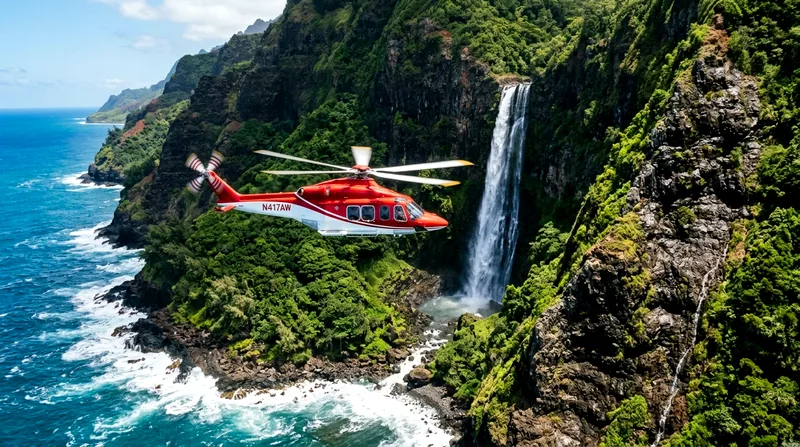
Compare the Jurassic Falls helicopter tour with standard Kauai flights. See who the Manawaiopuna Falls landing suits and what to check before booking.
9 min read · 21 Oct 2026
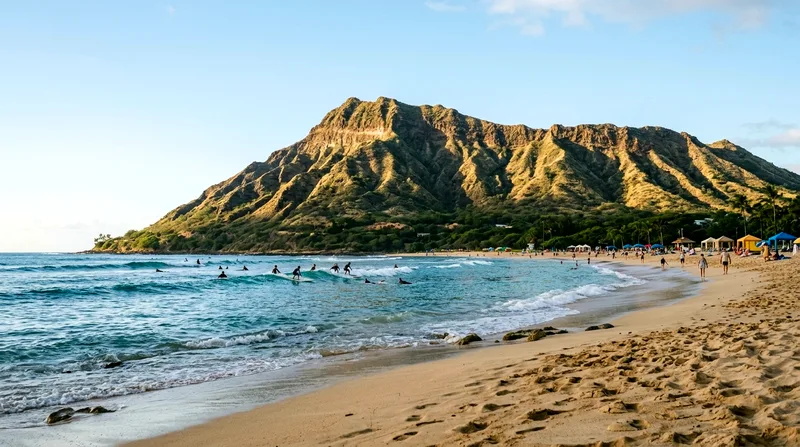
Plan a Hawaii Five-0 filming locations tour on Oahu. Compare guided, private and self-guided options, see key Honolulu sites, and know what to check before booking.
9 min read · 21 Oct 2026
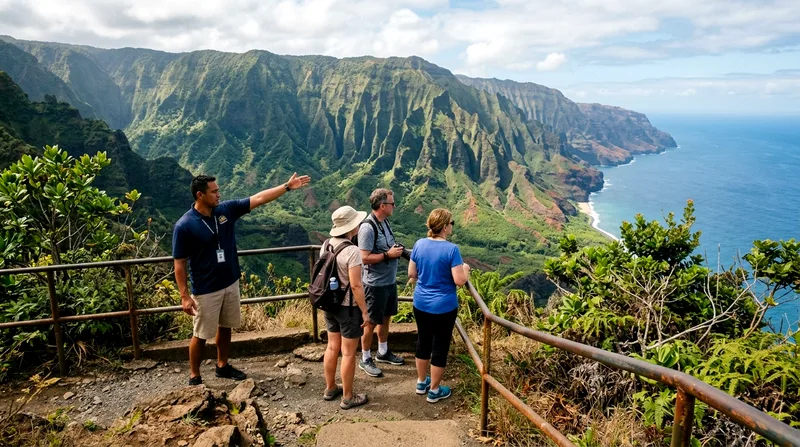
Compare the best Kauai movie tour styles, from group bus rides to private guides. See filming locations, what to look for when booking, and when to reserve.
10 min read · 21 Oct 2026
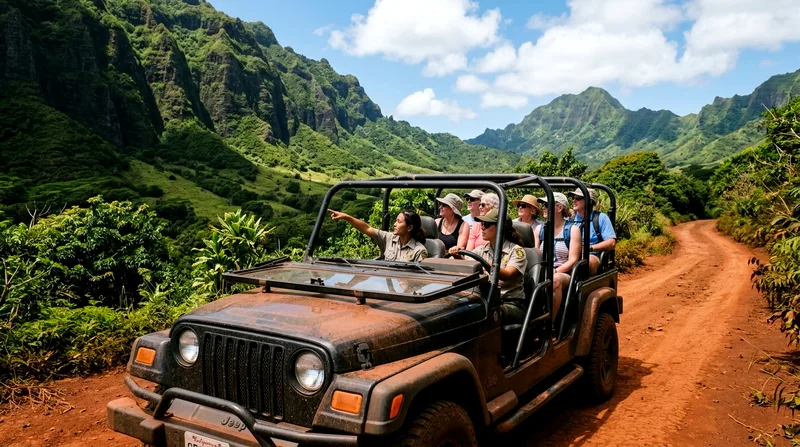
Kualoa Ranch Movie Tour vs Jurassic Adventure Tour: compare the film sets, vehicles, duration and which suits younger kids best before you book on Oahu.
9 min read · 21 Oct 2026
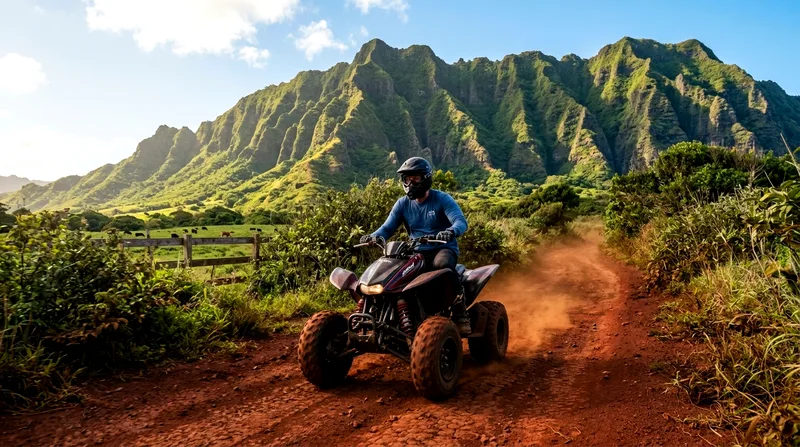
Compare every Kualoa Ranch tour, from UTV and horseback to movie sites. Learn how tickets work, getting there from Waikiki and which tours sell out first.
11 min read · 21 Oct 2026