Compare catamaran and raft Molokini snorkel tours, morning vs afternoon departures, and Turtle Town add-ons for clearer water and fewer crowds.
Is a Molokini Snorkel Tour Worth It?
Molokini Crater sits about three miles off Maui's southern shore, a partially submerged volcanic cone whose crescent wall blocks wind and swell, creating one of the calmest, clearest patches of open ocean in Hawaii. A Molokini snorkel tour is, for most visitors, worth the half-day and the fare — the water clarity alone (commonly 100+ feet of visibility on a good day) is hard to match anywhere else on Maui, including the shoreline reefs at Kaanapali or Wailea. That said, it's not a guaranteed showstopper. Conditions shift with wind and swell direction, and on a rough day you're looking at choppy surface water and reduced visibility, same as any open-water snorkel site.
Compare it honestly to similar experiences elsewhere: Bora Bora's lagoon snorkeling is shallower and warmer but far more expensive to reach; Fiji's soft coral sites rival Molokini's clarity but require a multi-hour flight beyond Hawaii itself. Within Hawaii, Molokini beats most shore snorkeling for fish density and water clarity, simply because there's no runoff, no sand stirred by waders, and it's protected as a marine reserve.
What Makes the Crater Special
The crater's shape is the whole trick. Its curved wall absorbs wave energy before it reaches the interior, so the water inside stays notably calmer than the open channel between Maui and Kahoolawe. That geology is why boats anchor inside the crescent rather than outside it — you're snorkeling in a natural, semi-enclosed basin rather than exposed ocean. Depths inside range from a few feet near the rim to over 100 feet toward the open end, which is also why it draws scuba divers, not just snorkelers.
Marine Life You Can Expect
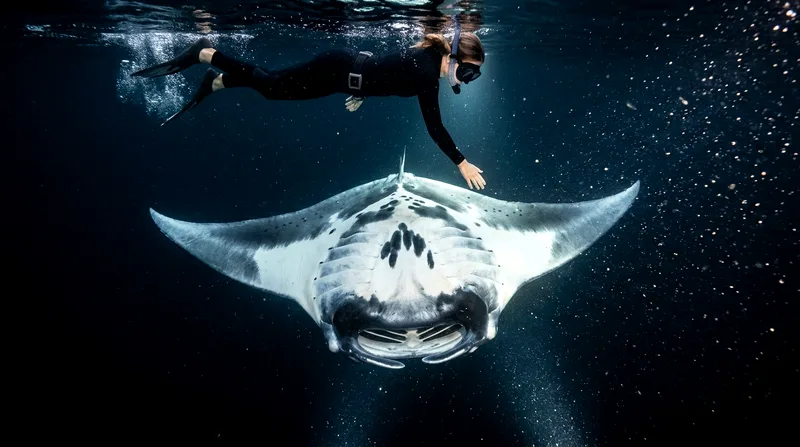
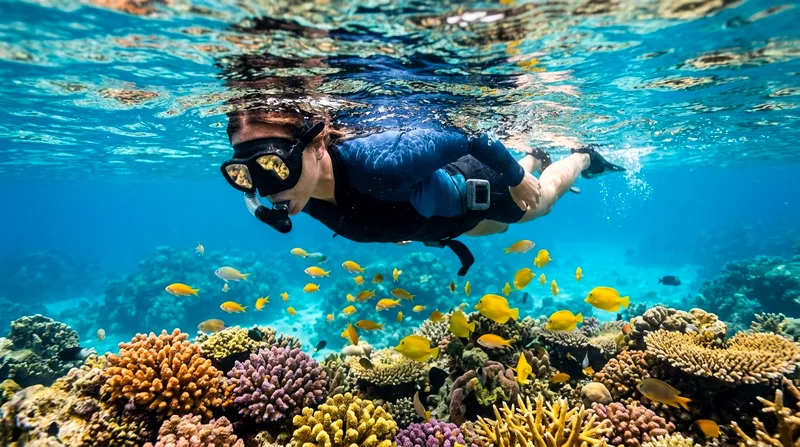
Expect reef fish in real numbers — yellow tang, parrotfish, triggerfish, Moorish idols — along with the occasional reef shark resting on the sandy bottom and, less commonly, manta rays passing through in open water beyond the rim. Don't expect guaranteed turtles inside Molokini itself; they're far more reliable at Turtle Town (covered below). Visibility and fish activity both drop on overcast, high-surf days, so temper expectations if the forecast looks rough.
Can You Snorkel Molokini on Your Own?
No — and this is worth saying plainly because people ask. Molokini is three miles offshore in open ocean with no beach access and no public ferry. There's no kayaking out there safely, either; the crossing is exposed to wind and current that can overpower even strong paddlers. Every legal way to snorkel Molokini involves a licensed tour boat departing from Maalaea Harbor or, less commonly, Makena Landing near Kihei.
This is actually part of what keeps Molokini worth visiting. Because access is gated by boat capacity, the crater never gets the walk-up crowding you'd find at a shore site like Lahaina's reef flats. It also means you're committed to a fixed schedule — you can't just decide to go at sunset on a whim the way you might drive to a Kihei beach.
Why Boat Access Is Required
Beyond the distance and current, there's a practical safety layer: boats carry rescue swimmers, first-aid equipment, and radios, which matters given Molokini's depth and occasional strong current near the open end of the crescent. Private boat owners can technically anchor there with a permit, but that's not a realistic option for visiting travelers — tour operators have moorings and local knowledge of where to position the boat based on wind direction that day.
Marine Reserve Rules
Molokini is a Marine Life Conservation District, which means no fishing, no touching or standing on coral, and no removing anything — shells included. Operators brief guests on this before entry, and crews do enforce it, mostly by calling out swimmers who drift too close to the reef wall. Sunscreen matters here too: reef-safe (mineral, non-nylon) sunscreen is strongly encouraged, and some boats restrict or ban oxybenzone-based products outright given the reserve status.
Catamaran vs Raft Molokini Tours
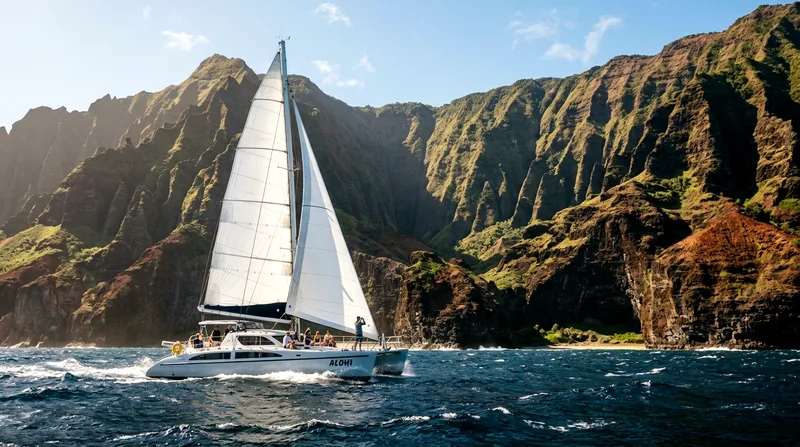
This is the real decision point for a Molokini snorkel tour, more than which company you book. Catamarans are the larger vessels — typically carrying 40 to 150 passengers — with shaded decks, restrooms, and sometimes a water slide or second story. Rafts (rigid-hull inflatables) carry roughly 6 to 24 passengers, run faster, and get you out to the crater quicker, often in 30-40 minutes versus an hour or more by catamaran from Maalaea.
Neither option is objectively "better" — it depends on who's in your group. Families with small kids or anyone with mobility concerns generally do better on a catamaran: there's shade, a bathroom, and room to sit out a lap if someone gets queasy. Couples and solo travelers who want a faster, more active trip — and who don't mind sitting on a pontoon tube bouncing over chop — often prefer the raft for the shorter crowd-to-guide ratio and quicker in-water time.
Vessel type and departure time matter more to your Molokini experience than which specific company you book.
Molokini snorkel tour options compared: catamaran vs raft vs departure time
| Option | Group Size | Crossing Time | Best For | Comfort Level |
|---|---|---|---|---|
| Large catamaran | 40-150 passengers | Approx. 60-75 min | Families, seniors, groups | Shade, restroom, stable ride |
| Mid-size catamaran | 20-40 passengers | Approx. 45-60 min | Couples, small groups | Moderate space, some shade |
| Rigid-hull raft | 6-24 passengers | Approx. 30-40 min | Active travelers, solo/couples | No restroom, less shade, faster |
| Early morning departure (any vessel) | Varies | N/A | Everyone wanting clear water | Calmest conditions, smallest crowds |
| Afternoon departure (any vessel) | Varies | N/A | Budget-focused travelers | Choppier water, busier anchorage |
Figures are typical ranges based on standard Maalaea Harbor operations; check specific vessel details and current schedules when booking.
Comfort, Space and Accessibility
If you're traveling with young children, seniors, or anyone who tires easily treading water, the catamaran's amenities aren't a luxury — they're the difference between an enjoyable morning and a miserable one. Restrooms matter on a half-day trip. Shade matters in Hawaii's midday sun, especially on the crossing back when everyone's wet and the wind picks up. Catamarans also tend to offer swim platforms and ladders that are easier for older passengers to use than clambering over a raft's inflatable tube.
Small-Group Raft Trade-Offs
Rafts trade comfort for intimacy and speed. With fewer passengers, you get more attention from crew, a faster ride (less time spent getting there and back), and often access to a second snorkel site that bigger boats skip because of time constraints. The trade-off: no bathroom on most rafts, less shade, and a bumpier ride in any kind of swell — not ideal if you're prone to motion sickness or traveling with a toddler who needs to nap.
Best Time of Day and Season
Timing shapes a Molokini snorkel tour more than almost any other variable, including which boat you pick. Wind on Maui's south shore builds through the morning and typically peaks in early-to-mid afternoon, which stirs up chop both on the crossing and inside the crater. That's the single biggest reason nearly every operator runs their first departure near sunrise.
Morning vs Afternoon Departures
Early morning trips — generally the first departure of the day, often before 7am — get the calmest water, the best visibility, and noticeably thinner crowds at the mooring. By mid-morning, several boats are commonly anchored in the crescent at once, and by early afternoon, wind chop can make the crossing rough and snorkeling less comfortable. If you can only book one slot, pick the earliest one offered. Afternoon departures exist and cost less on some operators' schedules, but you're trading savings for choppier conditions and a more crowded anchorage.
Seasonal Visibility and Sea Conditions
Summer months (roughly May through September) tend to bring calmer trade winds and more consistently clear water, while winter (November through March) brings larger north swells that can occasionally cancel trips altogether — more on that below. Winter also overlaps with whale season, so some boats slow down near Molokini to let guests spot humpbacks on the crossing, which is a nice bonus but adds to the trip length. Neither season rules out a good day — it's really about picking an early departure and checking the marine forecast, not the calendar month.
Booking, Gear and What to Expect
A typical half-day Molokini crater tour runs four to five hours door-to-door, including the ride from Maalaea Harbor, roughly 45-90 minutes of snorkel time at Molokini, often a second stop (Turtle Town or another reef), and a light breakfast or lunch on board. Most trips include basic mask, snorkel, and fin rental in the price; some upsell wetsuits, prescription masks, or snorkel-vest flotation for a little extra.
How to Compare Tour Operators
Don't just compare price — compare departure time, boat size, and how many stops are included. A cheaper afternoon trip on a 100-passenger catamaran with one stop is a different product than a pricier early-morning raft trip with two stops and a smaller group. Read what's included carefully: some list "continental breakfast" that's really coffee and pastries, while others serve a real hot breakfast and deli lunch. Check the cancellation policy too — most Maui operators offer a full refund or free reschedule for weather cancellations, but policies differ on passenger-initiated changes, often requiring 24-48 hours' notice. Compare current boat tours and prices before you book, since schedules and seasonal offerings shift.
Gear, Safety and Cancellation Policies
Crews run a safety briefing before anyone enters the water, covering current, boundaries, and signaling for help. Flotation devices (snorkel vests or noodles) are usually available free for weaker swimmers, and I'd recommend using one even if you're a confident swimmer — open water fatigue sneaks up faster than pool fatigue. Weather cancellations happen a handful of times a year, mostly in winter during high-surf advisories; operators generally rebook rather than simply refund, so ask about that policy specifically if your travel dates are tight.
Turtle Town and Other Add-Ons
Turtle Town is a reef area off south Maui, roughly between Makena and Wailea, named for its reliable green sea turtle sightings. Pairing it with Molokini is extremely common — most half-day combo trips hit Molokini first (while water's calmest) then swing by Turtle Town on the way back. It's a smart add-on because the two sites are genuinely different experiences: Molokini for clarity and fish volume, Turtle Town for a near-guaranteed turtle encounter in shallower, slightly murkier water.
Combined Molokini and Turtle Town Trips
If a tour offers both stops, take it over a Molokini-only trip almost every time — the extra 30-45 minutes in the water is worth the modest time cost, and turtles are consistently one of the most requested sightings among Maui visitors. One caution: Turtle Town visibility is noticeably lower than Molokini's, often 20-40 feet rather than 100+, since it's closer to shore and shallower. Don't expect the same dramatic clarity; expect turtles instead.
Nearby South Maui Activities
Since most Molokini trips depart from Maalaea Harbor, it's worth basing yourself in Kihei or Wailea for easy access rather than driving from West Maui or Upcountry at 5:30am. South Maui also gives you easy same-trip pairing options — the Maui Ocean Center aquarium sits right at Maalaea Harbor, making it a reasonable rainy-afternoon follow-up after a morning boat trip.
Frequently asked questions
Is snorkeling in Molokini Crater worth it?
Yes, for most visitors — the water clarity (often 100+ feet) and fish density beat nearly every shore snorkel site on Maui. It's less worth it on a rough-weather day or if you're prone to seasickness and book an afternoon slot when wind chop is highest; in that case a shore snorkel at a calmer bay might serve you better.
Can you snorkel Molokini Crater on your own?
No. Molokini sits three miles offshore with no beach or public ferry access, and currents make an independent kayak or swim crossing unsafe. Every legitimate way to snorkel there requires booking a licensed tour boat from Maalaea Harbor or Makena Landing.
What is the best time of day to snorkel at Molokini Crater?
Early morning, ideally the first departure of the day before wind picks up — typically before 7am. Water is calmer, visibility is better, and fewer boats are anchored at the site. Afternoon trips are cheaper on some schedules but trade away clarity and crowd-free time.
What is the difference between catamaran and raft tours?
Catamarans carry 40-150 passengers with shade, restrooms, and a smoother ride — better for families, seniors, or anyone prone to motion sickness. Rafts carry 6-24 passengers, reach Molokini faster, and offer more personal attention from crew, but skip restrooms and shade and ride rougher in swell.
Should I bring my own snorkel gear to Molokini?
It's optional — most tours include mask, snorkel, and fins in the price. Bring your own if you have a prescription mask, a preferred fit, or sensitive skin that reacts to shared silicone gear; otherwise rental gear is perfectly serviceable for a single half-day trip.