Planning a Kona manta ray night snorkel? Compare tour types, group sizes and sighting odds, plus tips for nervous swimmers and kids before you book.
Who Each Manta Ray Night Snorkel Suits
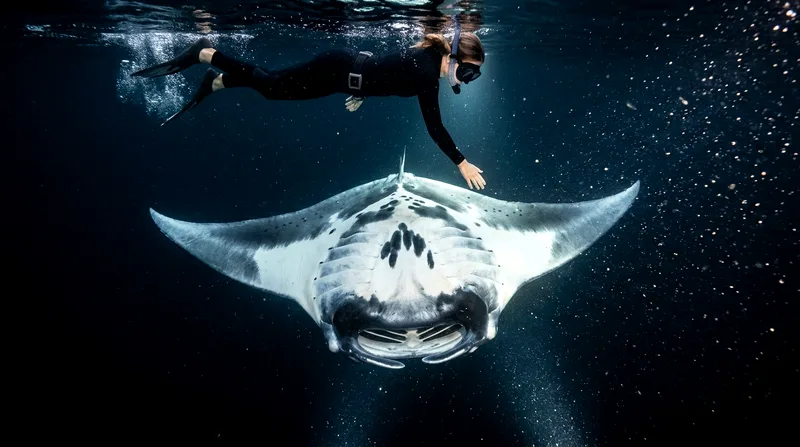
A Kona manta ray night snorkel puts you in dark, open ocean water after sunset, floating above lights that draw plankton — and, if the night cooperates, manta rays with wingspans up to 12 feet feeding just below you. It sounds intense, and for a few minutes before you get in, it is. Once you're floating on the surface holding a board, most people relax fast, because you're not required to dive, kick hard, or go anywhere.
This tour is not one-size-fits-all, though. Confident swimmers and anyone who has snorkeled reef sites in Maui or the Caribbean will find the mechanics easy. Nervous swimmers can still do it, but they need the right boat and setup — more on that below. I would not recommend this trip for anyone who gets genuinely frightened by dark water or who has never snorkeled before and wants their first attempt to happen at night, offshore, in open ocean. Practice in daylight at a calm bay like Kahaluu first.
Nervous Swimmers and First-Timers
If you're anxious about open water, book a smaller boat (6-14 passengers) rather than a large catamaran carrying 40-plus guests, and tell the crew ahead of time. Reputable operators like Sea Quest Hawaii and Big Island Divers run smaller vessels and give a thorough in-water briefing before anyone enters. You'll typically hold onto a floating board or a lit pool-noodle-style ring, face down, breathing through a snorkel — no fins kicking required, no need to swim far. The crew stays in the water with the group. If you panic at any point, you signal and a guide swims you back to the boat ladder within seconds. That said, if you've never used a mask and snorkel before, do a trial run in a hotel pool or at a calm beach during the day. Night water, even shallow and calm, is not the place to learn the basics.
Families with Children
Most operators set a minimum age, commonly around 8 to 10 years old, and require kids to be competent swimmers comfortable with a mask and snorkel in open water. A Kona manta ray snorkel for kids works best with smaller boats and a low guest-to-guide ratio — ask directly how many crew will be in the water, not just on deck. Expect your child to hold the floating board the entire time rather than swim freely; this cuts down on anxiety and energy loss. If your kids are younger than the minimum age or inexperienced in the water, consider booking a daytime snorkel at Kealakekua Bay or Two Step instead, and save the night tour for a future trip when they're older. Some families split the group — one parent takes older kids on the night tour while the other stays at the Outrigger Kona Resort and Spa pool with younger children.
How the Kona Manta Ray Night Snorkel Works
The logistics are fairly standardized across Kona operators. Boats depart from Keauhou Bay or Honokohau Harbor in the early evening, time the crossing to arrive at the site around dusk, and anchor near one of a handful of known manta feeding spots. Briefings cover gear, hand signals, and what to do if you want to exit the water. Trips typically run two to three hours total, with 45 minutes to an hour of actual in-water time once lights are set and conditions are checked.
Lights, Plankton and Manta Feeding
Boats lower underwater lights that attract plankton, and the plankton in turn attracts manta rays, which feed by barrel-rolling through the water column with their mouths open. This is a natural feeding behavior, not a trained performance, and it's the reason sightings are never guaranteed — mantas go where the food is, and some nights the plankton bloom is thin. When mantas do show, they often pass within a few feet of snorkelers, which is startling the first time and genuinely memorable after that. Guides position the group around the light source and keep everyone oriented so no one accidentally kicks a passing ray.
Floating on a Board or Ring
Nearly all tours use a flotation system — a rigid surfboard-style float or a circular lit ring — that snorkelers hold onto in a line or circle, facing down toward the light. This keeps everyone stationary, visible to the crew, and out of the way of the mantas' feeding path. You are not expected to free-dive or swim laps around the site. Wetsuits (usually included) help with buoyancy and warmth, since water temperatures at night feel cooler than they do during a daytime reef snorkel even in a Hawaii summer.
Manta Tour Types Compared
Kona's manta trips split into a few real categories, and picking the right one matters more than picking a specific company. The biggest divide is snorkel versus scuba dive, followed by boat size, and finally which bay the operator uses.
Small-group snorkel boats out of Keauhou Bay offer the best balance of safety, visibility and cost for most travelers.
Kona manta ray night snorkel tour types compared
| Tour Type | Typical Group Size | Experience Level | Best For |
|---|---|---|---|
| Small-group snorkel (Keauhou Bay) | 6-14 guests | Beginner-friendly | Families, nervous swimmers, couples |
| Large-boat snorkel/party cruise | 30-50 guests | Beginner-friendly | Budget-conscious groups, solo travelers |
| Scuba dive (certified) | 6-12 divers | Open-water certified | Experienced divers wanting the floor view |
| Discover scuba add-on | 2-6 per instructor | No cert required, supervised | Adventurous first-timers wanting to try diving |
Group sizes and inclusions vary by operator and season; confirm current caps and requirements when booking.
Snorkel vs Dive, and Small vs Large Boats
Snorkel tours require no certification and keep you at the surface, which suits the vast majority of visitors. Scuba dive versions require an open-water certification (or a supervised discover-dive add-on) and put you on the sea floor looking up at the mantas silhouetted against the light — a different, often more dramatic angle, but with more gear, more briefing, and a higher price. For most families and first-timers, the snorkel option is the right call.
Boat size is the other major variable. Small operators capping trips at 6-14 guests cost more per person but give you a better guide ratio, less crowding at the light source, and an easier time if you need help in the water. Larger catamarans and party-style boats running 30-50 passengers cost less and often include extras like dinner or an open bar, but you'll be sharing a smaller patch of light with far more people, which thins out your personal view of the action. If photos and a calm experience matter more than price, pay for the smaller boat.
Keauhou Bay vs Makako Bay Sites
Most snorkel tours depart from and dive near Keauhou Bay, a sheltered departure point a short drive south of central Kona, while many dive-focused trips head slightly north to Makako Bay and the Garden Eel Cove site, closer to Honokohau Harbor. Both areas have hosted consistent manta activity for years, though which site is "hot" shifts by season and even week to week depending on plankton concentration. Operators often coordinate by radio and will move to whichever site has mantas present that night — ask whether your tour has flexibility to relocate, since a company locked into one fixed site has worse odds on an off night.
What to Look For When Booking a Kona Manta Ray Night Snorkel
Shopping by price alone is the fastest way to end up disappointed. Read recent reviews on TripAdvisor and skim threads on Reddit's r/VisitingHawaii, where travelers are usually blunt about which boats felt crowded or rushed and which crews gave real one-on-one attention.
Group Size Caps, Inclusions and Crew
Ask directly: how many guests are booked for this specific departure, how many guides will be in the water (not just on board), and is a wetsuit, mask, snorkel, and flotation device included in the price. Some operators include light dinner or snacks on the return trip; others charge extra. A guide-to-guest ratio better than 1:8 in the water is a reasonable benchmark for a smaller operator — anything looser and you're relying more on the buddy system than on crew supervision.
Cancellation and Sighting Policies
Because sightings depend on wildlife behavior, look for an operator with a clear policy for no-show nights — some offer a free rebooking or partial credit if zero mantas appear, though few offer a full guarantee outright, and you should be suspicious of any that claims one. Also check weather cancellation terms, since high surf or wind can scrub a trip entirely; flexible, fee-free rescheduling matters more here than at almost any other Hawaii tour, given how weather-dependent conditions off Kona's leeward coast can be.
Sighting Odds and When to Book
Kona's leeward coast has one of the most reliable resident manta populations in the world, with researchers having cataloged well over 200 individual mantas by their distinct belly markings over the decades. That said, "reliable" doesn't mean guaranteed on any single night.
Seasonal and Weather Variation
Sightings happen year-round, but many longtime operators and dive shops note that activity can dip during periods of rough surf or strong currents, which stir up visibility and scatter plankton. Calmer summer months sometimes offer more consistent conditions, though mantas have their own patterns that don't map neatly onto tourist seasons. Compare this to a Maui snorkel trip to Molokini, where sightings of reef fish are nearly certain regardless of season — manta tours trade that certainty for a genuinely wild encounter.
How Far Ahead to Reserve
Book 1-2 weeks ahead during peak travel periods (summer and winter holidays), and 2-3 days ahead in shoulder season if your schedule is flexible. If you only have one evening available on your Big Island itinerary, book earlier rather than later, and choose an operator with free date changes in case the first night gets rained or surfed out — you want a buffer night built into your trip, not a one-shot attempt.
Frequently asked questions
Is night snorkeling with manta rays in Kona safe?
Yes, for reasonably comfortable swimmers. You float on a board or ring rather than swimming freely, crew stay in the water with the group, and mantas are filter feeders with no interest in contact with people. The main real risks are seasickness on the boat ride and panic from being in dark, open water — both manageable with the right boat size and a pre-trip pool practice session if you're new to snorkeling.
Are manta ray night snorkels suitable for children and nervous swimmers?
Generally yes, with conditions. Most operators set a minimum age around 8-10 and require basic swimming competence and comfort with a mask and snorkel. Nervous swimmers and kids both do better on smaller boats (6-14 guests) with a tight guide-to-guest ratio in the water. Tell the operator about anxiety or inexperience when booking so they can pair you with a guide.
How many manta rays will I see on a night snorkel?
It varies by night, season, and site — some evenings bring a single manta, others bring a dozen or more feeding together. Kona's resident population is large and well documented, but no operator can promise a count, and you should avoid any that claims a guarantee. Ask the crew about recent trends on the specific site they're using that week.
What is the difference between small group and large group tours?
Small-group boats (roughly 6-14 passengers) cost more but give better guide supervision, less crowding at the light source, and an easier experience for anxious swimmers or kids. Large catamarans (30-50 passengers) cost less and sometimes include dinner or drinks, but you'll share a smaller viewing area with far more snorkelers, which can mean less personal space and fewer unobstructed views.
Is the Kona manta ray night snorkel worth it?
For most visitors, yes — it's a genuinely different experience from any daytime reef snorkel in Hawaii, Fiji, or Bora Bora, since you're watching wild megafauna feed inches away rather than viewing static reef scenery. It's not worth it if you're a nervous first-time snorkeler with no daytime practice, or if you need a guaranteed wildlife sighting to feel satisfied — book a smaller boat, check the cancellation policy, and go in with realistic expectations.