Plan Hawaii with kids on a budget: mix free beaches and hikes with a few smart paid tours, and find the child discounts most parents miss.
Where Your Family's Money Actually Goes
Ask any parent back from Hawaii what blew the budget, and it's rarely the beach day. It's the $120-per-person snorkel cruise booked for a family of five, the rental car upgrade nobody needed, or the resort luau that cost more than two nights of lodging. Activities are where Hawaii trips quietly balloon, because so many operators price per person with no real child discount, and a "family outing" for four can hit $400 before lunch.
The fix isn't avoiding paid activities altogether — it's being deliberate. Flights and lodging are largely fixed costs you lock in early; food is manageable with some planning (more on that below); activities are the one category where daily choices directly control your spend. A family that mixes free beach days with two or three well-chosen paid experiences will spend a fraction of what a family booking something every single day spends, and the kids usually remember the free days just as fondly.
Every major island offers a strong free option for families, but the best paid splurge varies by island.
Free versus paid family activities by Hawaiian island
| Island | Best Free Option | Best Paid Splurge | Good For |
|---|---|---|---|
| Oahu | Shark's Cove tide pools, Waikiki Beach | Snorkel or sunset cruise | First-timers, toddlers to teens |
| Maui | Kaanapali Beach, Iao Valley lookout | Road to Hana guided tour | Couples-turned-families, older kids |
| Big Island | Volcanoes National Park overlooks | Manta ray night snorkel | Science-minded kids, teens |
| Kauai | Poipu Beach, easy coastal trails | Na Pali Coast boat tour | Nature-focused families |
Typical seasonal patterns; surf conditions and park access can change day to day, so check current advisories before you go.
Activities versus lodging, flights and food
Roughly speaking, a mid-range family trip to Hawaii breaks down as lodging and flights eating the largest share, food second, and activities third — but activities are the most elastic. You can't easily negotiate your flight price once booked, but you can decide, day by day, whether today is a free beach day or a $60-per-kid activity day. Treat activities as the flexible slice of the budget and plan lodging with a kitchenette or at least a mini-fridge, since cooking even breakfast and some dinners at your rental cuts daily costs more than any single "free activity" will.
Setting an activity budget per child
Before you land, set a rough per-child activity budget for the whole trip — say $100 to $150 per kid for a 7-day stay — and treat it like a cap, not a target. This forces the question "is this worth a third of our activity budget?" before you book a submarine tour or a dolphin encounter. Most families find that once they've picked one splurge (a sunset catamaran sail, a helicopter tour, a luau), the rest of the trip naturally defaults to free beaches, tide pools and hikes, because there's no budget left for more paid add-ons — and that's usually the right outcome anyway.
Free Activities Kids Love Across the Islands
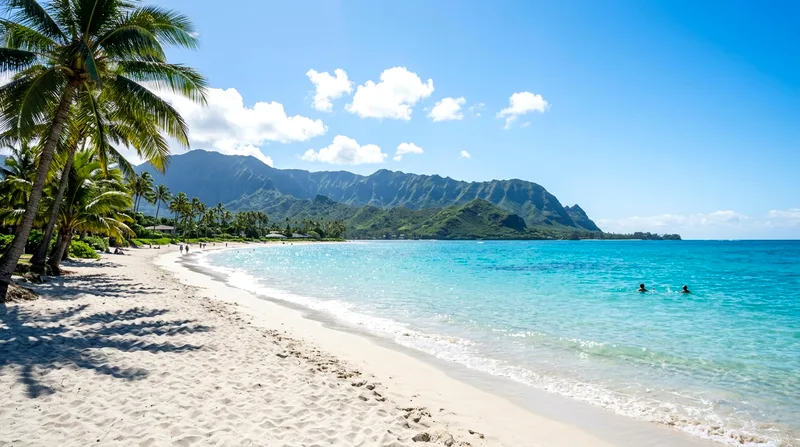
This is the part that surprises first-time visitors: free things to do in Hawaii with kids aren't a backup plan, they're frequently the highlight. Hawaii's beaches are all public by law, and many of the best ones for families — calm, shallow, with lifeguards — cost nothing beyond parking. The same goes for most hiking trails, botanical overlooks and cultural sites scattered across Oahu, Maui and the Big Island.
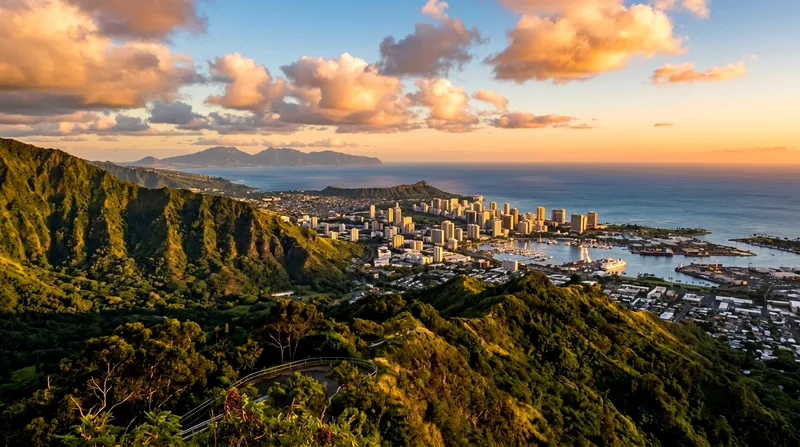
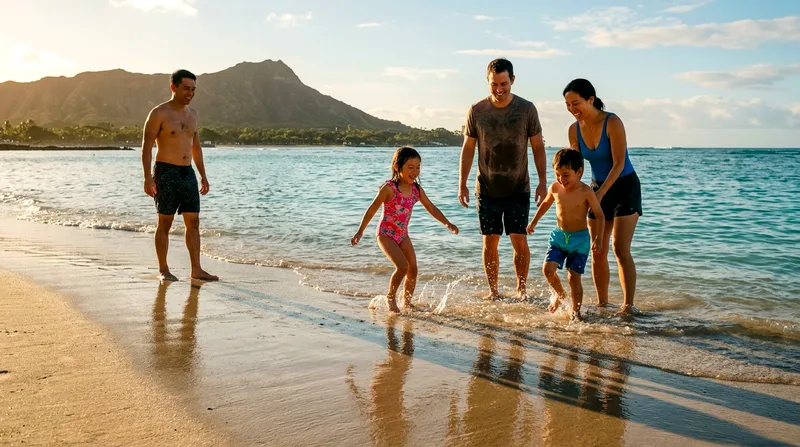
Oahu alone could fill a week of free family days. Waikiki Beach, for all its crowds and resort towers lining the shore, has genuinely calm water that's good for small kids and is walkable from a huge range of budget condo rentals. Kaneohe, on the windward side, has a shallow bay good for a quieter paddle or wade, away from the Waikiki tourist density. None of this requires a booking, a voucher, or a child discount code — just sunscreen and a cooler.
Free beaches, tide pools and easy hikes
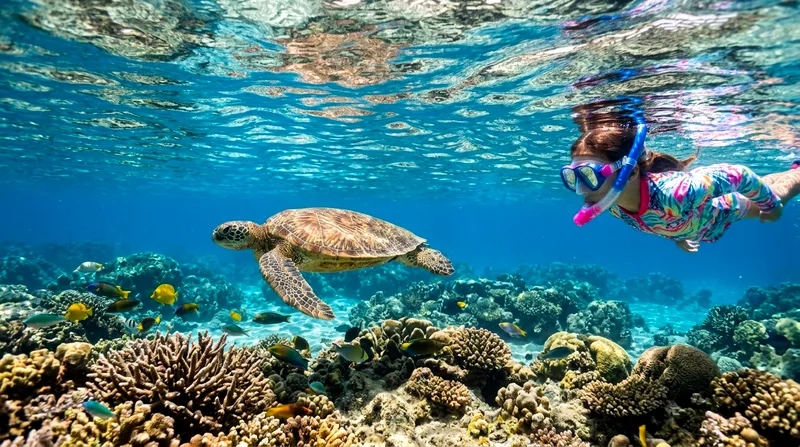
Shark's Cove on Oahu's North Shore is the standout for families — in summer, when surf is low, it's a shallow, rocky-edged pool packed with small fish and sea urchins that kids can observe from the surface with just a cheap mask. It's free to access, though parking fills early, so arrive by mid-morning on weekends. Winter surf makes it genuinely dangerous, which is a real watch-out: this is a seasonal activity, not a year-round one, and locals will tell you plainly when it's closed out by swell.
Easy coastal hikes are another free win — look for short, stroller-unfriendly-but-kid-manageable trails under two miles round trip rather than the strenuous ridge hikes aimed at fit solo travelers. Many state park trailheads charge a small vehicle fee for non-residents (often $5 to $10), which is still far cheaper than any guided hike.
Free cultural events and local spots
Beyond the beach, look for free cultural programming — many shopping centers and resort areas host no-cost hula shows, lei-making demonstrations or Hawaiian music performances on a weekly schedule, and these are genuinely aimed at families, not just a sales pitch before a timeshare tour (though a few are, so read the fine print on any "free" event that requires registration). Public libraries across the islands offer free keiki (children's) story times. Farmers markets, common on weekends across Oahu and Maui, are free to wander and a cheap way to get fresh fruit for lunch instead of paying resort prices. Check GoHawaii.com or Hawaii.gov before you go — both list current free community events by island, updated more reliably than most third-party blogs.
Smart Ways to Save on Paid Activities
Once you've decided which one or two paid activities are worth the splurge, the goal shifts to not overpaying for them. The single biggest mistake families make is booking through a resort concierge or a third-party kiosk on the street, both of which routinely mark up tours by a meaningful margin for the convenience. Booking directly with the operator, or through a reputable comparison platform, almost always gets you the same boat or tour for less.
The second mistake is ignoring child pricing structures entirely. Many tour operators — snorkel cruises, luaus, zip lines — have a defined age cutoff (often around 3 or under rides free, and a reduced rate up to 12), but they don't always advertise it clearly. You have to ask, or dig into the fine print on the booking page.
Child discounts and family pricing to ask about
Before booking anything, check for three things: an age cutoff for free entry (common at luaus and cultural parks, less common on boat tours), a reduced child rate (common on snorkel and whale-watching tours, roughly half the adult price in many cases), and a family package rate, which some larger attractions and luaus offer for two adults plus two or more kids at a flat price lower than four individual tickets. None of this is guaranteed or standardized — it varies by operator and sometimes by season — so always ask directly or check the operator's own site rather than assuming a rate from one tour applies elsewhere.
Combo tickets, passes and booking direct
Hawaii combo tickets for families are worth hunting for if you're planning to do more than two paid things on one island — a snorkel cruise bundled with a land tour, or a luau paired with a cultural center visit, can cost noticeably less than booking each separately. These bundles are usually sold directly by the attraction or a few established local operators, not random resale sites. Before paying full freight, compare current prices on a few official operator sites and a general booking platform side by side — availability and pricing shift by season, so check current prices when booking rather than relying on a number you saw months ago.
Timing Your Trip to Cut Costs
Off-season Hawaii family travel is the single highest-use move available to budget-minded parents, because it affects every cost category at once — flights, lodging, car rentals and tour availability (often with shorter lines and more flexible rebooking). The trade-off is real, though: off-season in Hawaii often means late spring shoulder weeks or the period after Labor Day through early December, and you're working around school calendars, which not every family can do.
Shoulder season and off-season savings
Late April through early June, and mid-September through early December, are generally the cheapest windows to visit with kids — school is in session for most of the mainland US and Europe, so flights and condos drop, and the islands themselves are quieter at beaches and trailheads. Winter holiday weeks (mid-December through early January) and summer break (June through August) are the most expensive, because that's exactly when every other family is traveling too. If your kids aren't yet in school, or you can pull them for a week, shoulder season is worth more than any discount code you'll find.
Booking early versus last-minute deals
Unlike cruise or city-break deals, Hawaii rarely rewards last-minute booking — inventory on inter-island flights and family-sized condos is limited, and prices tend to rise, not drop, as dates approach. Book flights and lodging three to six months out for the best selection; save your flexibility for activities instead, where booking a few days ahead (once you've checked the weather and surf forecast) is usually fine and lets you skip paying for a tour that gets canceled by swell or rain.
What Not to Skimp On
Budget travel has limits, and Hawaii is not the place to cut every corner. Two things I'd never recommend skimping on: ocean safety and reputable tour operators. The ocean here is genuinely more powerful than it looks, and a calm-looking beach can have a dangerous shore break or rip current that a mainland or European family simply doesn't have context for.
Ocean safety, sun protection and reputable operators
Swim only at lifeguarded beaches when you have small children — Hawaii's lifeguards post daily flag warnings and know which beaches are safe on a given swell, something no guidebook can tell you in real time. Reef-safe sunscreen (mineral-based, not the cheap spray kind) is both an environmental requirement at several protected sites and genuinely necessary given the UV intensity at this latitude; kids burn faster here than most parents expect, even on cloudy days. For any ocean activity — snorkel tours, surf lessons, boat trips — pay for a licensed, reviewed operator rather than the cheapest option on the beach. A $20 savings on a surf lesson isn't worth it if the instructor-to-student ratio is poor or the gear is in bad shape. This is the one category where "cheap" and "good value" genuinely diverge.
Family Activity Booking Checklist
Before you book anything, run through this short list: Does this activity have a child rate or age cutoff I haven't checked yet? Is there a combo ticket that bundles this with something else we're already planning? Could this be done for free nearby instead (a paid snorkel cruise versus a free tide pool at Shark's Cove, for instance)? Have I compared the operator's own site against at least one general booking platform for the same experience? Is this during shoulder season, or am I paying peak pricing because of when we're traveling?
Running through these five questions before every booking is slower than just clicking "reserve," but it's the difference between a family of four spending $600 on activities for a week and spending $1,800 for the same trip. Hawaii doesn't punish budget travelers — it punishes impulse bookings.
Frequently asked questions
What are free things to do in Hawaii with kids?
Public beaches with lifeguards (Waikiki, Kaanapali, Poipu), tide pools like Shark's Cove on Oahu's North Shore in summer, easy coastal hikes, farmers markets, and free hula or cultural demonstrations at shopping centers are all genuinely free. Parking and park entry fees sometimes apply but rarely exceed $10.
How can families save money on Hawaii activities?
Set a per-child activity budget before you arrive, fill most days with free beaches and hikes, and reserve paid bookings for one or two experiences you can't replicate for free. Book those directly with the operator rather than through a resort concierge, and ask specifically about child rates and combo tickets.
What child discounts are available in Hawaii?
Many tours offer reduced rates for children up to around age 12, and some luaus or cultural parks let kids under 3 or 4 in free. These vary widely by operator and aren't always advertised, so check the operator's own website or ask directly before booking — don't assume a family package applies everywhere.
Which Hawaii island is best for families with kids?
Oahu is generally the easiest and most budget-friendly for families — it has the most free beaches, the shortest distances between attractions, and the widest range of budget condo rentals. Maui and Kauai offer more scenery per paid activity but involve more driving and higher average lodging costs.
When is the cheapest time to visit Hawaii with children?
Late April to early June and mid-September through early December are typically the cheapest windows, since they fall outside US and European school holidays. Avoid mid-December through early January and the June-to-August stretch if budget is the priority, as those are peak family travel periods with the highest prices.