Plan one week in Hawaii with two day-by-day itineraries: Oahu only or Oahu and Maui. See who each plan suits, where to stay and which tours to pre-book.
Who These 7-Day Hawaii Plans Suit
A hawaii itinerary 7 days long gives you two realistic options: stay on one island and see it properly, or split the week between Oahu and Maui and accept that you'll spend part of your trip in transit. Neither is wrong, but they suit different travelers. If this is your first trip and you want a mix of city, hiking, history and beach without constant repacking, one island — Oahu, usually — is the smarter use of seven days. If you've already done Oahu, or you specifically want both the urban energy of Honolulu and the Road to Hana, the two-island split earns its extra logistics.
I'd steer most families with young kids toward the single-island plan. Moving hotels mid-week with toddlers, strollers, and a 7am inter-island flight is more stress than the extra island is worth. Couples and solo travelers with more flexible schedules tolerate the two-island version better, especially if they're the type who'd rather see less thoroughly than more superficially.
European travelers crossing eight to eleven time zones should factor in at least one slow day regardless of plan — jet lag plus a rental car on unfamiliar roads is a bad combination, and Hawaii's two-lane highways punish distracted driving.
One island lets you go deeper with less transit time; two islands cost you roughly a day of logistics for broader variety.
Hawaii itinerary 7 days: Oahu-only vs Oahu-and-Maui compared
| Plan | Travel time lost | Best for | Signature experience | Day summary |
|---|---|---|---|---|
| Oahu only | None after arrival | First-timers, families, slower pace | Diamond Head sunrise hike + Pearl Harbor | 7 full days exploring one island thoroughly |
| Oahu + Maui | Approx. half a day (flight + car) | Repeat visitors, couples, beach-and-adventure mix | Road to Hana + Molokini snorkeling | 3 days Oahu, 4 days Maui with one transit day |
Typical figures; flight schedules and road conditions (especially Hana Highway) vary by season, so confirm before you travel.
One Island vs Two: Quick Comparison
Before locking in a plan, weigh the trade-off honestly: two islands in a week means roughly a day and a half lost to flights, check-in lines, car swaps and re-settling into a new base. One island means you skip all of that but miss the Road to Hana, Haleakala sunrise and Maui's calmer beaches entirely. There's no version of this where you get both without compromise — see the comparison table below for the specifics.
First-Timers, Couples and Families
First-time visitors almost always ask about Maui, Oahu, and increasingly Big Island, in the same breath — as if a week can cover all three. It can't, realistically. Oahu alone has enough range (Pearl Harbor, Diamond Head, the North Shore, Waikiki, Kakaako's food and murals) to fill seven unhurried days. Couples celebrating an anniversary tend to prefer Maui's resort corridors in Wailea or Kaanapali if beach time matters more than sightseeing density. Families do well on Oahu because distances are short — you're rarely more than 90 minutes from your hotel, which matters when nap schedules run the day.
Plan A: Oahu Only, Day by Day
This plan bases you in Waikiki or Kakaako the entire week, with day trips radiating out. No packing up mid-trip, no missed flights — just one island covered at a reasonable pace.
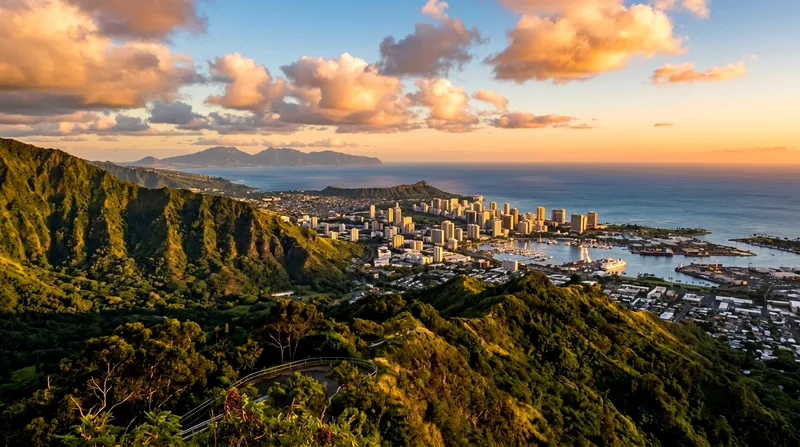
Days 1-4: Waikiki, Diamond Head, Pearl Harbor, Honolulu
Day 1: Morning — land, settle into Waikiki, short walk on the beach to reset after the flight. Afternoon — easy stroll through Kakaako to see the mural art and grab a casual lunch. Evening — early dinner, early sleep; don't fight jet lag on day one.
Day 2: Morning — hike Diamond Head summit trail (about 1.6 miles round trip, 1-1.5 hours, arrive by 8am before heat and crowds build; reservations are required in advance for non-residents). Afternoon — Waikiki Beach, bodyboard rental or a swim lesson for kids. Evening — this is the night to book a sunset catamaran sail off Waikiki; reserve it a few days ahead since the good-weather slots fill first.
Day 3: Morning — Pearl Harbor and the USS Arizona Memorial (book the free NPS ticket or a guided tour slot weeks ahead — it sells out, and bag restrictions mean you can't bring much inside). Allow 3-4 hours total including the shuttle boat. Afternoon — downtown Honolulu, Iolani Palace area. Evening — Kakaako or Chinatown for dinner.
Day 4: Morning — Hanauma Bay for snorkeling (closed Tuesdays, reservations required, arrive by 7am for parking). Afternoon — rest or explore Waikiki shops. Evening — a Polynesian luau is worth booking for tonight or tomorrow; reserve at least a week out, especially in peak summer and December.
Days 5-7: North Shore, Windward Coast, Slow Beach Day
Day 5: Morning — drive to the North Shore (about 1 hour from Waikiki). Watch surfers at Pipeline or Waimea Bay in winter; swim there instead in summer when it's calmer. Afternoon — shrimp trucks at Kahuku, Waimea Valley botanical gardens and waterfall. Evening — drive back via the windward coast, or stay for sunset at Sunset Beach.
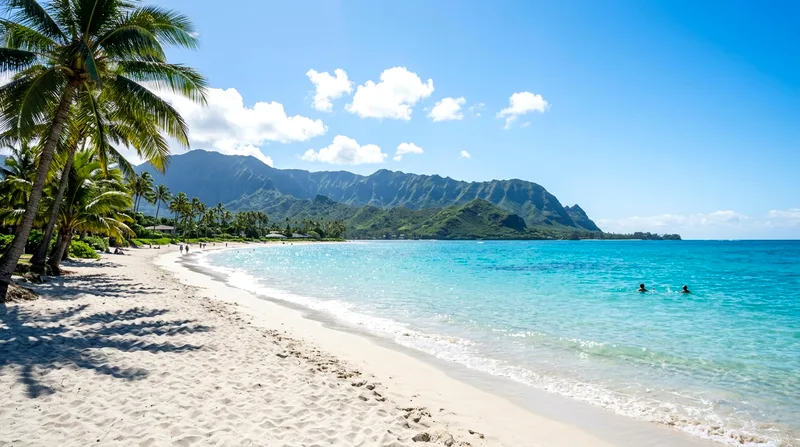
Day 6: Morning — windward coast: Kailua or Lanikai Beach, among the better sand-and-water combinations on Oahu. Rent a kayak toward the Mokulua Islands if conditions allow. Afternoon — Byodo-In Temple in the Valley of the Temples. Evening — casual dinner in Kailua town.
Day 7: Morning — slow beach morning, pack up. Afternoon — last swim or a spa treatment if your hotel has one. Evening — flight home or onward.
Rainy day alternative: swap outdoor days for the Bishop Museum, Honolulu Museum of Art, or Ala Moana Center shopping — Oahu's weather moves fast, so a soggy morning often clears by noon.
Plan B: Oahu and Maui Day by Day
This is the classic oahu and maui itinerary for travelers who want both island personalities. Budget a half-day for the inter-island flight transition — it's only about 35-40 minutes in the air, but airport time, rental car pickup and drive-to-hotel eat up 3-4 hours total.
Days 1-3: Oahu Highlights
Day 1: Arrive, Waikiki, easy beach afternoon, early night.
Day 2: Diamond Head hike at sunrise-ish start, Pearl Harbor in the afternoon (swap order if your Pearl Harbor slot is morning-only, which is common).
Day 3: North Shore day trip — surfing beaches, shrimp trucks, Waimea Valley — then an early dinner before packing for the morning flight. Book a sunset dinner cruise for tonight if you'd rather skip the drive back from the North Shore.
Days 4-7: Maui Road Trip and Beaches
Day 4: Morning flight to Maui (OGG airport), rental car pickup, drive to Kihei, Wailea or Lahaina. Afternoon — settle in, short beach swim at Kamaole Beach Park. Evening — dinner in Lahaina town, rebuilding steadily after the 2023 wildfire; check current access and open businesses before planning a visit there.
Day 5: The Road to Hana — start by 7am, it's a full day (figure 8-10 hours round trip for the roughly 64-mile route with 600+ curves). Stop at Twin Falls, Wailua Valley lookout, and Waianapanapa State Park's black sand beach (a permit is required to enter, book it online in advance). Don't attempt this with less than a full tank of patience — it's slow, carsickness-inducing for some, and not worth rushing.
Day 6: Recovery day — snorkeling at Molokini Crater or Honolua Bay is the bookable highlight; reserve a morning boat trip a few days ahead since conditions are best before the wind picks up. Afternoon — Kihei or Wailea beach time.
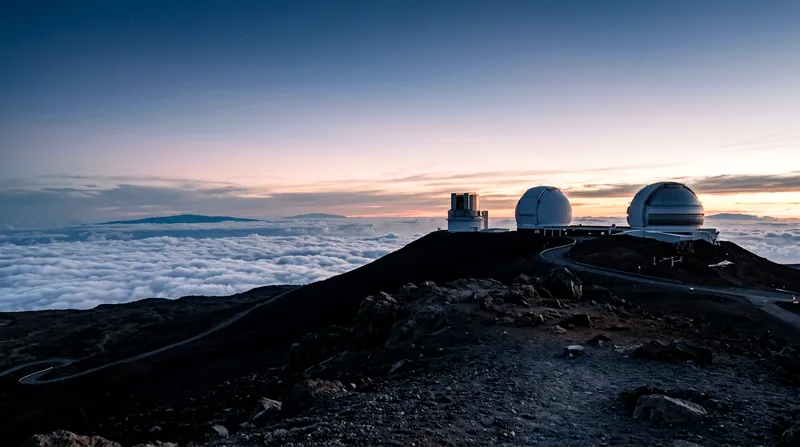
Day 7: Morning — Haleakala sunrise is popular but requires a reservation made well in advance and a 3am departure; it's genuinely spectacular but not for everyone, especially with kids or on little sleep. Alternative: a relaxed beach morning and lunch in Paia before your flight home.
Getting Around and Where to Base
Hawaii isn't a place where you can skip a car and rely on walking, except within Waikiki itself. Budget accordingly.
Rental Cars, Rideshare and Inter-Island Flights
On Oahu, a rental car is optional if you're staying put in Waikiki and doing organized tours for Pearl Harbor and the North Shore — rideshare and TheBus cover a lot of ground. But for Plan A's North Shore and windward coast days, a car (or a private tour) is far more efficient than public transit, which can take 2+ hours each way. On Maui, a rental car is not optional — there's no practical alternative for the Road to Hana or reaching Haleakala. Inter-island flights between Honolulu and Kahului run frequently throughout the day; book at least a few weeks ahead in peak season (June-August, December) to avoid inflated fares.
Best Areas to Stay on Oahu and Maui
On Oahu, Waikiki is the obvious base — walkable, beach-adjacent, dense with restaurants — though it's touristy and can feel crowded compared to Kakaako, a quieter, more local neighborhood ten minutes away with good food options and less foot traffic. On Maui, Kihei offers the best value and a central location for both Haleakala and West Maui; Wailea is pricier and more resort-heavy; Lahaina's accommodation options are still recovering post-wildfire, so check current status before booking there.
Tours and Experiences Worth Pre-Booking
Hawaii's popular experiences have real capacity limits — this isn't marketing hype, it's park policy. Several of the best things to do require reservations made days or weeks out, and showing up without one means being turned away.
Book-Ahead Essentials by Day
Pearl Harbor's USS Arizona Memorial tickets should be booked as early as possible — free NPS tickets release in batches and vanish fast; paid guided tours offer more flexibility. Diamond Head's hiking reservation (for non-Hawaii-residents) should be done a few days ahead minimum. Hanauma Bay's snorkeling reservation system requires booking at least two days in advance, and it's closed Tuesdays. On Maui, Haleakala sunrise viewing reservations open 60 days out and are released daily — book the moment your dates are fixed. Waianapanapa State Park's entry permit for the Road to Hana should also be secured before you go. For evening experiences, a luau or a sunset sail is the one bookable-ahead highlight worth locking in per week — compare current boat tours and prices before you book, since availability shifts with season and weather.
Seasonal Timing and Weather Notes
Hawaii doesn't have a true off-season, but it has quieter and cheaper windows. April-May and September-early December bring lower hotel rates and fewer crowds, with generally reliable weather. Winter (December-March) means bigger surf on Oahu's North Shore — exciting to watch, dangerous to swim in — and higher rainfall chances on Maui's windward side, which can make parts of the Road to Hana slower going. Compared to Fiji or Bora Bora, Hawaii's weather is milder and less humid overall, but a seven-day trip timed around hurricane season (roughly June-November, peak risk August-September) carries slightly more disruption risk than visiting Costa Rica's dry season or Cancun outside hurricane months — worth checking forecasts a few days before any Road to Hana or boat-based plans.
Frequently asked questions
Is 7 days enough time for Hawaii?
Yes, for one island. Seven days lets you cover Oahu's main sights — Waikiki, Diamond Head, Pearl Harbor, the North Shore — without rushing. It's tight for two islands and unrealistic for three; trying to add Big Island or Kauai to a one-week trip means every stop becomes a drive-by.
Should I visit one island or two in a week?
One island, if this is your first visit or you're traveling with young kids. Splitting the week costs roughly half a day in flights, car rentals and re-settling, which is a real trade against sightseeing time. Two islands work better for repeat visitors who've already covered Oahu's basics.
Is Oahu or Maui better for a 7-day trip?
Oahu offers more variety in less driving time — history, hiking, city life and beaches within an hour of each other. Maui is slower and beach-and-nature focused, built around the Road to Hana and Haleakala. Choose Oahu for first-timers and families, Maui for couples prioritizing beach resorts and scenery over sightseeing density.
What should I do on my first day in Hawaii?
Keep it light. Walk Waikiki Beach, eat an easy meal, and go to bed early — jet lag from mainland US or especially Europe hits hard, and a packed first day usually backfires. Save Diamond Head and Pearl Harbor for day two and three when you're adjusted.
What is the best time to visit Hawaii for a one-week trip?
April-May or September-early December offer lower prices, fewer crowds and generally stable weather. Winter brings big North Shore surf (great to watch, risky to swim) and more rain on Maui's windward side. Summer is reliably warm but the most expensive and crowded stretch.