A practical Hawaii itinerary for 10 days across Oahu, Maui and the Big Island — day-by-day route, jet lag tips, island-hopping logistics and where to stay.
Who This 10-Day Hawaii Itinerary Suits
A flight to Hawaii from Europe runs 13-17 hours with a connection, and from the US mainland it's still 5-11 hours depending on where you start. That's a long way to go for one beach. This hawaii itinerary 10 days plan assumes you want to see real variety — city energy and history on Oahu, a dramatic volcano-to-coast drive on Maui, and raw lava landscapes plus some of the world's best stargazing on the Big Island — without turning the trip into an airport shuttle.
It won't suit everyone. If your idea of a vacation is one resort, one beach chair, and minimal logistics, skip the three-island hop and spend all 10 days on Maui or the Big Island instead. You'll trade variety for depth, and you'll save roughly $150-300 per person on inter-island flights plus the hassle of two additional rental car pickups. But if you're the type who'd rather see more and sleep less, this works, and it's the itinerary I'd actually recommend to a first-timer with 10 days and a real curiosity about the islands beyond Waikiki.
Jet lag and pacing for long-haul travellers
Hawaii sits 10-11 hours behind Central European Time, which is brutal on paper but easier in practice than flying east. Arriving in late afternoon or evening local time, your body clock is usually several hours ahead, so you'll naturally wake early — which, conveniently, is exactly when Hawaii's best light and least crowded trails happen. Don't fight it. Book sunrise activities for days 2 and 3 rather than day 1.
Give yourself a genuinely low-key first evening: check in, eat something simple, walk the beach, sleep. Scheduling a boat tour or long hike for day one off a long-haul flight is how people end up seasick or exhausted halfway through a trip they waited years to take.
Three islands vs two islands
Three islands in 10 days means two inter-island flights, two rental car swaps, and roughly 1.5 travel days absorbed into the itinerary. Two islands — say Oahu and Maui, or Maui and the Big Island — gives you 4-5 unrushed days per stop and far less packing and repacking.
I'd pick three only if this is likely your only Hawaii trip for a while. If you can see yourself coming back, do two islands properly this time and save the third for next visit. Compare that trade-off to somewhere like Fiji or Tahiti, where inter-island transport often means a boat or small prop plane with far less frequent schedules — Hawaii's inter-island flight network, dominated by a couple of carriers running frequent short hops, is genuinely one of the easier island-hopping systems in the Pacific.
Days 1–3: Oahu Arrival and Culture
Oahu is your landing point almost by default — Honolulu's airport has the most direct international and mainland connections of any Hawaiian airport, so it makes sense as both arrival and first stop rather than a rushed layover.
Day 1: Arrival, Waikiki and an easy first evening
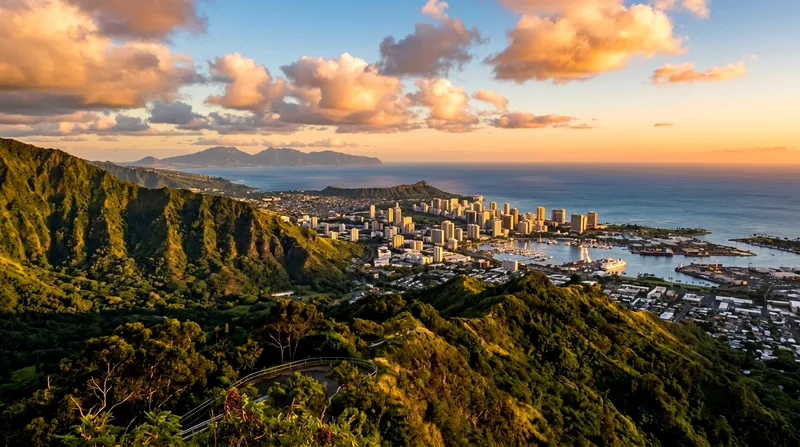
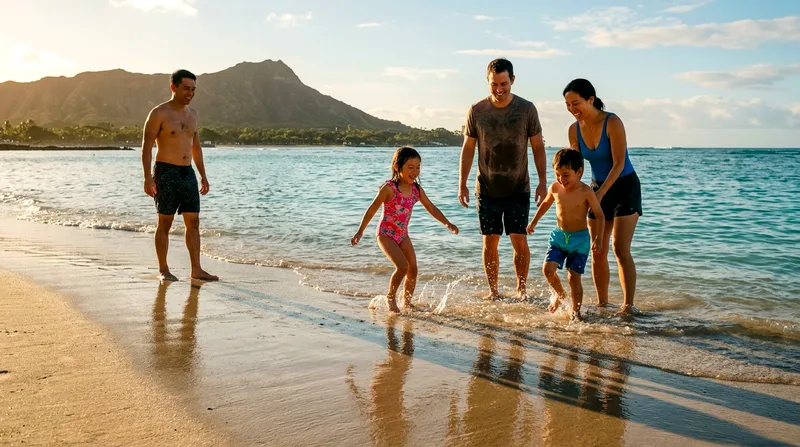
Land, collect the rental car or take a taxi/rideshare into Waikiki (20-25 minutes from the airport without traffic), and check into your hotel. Waikiki isn't subtle — it's dense, commercial, and crowded — but it's also walkable, safe at night, and puts Diamond Head, decent beaches, and restaurants within a few blocks of nearly any hotel. Spend the evening walking the beach path at sunset and eating something unambitious nearby. Save the real exploring for tomorrow, when you'll actually have the energy for it.
Days 2–3: Pearl Harbor, Diamond Head and the North Shore
Day 2, go early to Pearl Harbor — the USS Arizona Memorial requires a timed ticket, often booked out days ahead through the National Park Service recreation site, so reserve before you land in Hawaii, not after. Plan 3-4 hours there including the museum exhibits. Afternoon, hike Diamond Head crater (a round trip of about 1.6 miles / 2.6 km, roughly 1-1.5 hours, and note it requires an advance reservation for both vehicles and pedestrians).
Day 3, head to the North Shore — about 45-60 minutes' drive from Waikiki. Visit Haleiwa town, watch surfers at Pipeline or Waimea Bay in winter (these same beaches are often flat and swimmable in summer), and eat shrimp from one of the roadside trucks. This is also a strong day for a bookable experience: a half-day snorkeling or turtle-watching boat tour departing from the North Shore or Haleiwa harbor. Book it a few days ahead in peak season (June-August, December-January). If weather turns, swap the boat for the Bishop Museum or Honolulu's Chinatown, both solid rainy-day options.
Days 4–6: Maui Coast and Crater
Fly from Honolulu to Kahului, Maui — the flight itself is short, about 35-40 minutes, but budget a full half-day for the airport-to-airport process including security and baggage.
Day 4: Inter-island flight and west Maui beaches
Take an early flight so you land by late morning, pick up a second rental car, and have the afternoon free. Head to Kaanapali or Kapalua on the west side — both have calm, sandy beaches good for swimming and reasonable snorkeling right off the shore. Compared to Oahu's Waikiki, West Maui feels noticeably less built-up and the water is calmer, closer to what you'd find on a quiet stretch of Puerto Rico's west coast than the surf-heavy North Shore you just left. Keep day 4 light — no major hikes — since you've burned half the day on logistics.
Days 5–6: Haleakalā sunrise and the Road to Hana
Day 5 is Haleakalā sunrise — genuinely worth the 2:30-3am wake-up, but you must reserve a sunrise viewing slot in advance through the National Park Service; it's capped and sells out. Dress for cold: the summit sits above 10,000 feet (3,000+ meters) and temperatures often sit near freezing before dawn. Sleep or rest that afternoon; this day is physically draining even though it's not strenuous.
Day 6 is the Road to Hana — around 64 miles (103 km) one way, but with 600+ curves and 50+ one-lane bridges, it's realistically a 7-9 hour round trip with stops at waterfalls, black sand beaches (Waianapanapa State Park requires an advance reservation), and lookout points. Don't attempt it the same day as Haleakalā sunrise — that's how people end up pulling over to nap on the shoulder. If you've got shaky legs or get carsick easily, consider a guided van tour instead of self-driving; it lets you watch the scenery rather than the road.
Days 7–10: Big Island Volcanoes and Stars
Fly Kahului to Kona (around 40 minutes) on day 7 morning. The Big Island is genuinely big — about twice the landmass of all other Hawaiian islands combined — so don't expect to casually day-trip between Kona and Hawaii Volcanoes National Park; it's a 2-2.5 hour drive one way.
Days 7–8: Kona coast and snorkelling
Base yourself in Kona for these two days. The coast here has excellent snorkeling — Kealakekua Bay is a marine sanctuary known for spinner dolphins and clear water, though it's only reachable by boat, kayak, or a steep hike down and back up. A half-day snorkel or dolphin-watching boat tour is the obvious bookable experience here; reserve it a few days out, especially in whale season (roughly December through April, when humpbacks also show up offshore). If the ocean's rough, swap in a coffee farm tour around Kona's upland coffee belt — low effort, genuinely interesting, and indoors enough to dodge rain.
Days 9–10: Hawaii Volcanoes National Park and departure
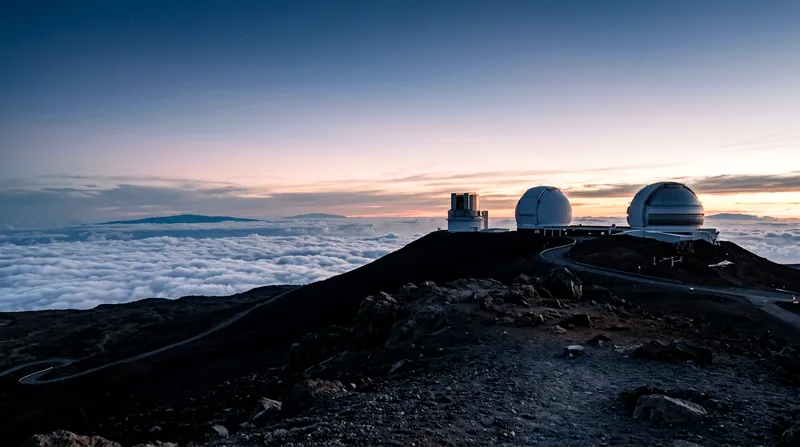
Day 9, drive to Hawaii Volcanoes National Park and either base there for one night or do it as a long day trip with an early start. Walk the Kilauea Iki crater trail (about 4 miles / 6.4 km, 2-3 hours) and drive Chain of Craters Road down to the coast. If there's active surface lava — which isn't constant — ranger stations post current viewing info; don't chase rumors on social media. That evening, if skies are clear, a guided Mauna Kea stargazing tour is worth booking ahead; summit access above 9,000 feet can require a 4WD vehicle and some tour operators include dinner and warm gear. Day 10 is departure — fly out of Kona, ideally in the afternoon to leave the morning free for a last swim or a slow breakfast.
Getting Around and Where to Base Yourself
Renting a car on each island is close to mandatory — Hawaii's public transit is limited to Oahu's TheBus, which is fine for Waikiki-to-Pearl Harbor trips but useless for the North Shore or any part of Maui or the Big Island. Budget separately for three short-term rentals rather than one long one, since each island requires its own pickup and return.
Oahu suits culture and an easy landing, Maui rewards a long scenic drive, and the Big Island delivers the most dramatic, spread-out landscapes of the three.
Hawaii itinerary 10 days: island-by-island comparison of pace, activity and base
| Island | Days | Pace | Signature Activity | Best Base |
|---|---|---|---|---|
| Oahu | 3 | Moderate | Pearl Harbor and Diamond Head | Waikiki |
| Maui | 3 | Slow, then intense (Hana day) | Haleakalā sunrise, Road to Hana | West Maui (Kaanapali) |
| Big Island | 4 | Spread out, long drives | Volcanoes National Park, Mauna Kea | Kona |
Day counts include travel days; actual beach/activity time per island is roughly one day less than shown.
Inter-island flights and rental cars
Book inter-island flights as soon as your dates are fixed — prices climb closer to departure and the morning flights (best for maximizing your first day on a new island) sell out first. Flight time itself is short, 35-45 minutes between any two main islands, but factor at least 2-2.5 hours door-to-door once you add security, baggage, and car pickup. Rental cars should also be booked early, particularly in summer and around the winter holidays, when Maui and the Big Island fleets run short. Skip the temptation to save money with a tiny economy car on the Big Island — some rental agreements explicitly exclude certain unpaved or rough roads, so check the contract if you're heading toward South Point or deeper into volcano country.
Best base on each island
On Oahu, stay in Waikiki for convenience despite the crowds — it's central to the airport, Diamond Head, and decent food. On Maui, West Maui (Kaanapali/Kapalua) suits beach-focused stays, while Upcountry or Kahului works better if you want to be closer to Haleoakala's entrance for that early sunrise drive. On the Big Island, Kona is the practical choice for snorkeling and volcano access; Hilo, on the wetter east side, puts you closer to the park but with a noticeably rainier, greener feel — some travelers love that contrast, others find it gray and damp after Kona's sun.
Optional Bookable Experiences
A few experiences across this route genuinely benefit from advance booking rather than walking up. None of these need to be locked in months ahead, but reserving a few days to a couple of weeks out — longer in peak summer and holiday weeks — avoids disappointment.
Ocean and wildlife experiences
On Oahu's North Shore, a half-day snorkel or turtle-watching boat trip fills day 3 nicely. On the Big Island, a Kealakekua Bay snorkel or dolphin tour is close to essential, since land access to the bay is genuinely difficult. In whale season, add a dedicated whale-watching trip from either Maui or Kona — Maui's Auau Channel is one of the more reliable humpback viewing areas in the state. Compare current boat tours and prices before you book, since availability shifts with season and weather.
Volcano, stargazing and cultural tours
A guided Mauna Kea summit and stargazing tour solves the altitude and night-driving problem in one booking — useful since many standard rental cars aren't approved for the unpaved summit road. On Maui, a guided Road to Hana van tour is worth it if you'd rather watch waterfalls than hairpin turns. On Oahu, a Pearl Harbor and USS Arizona Memorial combo tour simplifies the ticket logistics, which otherwise require planning around the NPS reservation system. Check current prices and availability when booking — these fill up faster than the beach-based tours.
Frequently asked questions
Can you visit three islands in 10 days in Hawaii?
Yes, but expect roughly 1.5 days absorbed by flights, car rentals, and check-ins. That leaves about 8.5 solid days split across Oahu, Maui, and the Big Island — workable, but tighter than a two-island trip. If you want real downtime rather than a sampling tour, cut to two islands and add days to each.
How should I split 10 days between Hawaiian islands?
A 3-3-4 split works well: three days on Oahu, three on Maui, four on the Big Island, since it's the largest and has the longest internal drive times. If you'd rather favor beach time, shift a day from Oahu to Maui instead — Oahu's main sights (Pearl Harbor, Diamond Head) are genuinely doable in two focused days if needed.
What is the best order to visit Oahu, Maui and the Big Island?
Start with Oahu since Honolulu has the most international and mainland flight connections, making it the natural landing point. Maui next makes sense geographically and logistically, then finish on the Big Island, flying out of Kona — its airport also has solid direct connections home, avoiding a backtrack through Honolulu.
Should I do Oahu, Maui and Big Island or Oahu, Maui and Kauai?
Choose Big Island if you want volcanoes, stargazing on Mauna Kea, and dramatic lava landscapes; choose Kauai if you want the greenest scenery, the Napali Coast, and a slower, more rural pace. Kauai suits travelers who want fewer driving hours and more hiking; the Big Island suits those wanting variety and bigger single-day "wow" moments.
Is the Big Island worth visiting on a 10-day trip?
Yes — it offers landscapes you won't find on Oahu or Maui, including active volcanic terrain at Hawaii Volcanoes National Park and some of the world's clearest night skies atop Mauna Kea. The trade-off is long drive times, often 2+ hours between the Kona coast and the park, so budget accordingly rather than trying to do it as quick day trips.