Hawaii food prices can sting, but plate lunches, happy hours, food trucks and tasting tours help you eat well for less. See where meal money goes.
Where Your Food Money Goes in Hawaii
Open a dinner menu in Waikiki for the first time and the numbers can stop you mid-scroll — $18 for a burger, $14 for a mai tai, $32 for mahi-mahi that would run half that in Phoenix or Denver. Hawaii food prices are genuinely higher than most of the mainland United States, and that's not a tourist markup myth. It's structural. But the gap is narrower than people assume once you know where to eat, and it's entirely possible to eat well in Hawaii without matching those sticker-shock menu prices every meal.
The honest range: a casual sit-down lunch runs $14-$22 per person, a mid-range dinner with a drink lands around $30-$50, and fine dining in Honolulu or Lahaina starts at $75 and climbs fast. Compare that to Cancun or Puerto Rico, where a comparable mid-range dinner might run $20-$35, and you can see why Hawaii feels steeper even within the U.S. vacation landscape. It's closer to Tahiti or Bora Bora pricing than to Costa Rica, where inexpensive sodas and roadside meals keep daily costs low.
Plate lunches and food trucks keep daily costs reasonable, while sit-down dinners and luau buffets are where Hawaii food prices climb fastest.
Hawaii food prices by meal type and restaurant category
| Meal Type | Typical Cost (per person) | Best For | Watch Out For |
|---|---|---|---|
| Plate lunch counter | $11-$16 | Lunch, quick dinner | Lines at peak lunch hour |
| Food truck (Oahu/Maui) | $12-$17 | Casual lunch, North Shore stops | Cash-only at some trucks |
| Grocery store meal | $6-$12 | Breakfast, self-catering | Limited selection at small markets |
| Casual sit-down dinner | $18-$28 | Families, easy dinners | Resort-area markup |
| Happy hour pupus | $6-$10 per item | Couples, budget dinners | Limited time window (3-6pm typical) |
| Mid-range dinner with drink | $30-$50 | Special nights out | Add-on costs (tax, service charge) |
| Luau buffet | $120-$220 | Entertainment plus dinner | Pay mainly for the show, not food value |
| Fine dining tasting menu | $75-$150+ | Anniversary, one splurge night | Easy to overspend without a set budget |
Figures are typical ranges across Oahu and Maui; costs vary by island, season, and location relative to resort areas.
Why Hawaii costs more than the mainland
Roughly 85-90% of Hawaii's food is shipped or flown in, since the islands grow only a fraction of what residents and visitors consume. Every container of flour, case of soda, or pallet of produce travels by barge from the West Coast, adding freight costs that show up on every menu and grocery shelf. Labor costs are also higher — Honolulu's minimum wage and cost of living push restaurant wages up, and that gets passed to diners. None of this is a scam; it's logistics. Understanding it helps you stop resenting the prices and start planning around them.
Meal costs by restaurant type
Breakfast at a casual diner or bakery: $10-$16 per person, more if you add fresh juice or a specialty coffee drink. Lunch plate lunches and food trucks: $11-$16. Casual dinner (think a local noodle shop or a mid-range grill): $18-$28. Sit-down dinner with ocean views in Waikiki or Wailea on Maui: $45-$80 per person once you add a cocktail and tax. Fine dining tasting menus can exceed $150. Oahu and Maui run similar on average; the Big Island and Kauai have fewer ultra-premium options but also fewer rock-bottom cheap eats outside their main towns.
Plate Lunches and Food Trucks for Less
If there's one category that makes Hawaii food prices feel sane again, it's the plate lunch. This is the backbone of local eating — and it's also genuinely good food, not a tourist concession.
How plate lunch culture works
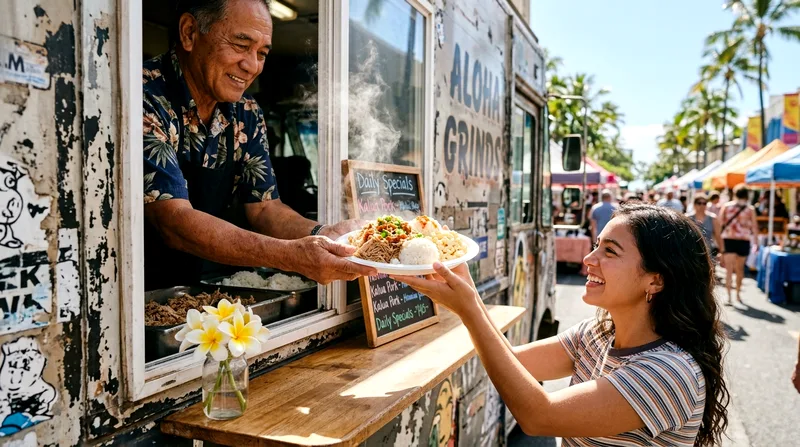
A plate lunch is built around plantation-era lunch routines: two scoops of rice, a scoop of macaroni salad, and a protein — loco moco, kalua pork, chicken katsu, teriyaki beef, or the Korean-plate-lunch hybrid dishes you'll see on Oahu. The Hawaii plate lunch cost typically runs $11-$16, occasionally touching $18 for a seafood or combo plate. That's filling enough to split or save half for later, which functionally cuts your per-meal cost further. These spots are usually counter-service, cash-friendly, and fast — ten minutes from order to table, often eaten at a picnic bench or in the car.
Cheap eats in Waikiki and beyond
Cheap eats Waikiki does exist, but you have to walk past the beachfront strip. Head a few blocks toward Kuhio Avenue or into the Ala Moana area and plate lunch counters, poke shops, and noodle houses charge closer to local prices than resort prices. On Oahu's North Shore, the food truck lineup near Haleiwa is a genuine destination — garlic shrimp plates run $14-$17, and you're paying for the experience as much as the food, which is fair. Hawaii food truck prices generally sit $2-$4 above a sit-down plate lunch counter for similar portions, since trucks carry higher fuel and permit costs, but they beat any restaurant with table service. On Maui, food trucks cluster around Paia and Kihei with similar pricing. Avoid buying food directly at resort pool decks or beach kiosks — markups there can double what you'd pay a quarter-mile away.
Happy Hours, Groceries and Smart Timing
Timing your meals and your shopping does more for your Hawaii food budget than any single restaurant choice.
Happy hour and early-bird strategies
Happy hour is one of the few genuine value plays left in Waikiki and Honolulu dining. Most hotel bars and mid-range restaurants run happy hour somewhere between 3-6pm, with discounted pupus (appetizers) and drinks — expect $6-$10 apps and $5-$8 cocktails versus $14-$18 at full dinner prices. Ordering three or four pupus as a shared meal can turn a $70 dinner for two into $35-$40. It won't feel like a compromise; portions are often generous enough to be dinner, not a snack before dinner. Check hours directly with each restaurant since they shift by season and day of week.
Grocery runs, breakfast and seasonal swings
Hawaii grocery prices run 15-30% above the mainland U.S. average, worse for packaged and imported goods, better for anything locally grown — pineapple, papaya, local fish, and Kona coffee can actually be cheaper here than at home. A regular supermarket (Safeway, Foodland, Times) beats resort convenience stores badly; a gallon of milk or a loaf of bread at a hotel gift shop can cost double the grocery store price. If your condo or Airbnb has a kitchen, buying breakfast items and a few lunches saves real money — a family of four can cut $40-$60 a day by handling two of three meals themselves. Costco and Walmart locations on Oahu and Maui are worth a visit if you're staying a week or more. Prices also shift seasonally: summer and winter holiday weeks see higher demand and occasionally thinner produce selection, since shipping volumes don't always keep pace with visitor surges.
Food Tours and Luau Buffets: Worth It?
This is where opinions should be held loosely, because value depends entirely on what you want from the experience.
When bundled tastings save money
Food tours in Honolulu or on Maui typically run $100-$160 per person for a 3-4 hour walking tour with 6-10 tastings. Do the math against ordering those same dishes individually at full menu price, and a well-run tour often comes out close to even, sometimes slightly ahead, while also handing you context and direction you wouldn't get wandering alone. The real value isn't the per-bite savings — it's not having to guess which strip-mall counter is worth your limited vacation meals. For a first Hawaii trip, especially solo travelers or couples without a rental car, that guidance is worth paying for. Compare current food tour prices and itineraries before booking, since offerings and tasting counts vary by operator and season.
Luau value versus local alternatives
A commercial luau runs $120-$220 per adult, less for children, and includes a buffet dinner, drinks, and a show. Judged purely as a meal, it's expensive — you're paying mostly for the entertainment, not the kalua pig. If you want the cultural show, budget for it as a show with dinner included, not as a cost-efficient meal. If you just want good Hawaiian food, a plate lunch counter serving kalua pork and lau lau costs a fraction of that and tastes just as authentic, arguably more so since it's what residents actually eat. I'd skip the luau on a tight budget and spend that $150-$200 per person on three or four excellent dinners instead — but for a special-occasion night, especially with kids who'll remember the fire dancing, it earns its keep.
Where Not to Skimp on Food
Cutting costs is smart; cutting corners on a couple of specific things isn't.
Food safety and quality red flags
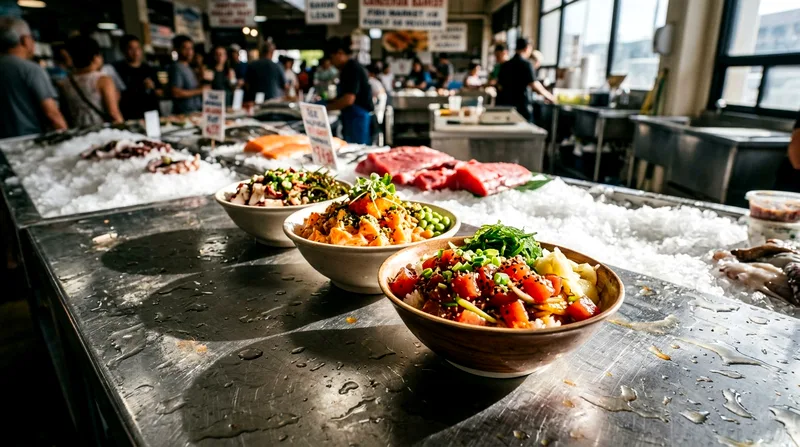
Raw fish dishes — poke especially — need to come from somewhere with real turnover and refrigeration discipline. Grocery store poke counters in reputable chains are fine and often excellent value, but be wary of poke sitting out at room temperature at a roadside stand or a beach vendor with no visible ice or cooler. Also skip pre-made plate lunches that have clearly been sitting for hours under a heat lamp with no apparent recent turnover; ask what's fresh rather than ordering blind. This is one area where the cheapest option isn't automatically the smart option.
Signature local dishes worth the splurge
Spend real money at least once on fresh-caught fish prepared well — a $35-$45 opah or ono entrée at a proper restaurant tastes nothing like the frozen version you'd get at home, and Hawaii is genuinely one of the best places in the world to eat it. Same goes for a proper poke bowl built from ahi bought that morning, and for Kona coffee from the actual growing region on the Big Island rather than a "Kona blend" that's mostly filler beans. These are the dishes that justify flying to Hawaii over, say, a cheaper but less fish-forward trip to Costa Rica or Cancun.
Hawaii Food Budget Checklist
Before you land, decide roughly how many meals you'll eat out versus cook, and which one or two splurges matter to you — a sunset dinner, a luau, a food tour. That decision alone shapes your whole budget more than any individual menu choice.
Sample daily food budgets by travel style
Budget traveler (plate lunches, groceries, one food truck meal): $35-$50 per day. Mid-range couple (mix of casual dinners, one happy hour, breakfast at the condo): $80-$120 per day for two. Family of four with a kitchen, cooking breakfast and some lunches, eating out for dinner: $150-$220 per day total. Splurge-minded couple with one or two special dinners plus casual meals otherwise: $150-$250 per day for two. These ranges hold reasonably steady across Oahu and Maui; Kauai and the Big Island trend slightly lower outside resort areas since there's less competition driving prices at both ends.
Frequently asked questions
How much should I budget for food in Hawaii per day?
Budget travelers mixing plate lunches, groceries, and one food truck meal typically spend $35-$50 per person per day. Mid-range travelers eating out for most meals with an occasional happy hour should plan $60-$90 per person. If you want one or two sit-down dinners with drinks each week, add $40-$80 for those specific nights on top of your baseline.
Are Hawaii food prices higher than the mainland?
Yes, generally 20-30% higher on average, driven mainly by shipping costs since most food is imported by barge or air. Grocery staples and casual dining show the gap most clearly; locally grown items like pineapple, papaya, and fresh fish can actually be cheaper than mainland prices since there's no shipping markup.
How much does a plate lunch cost in Hawaii?
A standard plate lunch — rice, macaroni salad, and a protein like chicken katsu or kalua pork — runs $11-$16 at most counters across Oahu, Maui, and the other islands. Seafood or combo plates can reach $18. Portions are large enough that splitting one or saving half often works.
Are food tours in Hawaii worth the money?
For first-time visitors, especially without a rental car, yes — a $100-$160 walking food tour with 6-10 tastings often costs close to what you'd pay ordering the same dishes separately, while adding context and saving you the guesswork of where to eat. If you already know the food scene or are traveling on a tight budget, skip it and go directly to the counters instead.
What are the cheapest ways to eat in Waikiki?
Walk a few blocks inland from the beachfront strip toward Kuhio Avenue, where plate lunch counters and noodle shops charge closer to local prices. Buy breakfast and snacks at a real grocery store rather than a hotel gift shop, and use happy hour windows (typically 3-6pm) for shared appetizer-style dinners instead of full-priced entrées.