Discover the best poke in Honolulu: learn what poke is, the authentic styles locals order, the markets and shops worth visiting, and how to spot fresh fish.
Best Poke in Honolulu: Where Locals Actually Go
There's a wide gap between the poke bowl you'll find on a menu board near your Waikiki hotel and the poke a Honolulu resident picks up on the way home from work. The tourist version often comes dressed up with mango, edamame, and a swirl of spicy mayo in a bowl that costs $16 and up. The local version is simpler: ahi cubed thick, tossed in shoyu, onion, and limu, sold by the pound from a deli case with butcher paper underneath. Both are valid, but only one of them tells you anything about where this food actually came from.
This guide sorts out what poke is, the styles worth knowing before you order, and where in Honolulu locals actually buy it — from Kaimuki to Kalihi to Kahuku. If you want the best poke in Honolulu, the answer usually involves driving past Waikiki, not staying in it.
What Is Poke? A Quick Primer
Poke (pronounced POH-keh, not "pokey") means "to cut crosswise into pieces" in Hawaiian, and that's exactly what it describes — cubed raw fish, usually ahi tuna, tossed with seasonings. It's not sushi, it's not ceviche, and it's not ever supposed to involve cooking the fish. If a menu advertises a "poke bowl" with cooked shrimp or crab stick as the main protein, you're eating a mainland adaptation, which is fine, but it's not the thing locals mean when they say poke.
The dish predates Hawaii's tourism industry by generations and still functions as everyday food rather than a novelty. You'll see it at family parties, tailgates, and grocery store counters at a frequency that outsiders sometimes mistake for a tourist gimmick. It isn't. It's closer to what a deli sandwich is in Philadelphia — ordinary, regional, and taken seriously by the people who eat it weekly.
Origins in Hawaiian Cuisine
Early Hawaiian poke used reef fish — not ahi — seasoned with sea salt, crushed kukui nut (inamona), and seaweed (limu). The ahi-shoyu version most visitors know today developed later, shaped heavily by Japanese immigration to Hawaii in the late 1800s and early 1900s, which introduced soy sauce, sesame oil, and the plantation-era mixing of cuisines that defines local food generally. Modern poke is a layered dish — Hawaiian technique, Japanese seasoning, and decades of local improvisation. That history matters because it explains why "authentic" poke varies so much shop to shop; there was never one fixed recipe to begin with.
How Poke Is Prepared
Good poke starts with sashimi-grade ahi, cut into half-inch to one-inch cubes, then mixed to order or in small batches so the fish doesn't sit too long in its marinade. Shoyu poke uses soy sauce, sesame oil, green onion, and often Maui onion or limu. The fish should taste clean and slightly sweet, not fishy or metallic — if it tastes sharp or sour, that's a red flag, not a style choice.
Authentic Hawaiian Poke Styles to Know
Walk up to a poke counter at Tamashiro Market or Foodland and you'll see six to fifteen varieties in steel trays, which can be overwhelming if you're used to a three-option menu. Knowing a handful of names before you go makes ordering faster and more satisfying.
Shoyu, Limu, and Hawaiian-Style Ahi
Shoyu ahi is the baseline — soy sauce, sesame oil, onion, green onion. "Hawaiian-style" usually signals a simpler, saltier preparation closer to the original reef-fish version, often made with inamona and sea salt instead of soy sauce. Limu poke adds seaweed for a briny, slightly crunchy contrast to the fish. If you only try one variety on a first visit, order shoyu ahi — it's the most representative of what locals grew up eating and the easiest baseline for judging quality elsewhere.
Tako, Crab, and Other Varieties
Tako poke uses cooked octopus, chewier and milder than ahi, often dressed similarly in shoyu and sesame. Kim chee poke brings heat and fermented funk. Spicy ahi — the mayo-based style that dominates mainland sushi restaurants — does exist in Honolulu but is treated as one option among many, not the default. You'll also find crab salad mixes, tofu poke for vegetarians, and salmon poke, which has become more common as ahi prices have climbed. Avoid judging a shop by its spicy ahi alone; it's the easiest variety to get right and tells you the least about a kitchen's skill.
Where Locals Buy Poke in Honolulu
If you're asking where locals eat poke in Honolulu, the honest answer is: wherever is closest to home, which is why the best spots are scattered across neighborhoods rather than clustered near hotels. A few names come up repeatedly among residents, not food bloggers chasing novelty.
Ono Seafood, a small counter-service spot in Kaimuki, is often cited as the shoyu ahi standard — no seating to speak of, cash-friendly, lines at lunch. Maguro Spot operates similarly, a no-frills counter built entirely around the fish itself rather than ambience. Nico's Pier 38, down at the harbor, pairs poke with a broader seafood menu and benefits from proximity to the fish auction, meaning turnover tends to be fast.
The best poke in Honolulu is spread across neighborhoods, not concentrated in Waikiki, so where you're staying should shape which spot makes sense.
Best poke in Honolulu by neighborhood: where to go and what to expect
| Spot | Neighborhood | Style | Best For |
|---|---|---|---|
| Ono Seafood | Kaimuki | Shoyu ahi, classic | Purists, quick takeout |
| Tamashiro Market | Kalihi | Full market, many varieties | Variety, market atmosphere |
| Tanioka's Seafoods | Waipahu | Poke plus plate lunch | Day-trippers with a car |
| Foodland (Farms) | Multiple | Wide grocery selection | Convenience, consistency |
| Maguro Spot | Near Kaimuki | Ahi-focused counter | Simple, fast lunch |
| Nico's Pier 38 | Honolulu Harbor | Fresh-off-auction fish | Seafood variety beyond poke |
| Kahuku Superette | North Shore | Local-style, simple | North Shore day trips |
Styles and offerings vary by day depending on the catch; check current hours and selection before visiting.
Seafood Markets and Grocery Counters
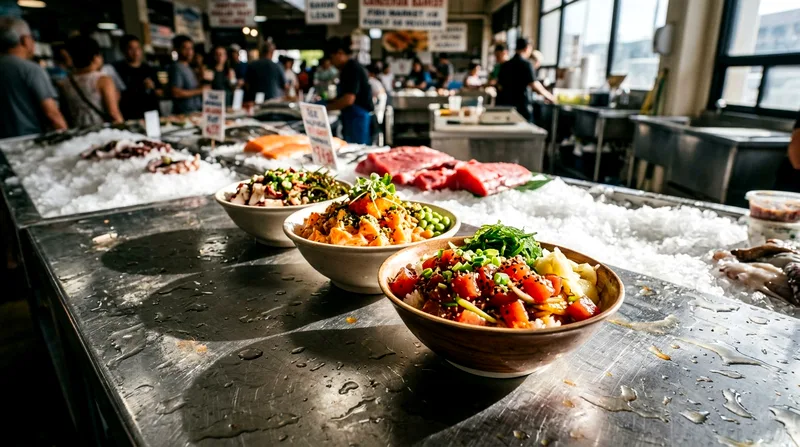
Tamashiro Market in Kalihi is the closest thing Honolulu has to a poke institution — a working fish market, not a restaurant, where the poke case sits alongside whole fish on ice. Foodland, a local grocery chain, surprises a lot of visitors with poke counters good enough that residents build weekly shopping trips around them; the Foodland Farms locations tend to have the deepest variety. Tanioka's Seafoods & Catering out in Waipahu draws people from across the island specifically for its poke and plate lunches, and it's worth the drive if you have a rental car. Cooke Street Market, a newer food hall concept, gathers several vendors under one roof, which is useful if your group can't agree on one style.
Neighborhoods Beyond Waikiki
Kahuku Superette, on the North Shore near Kahuku, is a worthwhile stop if you're already driving the island's north side for beaches or shrimp trucks. Kaneohe, on the windward side, has smaller markets and poke counters that rarely appear in guidebooks but serve a steady local clientele — useful if your itinerary includes the Windward Coast or Kualoa. The pattern holds across the island: the farther a poke counter is from a resort zone, the more likely the price per pound reflects local demand rather than tourist markup.
Poke Bowl vs. Traditional Poke
The modern "poke bowl," built on a base of rice with multiple mix-ins and sauces, is largely a mainland U.S. invention that circled back to Hawaii through fast-casual chains. It's not inauthentic exactly, but it's a different food experience than the scoop-and-weigh poke sold at a market counter, and conflating the two sets the wrong expectations for a trip.
Takeout Plates vs. Sit-Down Bowls
Traditional poke is typically sold by the pound (often around $14–$20/lb depending on the fish and market, though this shifts with tuna prices), scooped into a container, and eaten standing at a counter or back at your rental. There's no rice included unless you ask, no bowl composition to customize — you're buying the fish itself. Sit-down poke bowl restaurants, more common in Waikiki and near the University of Hawaii, build a full meal around a poke base with rice, toppings, and sauces, priced more like a restaurant entrée. Neither is wrong, but if you want to taste poke the way a Honolulu household does, go the market route.
Vegan and Gluten-Free Considerations
Standard shoyu poke isn't vegan, obviously, but most markets now stock tofu-based "poke" using the same marinade technique, and it's a reasonable substitute in flavor if not texture. Gluten-free travelers should ask about the shoyu used — some kitchens use tamari or a gluten-free soy sauce, many don't, and cross-contact in a shared mixing station is common at busy counters.
How to Spot Fresh, Quality Poke
Because poke is raw fish sitting in a deli case for hours at a time, freshness cues matter more here than at a cooked-food counter. The good news: Hawaii's poke culture is old enough and busy enough that turnover at popular counters is usually fast, which is itself a safety mechanism — fish doesn't sit long when a case empties every few hours.
Visual and Smell Cues
Fresh ahi poke should look deep red to maroon, slightly glossy, with clean-cut edges rather than ragged or mushy ones. Avoid poke that looks gray, brown-edged, or overly wet — that's often a sign it's been sitting too long or was previously frozen and thawed poorly. Smell is the simplest test: fresh poke smells like the ocean, faintly briny, never sharp or ammonia-like. If a counter has low turnover, empty trays late in the day, or seems to refill infrequently, that's worth noticing before you buy. High-volume markets like Tamashiro or Foodland locations near residential neighborhoods tend to move product fast simply because demand is constant.
Taking a Guided Poke Food Tour
If navigating a dozen neighborhood markets on your own sounds like more research than vacation, a guided food tour solves that problem directly. Honolulu has small-group walking and van tours that build an itinerary around poke counters, plate lunch spots, and sometimes a working market like Tamashiro, with a local guide doing the ordering and explaining what you're eating as you go.
What a Food Tour Adds
The real value isn't just convenience — it's context. A guide can explain why a particular shop's shoyu ratio differs from another's, point out which varieties are seasonal, and steer you away from the tourist-priced version without you having to guess. These tours typically run two to four hours, cover multiple stops, and are priced per person rather than per dish, so check current prices and availability when booking. If you're already planning an Oahu food-focused day, pairing a poke-focused tour with a broader North Shore or Chinatown food itinerary makes efficient use of a single day without a rental car.
Final Thoughts on Finding Honolulu's Best Poke
The pattern worth remembering: authentic Hawaiian poke is simple, sold by weight, and found at markets and counters that look unremarkable from the outside — Ono Seafood, Tanioka's, Tamashiro, and Foodland's seafood counters all fit that description. Compare that to the $18 novelty bowls near Waikiki's beachfront, and the difference in both price and flavor becomes obvious fast. If your trip includes time on the North Shore or Windward side, build in a stop at Kahuku Superette or a Kaneohe market rather than treating poke as a one-time Waikiki purchase. And if you'd rather have a local guide do the navigating, a half-day food tour pairs naturally with other Oahu itineraries — island loop drives, Pearl Harbor half-days, or a Chinatown walking tour — making poke one stop among several rather than a separate errand.
Frequently asked questions
What is poke and how is it prepared?
Poke is raw fish — typically ahi tuna — cut into cubes and tossed with seasonings like soy sauce, sesame oil, onion, and seaweed. It's never cooked, unlike the "poke bowls" some mainland chains serve with grilled or fried proteins. Traditional preparation is simple: fresh sashimi-grade fish, a short marinade, and minimal mixing so the texture stays intact.
Where do locals eat poke in Honolulu?
Mostly at neighborhood markets and grocery seafood counters rather than restaurants — places like Ono Seafood in Kaimuki, Tamashiro Market in Kalihi, Tanioka's in Waipahu, and Foodland's seafood counters across the island. These are everyday stops, not tourist destinations, which is exactly why the poke tends to be better and cheaper than what's sold near Waikiki.
Is Hawaii famous for poke?
Yes — poke originated in Hawaii and remains a staple of local daily eating, not just a tourist dish. It predates Hawaii's tourism industry by generations, rooted in Hawaiian fishing traditions and later shaped by Japanese immigrant seasonings like shoyu and sesame oil.
What are the different types of poke?
Common varieties include shoyu ahi (soy sauce-based), Hawaiian-style (saltier, often with inamona), limu poke (with seaweed), tako poke (octopus), spicy ahi (mayo-based), and kim chee poke. Many markets also offer tofu or salmon poke as alternatives when ahi prices rise or for dietary preferences.
Are there good poke spots outside of Waikiki?
Yes, and arguably the best ones are outside Waikiki entirely. Kaimuki, Kalihi, Waipahu, Kahuku, and Kaneohe all have markets and counters favored by residents, usually at lower prices than anything near the resort corridor. A rental car or a guided food tour makes these far more accessible than trying to walk to them from a Waikiki hotel.