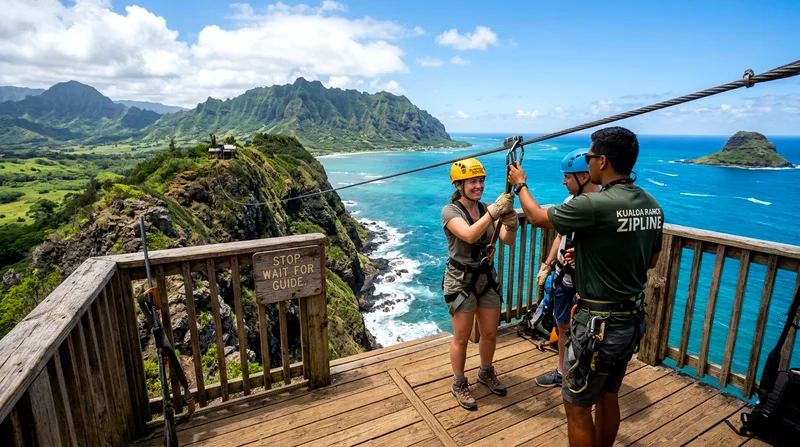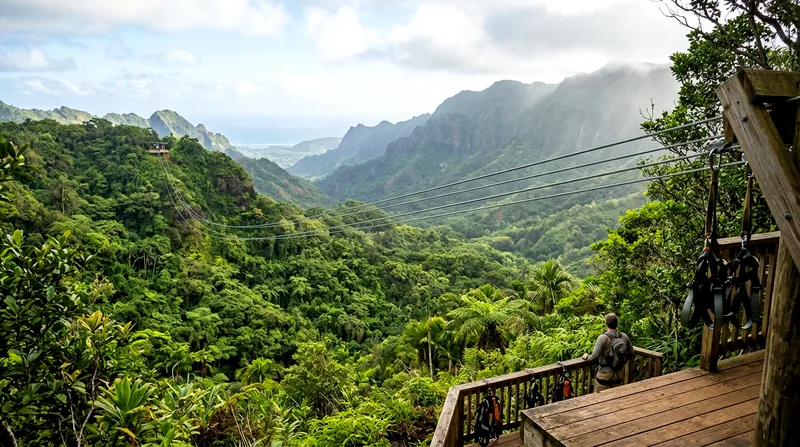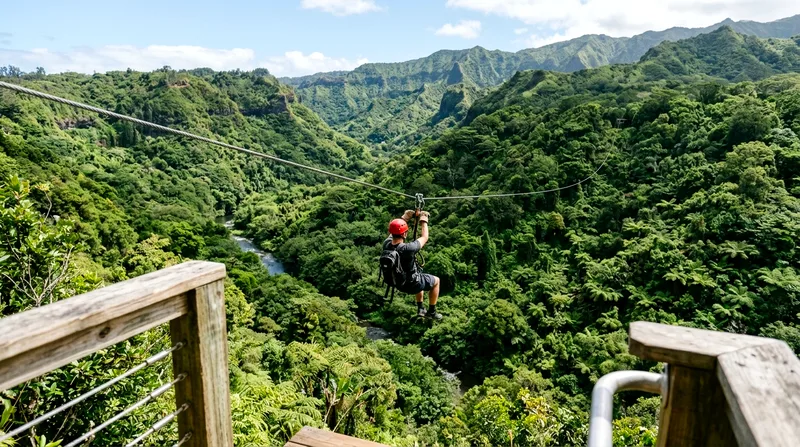
Compare Maui zipline tours by thrill level, location and group type. Find family-friendly lines, side-by-side runs and what to check before you book.
Which Maui Zipline Suits You?
Before you search "maui zipline" and click the first result, answer two honest questions: how much time do you have, and how much height and speed can you actually tolerate? Most Maui zipline tours run two to four hours door-to-door, including the drive, check-in, harness fitting and safety briefing — so a half-day is the realistic minimum, even for a "quick" course. Thrill tolerance matters more than people admit. Operators rate lines by span and height, but your own fear response is the variable that decides whether you enjoy mile-high views or spend the whole run with your eyes shut.
Families traveling with kids under 10, nervous flyers, and seniors with moderate mobility should lean toward shorter, lower lines with slower speeds and more frequent platform stops. Thrill-seekers — couples on a honeymoon who want a story to tell, or groups of friends chasing speed — should look specifically for dual or side-by-side configurations, which let two riders launch at once and actually race.
First-timers and nervous beginners
If you've never clipped into a harness before, pick a course advertised as "beginner" or "family," usually four to five lines topping out around 1,000-2,000 feet in length and 100-300 feet above the ground. These courses typically include a practice line near the ground so guides can check your form before the real runs start. Expect a slower cable speed — often capped well below the fastest commercial lines in Hawaii — and guides who talk you through each launch individually rather than rushing groups through. Avoid courses marketed primarily around "longest" or "fastest" claims if you're nervous; that marketing targets a different customer, and you'll feel rushed.
Thrill-seekers and speed lovers
If your idea of fun is launching off a platform at speed, prioritize side-by-side dual-cable courses and the longest single spans you can find on Maui, some of which run well over a mile in total cable length across a full course. Haleakala-area courses tend to have the longest individual lines and the most elevation change, which translates to higher top speeds and longer airtime per run. Don't assume "extreme" marketing means extreme — read recent TripAdvisor and Yelp reviews for actual rider accounts of speed and wait times, since even fast lines can feel tame if a tour group is large and platforms get crowded.
Maui Zipline Tour Types Compared
Not all Maui zipline tours are built the same, and the category matters more than the brand. Broadly, you'll find four types: beginner/family courses, mid-range adventure courses, dual side-by-side courses, and long-line specialty courses that emphasize one or two very long cables over a full circuit. Operators like Kapalua Ziplines, Maui Zipline Company, Skyline Hawaii, Adventure Maui, and NS Zipline each tend to specialize in one or two of these categories rather than offering everything, so matching category to operator saves time when you're comparing options.
Mid-range courses are the default choice for most couples and solo travelers — six to eight lines, two to three hours, a mix of forest and valley views, with at least one line long or high enough to get your pulse up without crossing into genuinely frightening territory. These are the most commonly booked tours on Maui and the easiest to find reviews for.
Beginner family courses suit most kids and nervous adults, while side-by-side and long-line courses are built specifically for speed-focused couples and groups.
Maui zipline tour categories compared by thrill level, duration and scenery
| Tour Category | Thrill Level | Typical Duration | Age/Fitness Suitability | Scenery |
|---|---|---|---|---|
| Beginner/Family | Low-Moderate | 2-3 hours | Most kids 5+, seniors, nervous flyers | Forest, valley, partial coastal views |
| Mid-Range Adventure | Moderate | 2.5-3.5 hours | Teens, adults, moderately fit seniors | Mixed forest and valley |
| Dual Side-by-Side | Moderate-High | 2.5-3 hours | Couples, friends, fit adults | Valley or coastal, varies by site |
| Long-Line (Haleakala-area) | High | 3-4 hours | Fit adults, experienced riders | Upcountry forest, elevation views |
Typical ranges based on widely advertised course structures; confirm exact line counts, lengths and age/weight limits on the operator's booking page before reserving.
Family-friendly and kid-appropriate courses
For a true zipline maui kids experience, check the minimum age and weight requirements first — these vary by operator but commonly start around age 5 and a minimum weight near 50-70 pounds, with a maximum weight limit that matters just as much (often around 250-280 pounds per rider). Kapalua-area family courses are a strong bet because the terrain is gentler and transfers between platforms are shorter, meaning less walking for tired kids. One genuine downside: family courses often run larger groups per session, so you may wait 10-15 minutes between turns at busy platforms. If your kids are easily bored by waiting, ask when booking whether the tour caps group size.
Dual side-by-side and long-line courses
Side-by-side maui zipline courses put two parallel cables on the same run so riders launch together — genuinely the only way to race a friend or partner through the air, and worth seeking out specifically if that's the appeal for you. These courses tend to sell out faster for sunset or late-morning slots since couples specifically request them. Long-line courses, concentrated more around Haleakala's upcountry slopes, favor a small number of very long, high runs over a large number of short ones. The trade-off: fewer total lines per tour, more driving time between platforms, and a higher likelihood of midday wind holds at elevation, which can delay or shorten your session.
Best Ziplines by Maui Area
Where you zipline on Maui changes the entire character of the experience, and it's worth choosing location before you choose a specific course. Kapalua and West Maui sit close to Kaanapali resorts, trading elevation for ocean views. Haleakala and the upcountry region trade ocean views for altitude, cooler air, and longer cable runs through eucalyptus and pine forest that feels nothing like a beach vacation.
Kapalua and West Maui
A Kapalua zipline course is the practical choice if you're staying in Kaanapali or Lahaina and don't want to lose half a day to driving. Courses here typically run over former pineapple plantation land and coastal ridgelines, with ocean views from several platforms — genuinely scenic, if not as dramatic as Haleakala's elevation. Expect lower overall altitude gain, which makes this a solid pick for first-timers and families. The downside: West Maui's courses are popular with cruise-ship day-trippers and resort guests, so midday slots book out and can feel crowded. Early morning or late afternoon bookings are worth the extra effort.
Haleakala and Upcountry
Haleakala zipline courses sit on the volcano's lower slopes, roughly 40-60 minutes' drive from most West Maui resorts — a real consideration if you're short on time or prone to carsickness on winding roads. What you get in exchange: longer cables, bigger elevation drops, and forest scenery that feels closer to a mainland adventure park than a tropical beach activity. Temperatures run noticeably cooler here, so bring a light jacket even in summer. This is the better choice for thrill-seekers and anyone who's done a basic zipline before and wants more speed and length. It's a weaker choice for young kids or anyone tight on vacation days, given the drive time.
What to Check Before Booking
Reading past the marketing photos is where you actually protect your trip. Maui zipline tours vary more than they appear to on the surface — two courses with similar prices can have very different group sizes, equipment, and cancellation terms. Before you book maui zipline tours of any kind, pull up recent reviews on TripAdvisor and Yelp and specifically search for complaints about wait times, weather cancellations, and refund handling — these patterns repeat more than star ratings suggest.
Inclusions, group size and safety equipment
Most tours include harness, helmet, gloves, and a guided briefing, plus transportation from a central meeting point in some packages — but not all include hotel pickup, so check this separately if you don't have a rental car. Group size varies widely: some courses cap sessions at 8-10 riders with two guides, others run 12-16 at a time. Smaller groups mean less waiting but can cost somewhat more. Ask whether braking is automatic or guide-controlled — automatic braking systems are generally considered safer for beginners and are now standard at most reputable Maui operators, but it's worth confirming rather than assuming.
Weight limits, fitness and cancellation policies
Weight limits catch people off guard more than any other restriction. Minimums typically sit near 50-70 pounds and maximums near 250-280 pounds, though some long-line courses set a lower maximum due to cable tension specs — always verify this directly rather than guessing from a general FAQ page. Pregnant travelers and guests with recent back, neck, or heart conditions are generally advised against ziplining altogether, regardless of course type. On cancellations: Maui's upcountry and coastal zones get different weather, so a rainy Kaanapali morning doesn't necessarily cancel a Haleakala tour, and vice versa. Most operators offer rescheduling rather than refunds for weather holds — read that policy before you pay, not after a cancellation notice arrives.
When to Book Your Maui Zipline
Book your Maui zipline tour at least a few days ahead during regular season, and a full week or more ahead if you're traveling during winter holidays, spring break, or summer peak — side-by-side and sunset slots sell out first because couples specifically request them. Morning slots tend to have calmer winds, which matters more at Haleakala's elevation than at sea-level Kapalua courses. If you're the type who prefers to decide once you're on island and see the weather, mid-range adventure courses generally have more flexible same-week availability than long-line or side-by-side options.
Compared with other Pacific and Caribbean destinations, Maui's zipline scene is genuinely more developed than what you'll find in Fiji or Bora Bora, where canopy tours are rare or nonexistent, and it's more varied in terrain than Puerto Rico's courses, which lean heavily on rainforest canopy without the volcanic elevation change Haleakala offers. If you've ziplined in Costa Rica, expect Maui's longest lines to be shorter overall, but the ocean-view platforms near Kapalua offer a different kind of payoff that jungle canopy tours simply don't.
Frequently asked questions
What is the best zipline on Maui?
There's no single "best" — it depends on what you want. For scenery and convenience near Kaanapali resorts, Kapalua-area courses win. For longer cables, more elevation, and bigger thrills, Haleakala upcountry courses are the stronger pick. Compare recent TripAdvisor reviews for your specific shortlist rather than relying on one ranking, since course conditions and crowd levels shift seasonally.
What is the longest zipline in Maui?
The longest individual cables on Maui are generally found at upcountry Haleakala-area courses, where some single lines stretch well over half a mile. Exact lengths vary by operator and are updated periodically, so check the specific course description and recent rider reviews for current line lengths before booking.
Are there kid-friendly zipline options in Maui?
Yes — several family-oriented courses, particularly around Kapalua and West Maui, accept children as young as 5, subject to a minimum weight requirement (commonly 50-70 pounds). These courses use shorter, lower lines and slower speeds. Always confirm the operator's exact age and weight policy directly, since it varies and is strictly enforced for safety reasons.
How long are Maui zipline tours?
Most tours run two to four hours total, including check-in, the safety briefing, transport between platforms, and the lines themselves. Beginner and family courses tend toward the shorter end; long-line and Haleakala upcountry courses run longer due to driving time between stations and additional elevation to cover.
What speeds do Maui ziplines reach?
Speeds vary by course design and rider weight, but commercial Maui ziplines commonly reach speeds in the 20-40 mph range on longer or steeper lines, with beginner courses running slower. Side-by-side and long-line courses at higher elevation, such as those near Haleakala, tend toward the faster end of that range.