Can only fit one adventure? Compare zipline vs ATV tour in Hawaii on thrill, scenery, effort, cost level and family fit to decide which one to book.
Zipline vs ATV Tour at a Glance
If you're weighing zipline vs ATV tour in Hawaii and can only book one, the decision usually comes down to what kind of adrenaline you want and how much dirt you're willing to tolerate. Ziplining puts you in a harness, clips you to a cable, and sends you gliding over valleys, gulches, and sometimes working ranch land. ATV touring puts you behind handlebars, bouncing over red-dirt trails through terrain that's often inaccessible any other way. Both are offered on Oahu and Kauai, with Kualoa Ranch and Kipu Ranch standing out as the best-known names for each respective activity.
The honest comparison isn't "which is more fun" — both are fun. It's about physical demands, group composition, and what you actually want to see. Ziplining is the lower-effort, higher-scenery choice. ATV touring is the higher-effort, more immersive choice, with more direct contact with the landscape (and more dust in your teeth). Neither is cheap, and neither is a "do it on a whim" purchase — both typically need advance booking, especially in peak season weeks around summer and the December holidays.
Zipline tours win on scenery and ease, while ATV tours win on terrain immersion and sustained adrenaline.
Zipline vs ATV tour Hawaii comparison by thrill, effort, cost and family fit
| Activity/Location | Typical Duration | Physical Effort | Cost Level | Best For |
|---|---|---|---|---|
| Kualoa Ranch Zipline (Oahu) | 2.5–4 hours | Low | $$$ | Scenery, mixed-age groups |
| Kauai Zipline Tours | 3–4 hours | Low-Moderate | $$$ | Waterfall views, couples |
| Kipu Ranch ATV (Kauai) | 2–3.5 hours | Moderate-High | $$$ | Terrain, active families |
| West Oahu ATV Tours | 2–3 hours | Moderate | $$ | Budget-conscious, convenience |
| Coral Crater Adventure Park (Oahu) | 2–3 hours | Low-Moderate | $$ | Combo zipline + zip-adjacent activities |
Cost levels are relative ($ = lower, $$$ = higher); check current prices and availability directly with the operator before booking.
What a Hawaii zipline tour involves
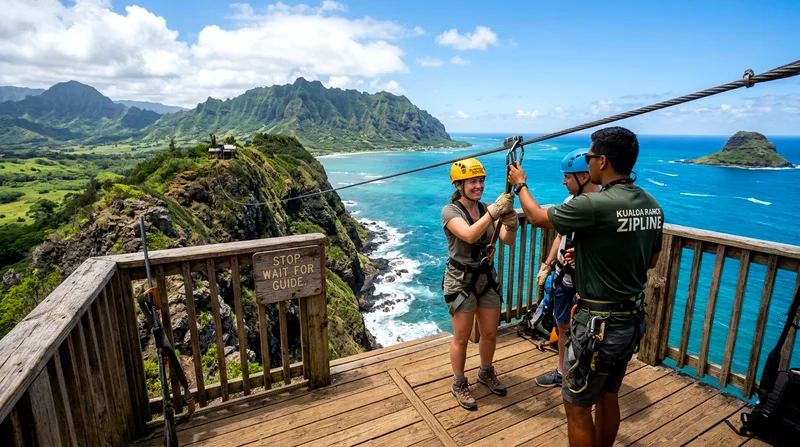
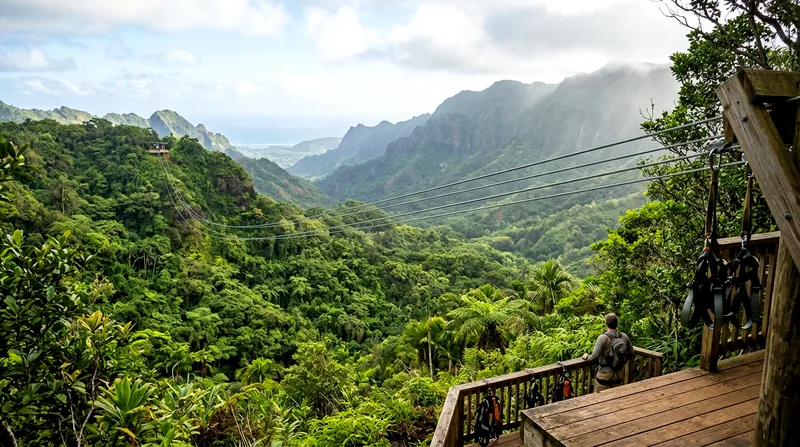
A typical Hawaii zipline tour strings together anywhere from five to nine lines across a property, often mixed with suspension bridges or short hikes between platforms. Kualoa Ranch on Oahu runs one of the most recognized zipline courses in the state, stretching across valley terrain that doubled as Jurassic Park filming locations — so you're not just flying over scenery, you're flying over a set. On Kauai, zipline operators frequently combine lines with waterfall views or river crossings, which tends to make the Kauai experience feel more tropical and less ranch-like than Oahu's.
Expect the full outing, including gear-up and safety briefing, to run two and a half to four hours. The actual zip time is short — a few minutes per line — so a lot of the experience is waiting, walking, and photo stops. That's fine for most travelers, but if you want nonstop action, this isn't it.
What an ATV tour involves
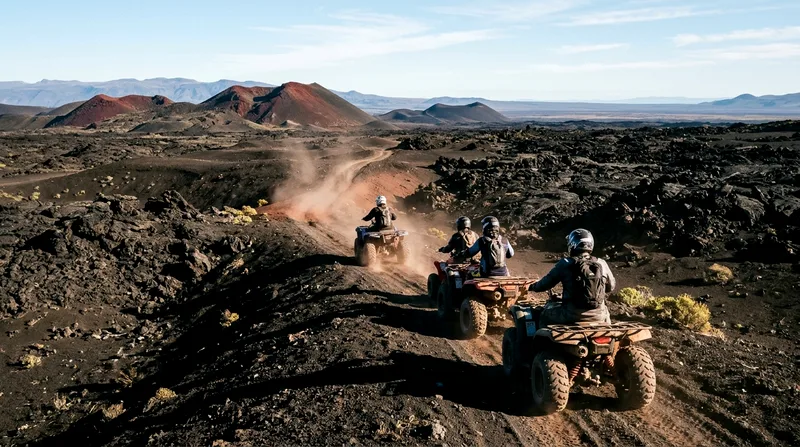
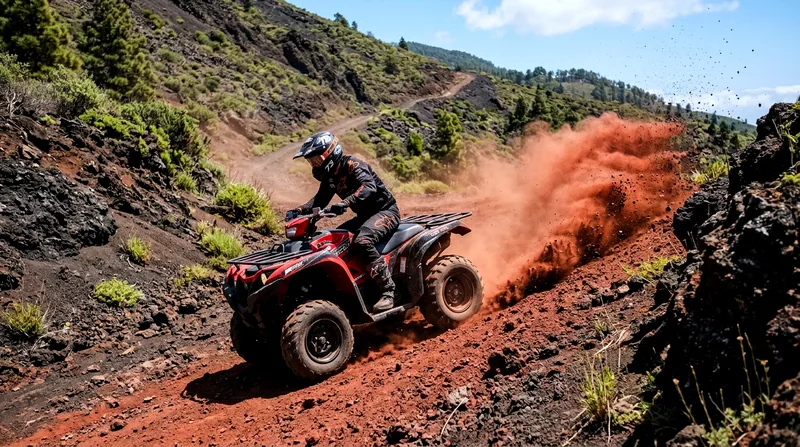
ATV and UTV (side-by-side) tours run you through red-dirt trails, streambeds, and backcountry roads that regular rental cars can't reach. Kipu Ranch on Kauai is the standard-bearer here, with tours crossing private ranch land, river crossings, and more Jurassic Park and Raiders of the Lost Ark filming spots. On Oahu, West Oahu has a smaller but growing ATV and off-road scene, generally less scenic than Kauai's lush interior but still a legitimate option if you're island-bound there.
Tours run two to three and a half hours, and unlike ziplining, you're physically driving (or riding as a passenger) the entire time. There's no "waiting between zips" — it's continuous bouncing, steering, and mud-splattering movement, which some people find more satisfying and others find more exhausting.
Thrill and Scenery Head-to-Head
Both activities sell themselves on adrenaline, but the sensations are different enough that your personal preference should drive the decision more than any ranking I could give you.
Adrenaline and fun factor
Ziplining delivers a sharp, short burst of adrenaline per line — that stomach-drop moment at launch, then a smoother glide. It's intense but brief, and repeatable across multiple lines, so the fun factor builds cumulatively. ATV touring delivers a more sustained kind of thrill: constant jostling, sudden dips, mud splashes, and the satisfaction of controlling the machine yourself (on tours where you drive rather than ride passenger). If you want the "scream and let go" feeling, zipline wins. If you want the "I did something" feeling of physically steering through a challenge, ATV wins. I'd rate ATV touring as slightly more engaging for teenagers and adults who get bored easily, and zipline as more universally enjoyable for a wider age range in one group.
Views, landscapes and photo opportunities
This is where zipline tours generally pull ahead. You're elevated, moving slowly enough to look around, and often positioned above valleys that ATVs can't access from ground level. Kualoa Ranch's zipline views over Oahu's windward valleys are hard to beat for sweeping, cinematic shots. ATV tours offer a different kind of photo value — closer to the ground, dustier, more "adventure documentary" than postcard. Kipu Ranch's river crossings and jungle corridors on Kauai are genuinely striking, but you'll often be too busy holding on to grab your phone mid-ride. If photos matter to you, plan on the designated photo stops rather than expecting to shoot on the move for either activity.
Effort, Age Limits and Safety
Neither activity is passive, but they ask different things of your body — and the restrictions reflect that.
Physical demands and restrictions
Ziplining requires minimal fitness — you're harnessed and the cable does the work — but most operators enforce weight limits, commonly in the 250–275 lb (around 113–125 kg) range per rider, and minimum age or height requirements, often around age 7 or a minimum height near 4 feet. ATV tours generally require a valid driver's license to operate your own vehicle (if you're driving rather than riding as a passenger), and minimum age for drivers is typically 16, sometimes 18 depending on the operator and vehicle type. Passengers on side-by-sides can often be younger, which makes ATV tours more flexible for families with a mix of ages — a 10-year-old can ride along even if they can't drive.
Safety and weather considerations
Zipline safety depends heavily on harness and cable maintenance, and reputable operators brief you thoroughly before the first line. Rain doesn't usually cancel a zipline tour, but high wind can — gusty days sometimes mean shortened courses or delays. ATV safety depends more on driver attentiveness and terrain conditions; wet weather actually makes Kauai's red-dirt trails more dramatic (and slicker), which operators manage by adjusting speed and route rather than canceling outright. Both activities require closed-toe shoes, and both will hand you a helmet you're expected to wear the entire time — don't be the person who argues about this.
Time, Cost Level and Booking Ease
Budgeting time and money for an adventure day in Hawaii means understanding that neither of these is a cheap add-on — they're centerpiece activities that deserve their own half-day.
Duration and cost level compared
Both activities run roughly two to four hours door-to-door, factoring in check-in, safety briefing, transport to the site, and the activity itself. Zipline tours tend to sit at the higher end of the cost spectrum because of the infrastructure involved — cables, platforms, braking systems, insurance overhead. ATV tours are often slightly less expensive per person, particularly at smaller operators near West Oahu, though premium multi-terrain tours at places like Kipu Ranch can cost as much as a top-tier zipline package. As a rough rule: expect zipline tours to run on the higher side of mid-range to premium, and ATV tours to span a wider range from mid-range to premium depending on vehicle type (solo ATV vs. shared UTV) and tour length.
Combo packages and booking timing
Some properties bundle the two. Kualoa Ranch, for instance, offers package options combining ziplining with other ranch activities like raptor viewing or movie site tours, which is a reasonable way to stretch a single booking into a fuller day without needing a separate ATV outing. Coral Crater Adventure Park on Oahu packages zipline with other adrenaline activities on-site, which suits travelers who want variety without driving between locations. Book at least one to two weeks ahead in peak travel months (June–August, mid-December to early January); shoulder season often allows booking just a few days out. Always compare current prices and availability before you book — both activities sell out faster than first-time visitors expect, especially weekend morning slots.
Who Should Pick Which
Matching the activity to your group matters more than matching it to some abstract "best adventure tour Hawaii" ranking — your travel companions and tolerance for dirt should decide this, not a review score.
Families with kids and mixed ages
For a Hawaii adventure for families with a wide age range — say, a 7-year-old and two grandparents — zipline tours at places like Kualoa Ranch tend to work better. The physical bar is lower, the pacing is gentler, and most operators are set up to handle nervous first-timers with patience. ATV tours work well for families with older kids (12+) who can either drive themselves or ride as engaged passengers, but I wouldn't recommend them for families with younger children or anyone with motion sensitivity — the bouncing is real, and there's no smooth glide to fall back on if someone gets queasy.
Couples, thrill seekers and first-timers
Couples looking for a shared rush with minimal risk of one partner feeling left out often lean toward zipline tours — you're both doing the same thing at the same pace. Thrill seekers who've already ziplined elsewhere (Costa Rica and Bali both have well-developed canopy tour circuits) may find Hawaii's lines familiar rather than novel, and might get more out of an ATV tour simply because it's less commoditized globally. First-timers to either activity should lean zipline — it's the gentler on-ramp, with less equipment to manage and no driving skill required.
Verdict: Which Adventure to Book
If you're still stuck choosing between a zipline tour and an ATV tour in Hawaii, here's the blunt version: book zipline if you want sweeping views, lower physical demand, and a smoother experience for mixed-age groups — Kualoa Ranch on Oahu and most Kauai zipline operators deliver reliably on this. Book ATV if you want sustained adrenaline, muddy hands, and a more hands-on connection to the terrain — Kipu Ranch on Kauai is the strongest single option in the state for this.
Comparing Hawaii to other adventure destinations helps put this decision in context. Fiji and Bora Bora lean almost entirely toward water-based adventure, with little in the way of ziplining or off-road touring, so if you specifically want this kind of terrestrial adrenaline, Hawaii already has an edge over those islands. Costa Rica arguably has more extensive zipline infrastructure overall, but Hawaii's combination of volcanic terrain and filming-location novelty (Jurassic Park sites on both Oahu and Kauai) gives it a distinct identity you won't get from a generic rainforest canopy tour elsewhere.
Don't try to cram both into one day unless your itinerary is unusually loose — you'll spend more time commuting between sites than enjoying either activity, and you'll arrive at dinner too exhausted to enjoy that either. Pick one per island visit, pair it with a beach day the following morning, and check current age, weight, and availability requirements directly with the operator before you book — restrictions do vary and they're the kind of detail that ruins a trip if you discover it at check-in rather than at booking.
Frequently asked questions
Which is more thrilling: zipline or ATV tour in Hawaii?
It depends on what kind of thrill you want. Ziplining gives a sharp, short adrenaline spike per line with a smooth glide between bursts. ATV touring gives sustained, physical adrenaline — constant bouncing and steering through red-dirt terrain. Neither is objectively more thrilling; riders who've done both often say ATV feels more "active" while zipline feels more "scenic and intense in short bursts."
Which adventure is better for families in Hawaii?
For families with younger kids or a wide age spread, zipline tours at operators like Kualoa Ranch are generally the better fit — lower physical demand, gentler pacing, and friendlier minimum height/age requirements. ATV tours suit families with teens or all-adult groups better, since driving typically requires a valid license and a minimum age around 16.
Can you do both a zipline and ATV tour in one day?
Technically yes on Kauai, where Kipu Ranch and several zipline operators sit reasonably close together, but it's a tight, tiring day once you add check-in, transport, and safety briefings for each. Most travelers get more value spreading the two activities across separate days or separate island visits rather than stacking them.
What are the age and fitness requirements for each activity?
Zipline tours commonly require a minimum age around 7 and weight limits near 250–275 lb (113–125 kg) per rider, with fitness demands kept low since the harness does most of the work. ATV tours typically require a valid driver's license and minimum age of 16 (sometimes 18) to drive, though younger passengers can often ride along on side-by-side vehicles. Always confirm exact limits with the operator before booking, since they vary by tour type and vehicle.
Is ziplining in Hawaii worth it?
For most visitors, yes — particularly at Oahu's Kualoa Ranch or Kauai's waterfall-adjacent courses, where the scenery (including Jurassic Park filming locations) adds value beyond the zip itself. It's a lower-effort, higher-scenery activity that works for a broader range of ages than ATV touring, though if you've already ziplined extensively elsewhere — Costa Rica, for example — the novelty may feel lower.