Plan a Haleakala sunrise tour on Maui: how the sunrise reservation works, guided van vs bike descent or self-drive, what to pack, and best timing.
Why Do a Haleakala Sunrise Tour
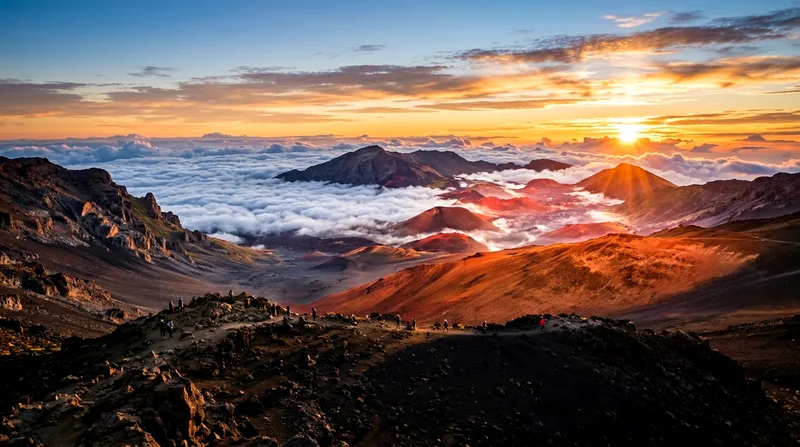
A Haleakala sunrise tour means driving, biking, or being driven to the 10,023-foot summit of Maui's dormant volcano before dawn to watch the sun break over a cloud layer that usually sits well below the crater rim. Mark Twain reportedly called it "the sublimest spectacle" he'd ever witnessed, and while that's an old quote worth taking with a grain of salt, the physical setup is real: you're standing above most of the island's weather, looking at a horizon with nothing between you and the curvature of the earth but air.
The catch is that the National Park Service requires a separate sunrise reservation for anyone entering Haleakala National Park between 3am and 7am, booked through recreation.gov. This isn't a park entrance fee — it's an additional timed reservation capped at a limited number of vehicles per morning, and it sells out, especially in summer and around holidays. Skip this step and you'll be turned away at the gate no matter how early you leave your hotel.
I'd rank this experience above most other Maui tours for one reason: it's genuinely unlike anything most travelers have done before, including sunrise hikes elsewhere. Compare it to watching sunrise from a beach in Cancun or Puerto Rico — pleasant, but you're at sea level, humid, and surrounded by other tourists on sand. At Haleakala you're cold, above the clouds, and the silence at that altitude before the sun hits is part of the experience.
What the summit sunrise is like
Temperatures at the summit commonly sit between 30-50°F (roughly 0-10°C) before dawn, even when it's 75°F down in Kahului. Wind adds to the chill. The sky typically starts changing color 30-45 minutes before actual sunrise, shifting through deep blue, then orange and pink bands over the cloud layer. The cinder cones inside the crater — Haleakala means "house of the sun" — pick up red and rust tones as direct light hits them, which is why photographers often linger an extra 20-30 minutes after the main event. Expect a crowd at the main Haleakala Visitor Center overlook; if you want more breathing room, the Kalahaku Overlook slightly lower on the summit road offers a similar view with fewer people, though officially it's not always open before sunrise.
Is it worth the early start?
Honestly, yes, but only if you're the type who can function on four or five hours of sleep without ruining the rest of your day. Families with young kids should think hard about this — a cranky 6-year-old at 4am in near-freezing temps isn't every parent's idea of vacation. Older children and teens tend to handle it fine and often remember it as a trip highlight. For couples and solo travelers, it's one of the few Maui experiences that feels genuinely earned rather than purchased. If you'd rather sleep in, Haleakala's crater and visitor center are open all day and the daytime views, while less dramatic, come without the 3am alarm.
Guided Van, Bike Descent or Self-Drive
There are three realistic ways to do this: drive your own rental car up and back, book a guided van tour that handles pickup and the mountain road, or combine sunrise with a Haleakala bike tour where you ride a bicycle back down the switchbacks after watching the sunrise. Each has real trade-offs, and the "best" choice depends more on your comfort with pre-dawn mountain driving and your appetite for a long bike ride than on price alone.
Self-driving gives you total control over timing and lets you linger as long as you want, but you're responsible for navigating 36 miles of dark, winding road from sea level, including hairpin turns on Highway 378, while half-asleep. Guided vans remove that stress entirely — you get picked up from your hotel or a central meeting point, usually somewhere in Kihei, Wailea, or Lahaina, and someone else deals with the road. Bike descent tours add a genuinely different activity on top of the sunrise: after watching dawn break, you switch from van or support vehicle to a bicycle and coast roughly 23-28 miles down the mountain, descending about 10,000 feet in elevation over a few hours.
Self-driving is cheapest and most flexible, while guided van and bike tours trade cost for convenience and a reserved spot.
Haleakala sunrise tour options compared: van, bike descent and self-drive
| Option | Reservation handled for you | Physical effort | Typical duration | Best for |
|---|---|---|---|---|
| Self-drive | No, book yourself | Low | 4-6 hours round trip | Flexible, budget-conscious travelers |
| Guided van tour | Usually yes | Low | 4-7 hours including pickup | Seniors, families, no rental car |
| Bike descent tour | Usually yes | Moderate-high | 6-8 hours including ride | Active travelers, couples wanting something different |
| Van + Upcountry add-on | Usually yes | Low | 6-8 hours | First-timers wanting a fuller day |
Durations vary by pickup location and operator; always check current itineraries and reservation details before booking.
Guided van and bike descent compared
A standard guided van tour is the lower-effort option: you sit, watch sunrise, then get driven back down, sometimes with a stop for breakfast or at a farm in Upcountry Maui. It suits people who just want the view without extra physical activity, including most senior travelers and anyone not comfortable cycling on a public road shared with cars. A bike descent tour requires a moderate level of fitness and comfort with braking continuously for close to two hours — your hands and forearms will feel it — plus a minimum age that's typically around 12-15 depending on the operator. The upside is real: coasting down Haleakala's switchbacks in the early morning light, with Maui's coastline opening up below you, is a distinct experience from anything you'd do at Mauna Kea on the Big Island or on a bike tour in Bali's rice terrace country. Compare current prices and group sizes for both van and bike options before you book, since availability and seasonal offerings shift.
Driving yourself: logistics and trade-offs
If you're staying in West Maui (Lahaina, Kaanapali, Kapalua), plan on a 2 to 2.5 hour drive to the summit, which means leaving around 2:30-3am for a sunrise around 6am depending on the season. From Kihei or Wailea it's closer to 1.5-2 hours. Fill your gas tank the night before — nothing is open at that hour near the park, and running low on a dark mountain road is a bad place to discover it. The road has no streetlights, sharp switchbacks, and occasional cattle or axis deer crossing, so fatigue is a genuine safety issue, not just an inconvenience. Self-driving saves money compared to a guided tour and gives you flexibility to stay as long as you like, but you still need the separate sunrise reservation regardless of how you arrive — a rental car doesn't exempt you from it.
Haleakala Sunrise Reservation and Entry
This is the part that trips up more visitors than anything else about Haleakala National Park. The National Park Service requires a timed vehicle reservation for entry during sunrise hours, managed through recreation.gov, separate from the standard park entrance fee you pay at the gate. One reservation covers one vehicle, not one person, so if you're traveling as a couple or family in a single car you only need one.
These reservations are released in two batches on recreation.gov: a bulk release roughly 60 days in advance, and a smaller next-day release at 4pm Hawaii time for stragglers. Both windows move fast during peak season — Hawaii's busiest travel months tend to be summer and around the winter holidays — so treat the 60-day mark as a hard deadline if your travel dates are set. Guided van and bike tour operators generally secure their own reservations as part of the package, which is one of the real advantages of booking a tour instead of self-driving: you skip the recreation.gov scramble entirely.
How the sunrise permit system works
The reservation is tied to a specific morning and vehicle, checked at the park entrance gate alongside your park entry fee (paid separately, either as a day pass or with an annual pass like the America the Beautiful pass). You'll need a printed or digital confirmation and ID matching the reservation name. Note that this reservation only covers entry between 3am and 7am — if your sunrise viewing runs past 7am you're fine to stay, but you can't re-enter later that same window without a new reservation. Always check the official NPS Haleakala page and recreation.gov directly for current fees and exact release times, since these details are reviewed periodically and the specifics you read elsewhere may be outdated.
Tips for securing a reservation
Set a calendar reminder for exactly 60 days before your planned sunrise date — reservations for popular dates in June, July, August, and around Christmas/New Year's can disappear within hours of release. If you miss the main window, check recreation.gov the day before your target date at 4pm Hawaii time, when a small batch of next-day reservations opens up; this is a realistic backup, not just a theoretical one, since some people cancel or change plans. If both options fail, booking a guided van or bike tour is your most reliable fallback, since operators typically hold their own allocation separate from the public release.
Best Time to Go and What to Pack
Sunrise time at Haleakala shifts throughout the year — roughly 7am in December versus around 5:45-6am in June — so check the specific sunrise time for your travel dates rather than assuming. The park's recommendation is to arrive at least an hour before sunrise to find parking at the main overlook, since the lots are small and fill up even with the reservation system limiting total vehicles.
Weather at 10,000 feet is unpredictable even when Maui's coast is clear. Cloud cover can roll in and obscure the sunrise entirely on any given morning, and there's no refund or reschedule for the reservation if that happens — you're gambling on conditions no app can fully predict. Generally, winter months bring a higher chance of cloud cover and even occasional snow at the summit, while summer tends to have more consistent clear mornings, though it's never guaranteed either way.
Seasons, weather and summit conditions
Summer (May through September) generally offers the best odds of a clear sunrise and the warmest summit temperatures, though "warmest" still means jacket weather. Winter (November through March) brings a real chance of fog, rain, or cloud obscuring the view, plus colder temps that can dip near freezing with wind chill. This is one case where Hawaii's reputation for consistent tropical weather doesn't hold — unlike a beach day in Waikiki or on the Kona coast, the summit operates almost like a different climate zone, more comparable to a mountain pass than a tropical island.
What to wear and bring
Dress in real layers — a base layer, a warm mid-layer like fleece, and a windproof outer shell, because wind at the summit cuts through regular jackets fast. Closed-toe shoes matter more than people expect; sandals in 35°F wind are miserable. Bring gloves and a hat if you own them, a blanket or towel to sit on the cold rock, and a thermos of coffee or tea since nothing is open at the summit before sunrise. If you get altitude headaches easily, drink water on the drive up and take it slow getting out of the car — 10,000 feet is enough to affect some people, especially combined with the early hour and cold.
Nearby Add-Ons After Sunrise
Once the sun is up and the crowd thins, you've got the whole day ahead and you're already most of the way up the mountain — it's worth building in time rather than rushing straight back to the beach.
Summit and park stops
The Haleakala Visitor Center, right near the main overlook, has exhibits on the volcano's geology and the endangered silversword plant, which grows almost nowhere else on earth and takes decades to bloom. The Pa Kaoao (Leleiwi Overlook) and Kalahaku Overlook offer different crater angles worth a short stop if you have the time and the road isn't too crowded. Hiking into the crater itself — Sliding Sands Trail is the main route — is a serious undertaking at altitude, not a quick post-sunrise stroll, so only attempt it if you've got hours, water, and sturdy shoes.
Upcountry Maui breakfast and sightseeing
On the drive back down, Upcountry Maui towns like Kula and Makawao make a natural breakfast stop, with local bakeries and farm stands that beat anything you'll find at the summit. Surfing Goat Dairy and lavender farms in the area are easy, low-key add-ons if you're not in a rush. Compare this to how a Maui volcano tour is sometimes packaged with these Upcountry stops already built in — if that appeals to you, a half-day guided tour combining sunrise and Upcountry sightseeing saves you from piecing it together yourself.
Frequently asked questions
Do I need a reservation for Haleakala sunrise?
Yes. The National Park Service requires a separate timed vehicle reservation through recreation.gov for anyone entering Haleakala National Park between 3am and 7am, in addition to the standard park entrance fee. This applies whether you self-drive or join a tour, though most guided van and bike tour operators arrange their own reservation as part of the booking.
Is a Haleakala sunrise tour worth it?
For most travelers, yes — watching the sun rise above the clouds from a 10,000-foot summit is a genuinely different experience from a beach sunrise, and it's one of the few free-feeling, non-commercial highlights on Maui. It's less worth it if you can't handle a 2-3am wake-up or you're traveling with very young kids who'll struggle with the cold and early hour.
Can you bike down Haleakala after sunrise?
Yes, several operators run bike descent tours where you watch sunrise, then switch to a bicycle for a guided ride down the mountain's switchbacks, covering roughly 23-28 miles and about 10,000 feet of descent over a few hours. These typically have a minimum age requirement, often around 12-15, and require decent comfort with continuous braking on a paved road.
What time do you need to wake up for Haleakala sunrise?
Plan to wake up around 2-3am depending on where you're staying. From West Maui (Lahaina, Kaanapali) the drive alone takes 2-2.5 hours; from Kihei or Wailea it's closer to 1.5-2 hours. Add another 30-60 minutes to find parking and walk to the overlook before the actual sunrise time, which shifts seasonally from around 5:45am in summer to 7am in winter.
What should I wear to Haleakala for sunrise?
Dress in layers — a base layer, a warm fleece or mid-layer, and a windproof jacket, since summit temperatures often sit between 30-50°F with strong wind. Closed-toe shoes, a hat, and gloves make a real difference. Bring a blanket to sit on and something warm to drink, since there are no food or drink options open at the summit before sunrise.